• TalkBass has been independent since 1998. Add your voice.
    Create a free account to reply to discussions, view embedded media, and browse with fewer display ads.
    Join freeLog in
    Want zero display ads or expanded classifieds tools? Compare plans.

Small Class-D Amp Heads. What validates the 'Warm' sound ?

so are there ways to voice a class-d amp other than the pre-amp? i kinda thought that if one went through the 'effects in' and bypassed all the preamp to go straight through to the 'power' amp section, that such amps would sound greatly similar.
I suspect many will, however there can easily be other aspects to voicing and feel other than just the preamp and amp. Some may come after the power amp and some may be integrated into the power amp circuitry to create certain behaviors as you push the amp harder.

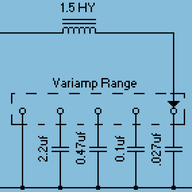
If you have a second, go to the Mesa website and open a copy of the WD-800 manual. Then go to the diagram on the third page from the end and look to the right after the class D amplifier and you'll see an output damping network that has nothing to do with the preamp. There are three positions and they have a noticeable impact on the feel and sound of the notes. In fact they can actually give you a bit of a tube amp characteristic on medium and low damping. Page 5 of the manual has a detailed explanation of how this control works, why it works the way it does, and what to expect when you use it.

I'm sure there are plenty of other examples, but that one is an obvious way to make the point that the class D amplifier section is only part of the circuit and it is the overall design that creates the results you hear.
 
In reading all these responses on how each person relates their amp head to the ‘warmth’ factor, at the moment, I don’t think I would really benefit from the specific design of one Class-D 300-500 watt head to another with regards to how the amp designer built it to have the final output product sound a certain way based on tone, texture, dynamics, voicing and harmonic structure particular to that amp head and it’s pre-amp section and front panel controls. Although I’d really like to benefit from it and that would require change on my end. Sometimes change is tough. I would not have any problems buying a new head though. That’s covered under GAS pains I think..

Because, my situation is that I only play my bass in my room here at the house, but I take it as serious as someone who does play out at a bar, church or VFW hall. For the past 4.6 years of playing each and every day, I have slowly sculptured the sound/tones that I am very happy with and I think it would be hard to change all that to reap the benefits of what some of you explain. For starters, I was violently opposed to playing with any trace of overdrive or grit or dirt. Just pure clean bass notes. Also playing at home only, I fall into the category of one f those people who like that signature sweet sound of general mid-scooping, the bedroom bass sound I guess. I am a pedal person and always have stuck to the thought of set my amp head flat, get rid of all the tone knobs on my bass (which I have done, there is just a single volume on each bass now) and make all my tone adjustments with my pedals, like parametric EQ and my Two-Notes LeBass and whatever other pedal I have that can manipulate tone. So right there I have pretty much disqualified what an amp head can really do versus another one. This is where my pre-conceived notion that if I set the amp head flat and adjust all my gear in my little room here, I can make any 300-500 watt Class-D head sound the same so what’s really the point of buying a different one.

No, change is not set in stone here though, there is hope. A while back I wanted to play around with the idea of ‘dirt’ in my sound. I bought a Darkglass Microtubes X pedal and though it sounded like marbles in coffee can. Horrible. I sold it. Then I bought the Microtubes Vintage. Sounded too much like old school ‘fuzz’, like in some Early Metallica songs. Not my thing. It was probably doing exactly what it was designed to do but I wasn’t having it, I sold it. Then I watched Rick Beato break down Megadeth/Symphony Of Destruction and he was playing the bass part though a Microtubes 900 amp and I thought the foundational (and there wasn’t much) ‘dirt’ sound was what I was searching for but the mids were too high. So I bought the B7K pedal and copied his amp settings in his video and by Golly, I found my ‘dirt’ sound I can learn to love, and my B7K pedal will handle that for me. I also have the Wampler compressor pedal and I really like the ‘color’ and change that it does to my sound so that is my comp pedal.

So see how I have all my tone and signal shaping bases covered already by pedals and not at the amp head nor at the bass guitar end, and the environment I play in, I don’t think I would benefit from a different amp head unless I made major change elsewhere here. It’s just that I got this sound in my head of a Fender Jazz bass (I used to have one) being plucked by a finger (I only play with a pick, never learned fingers) directly through a Class-D amp head and these beautiful sounding, warm ‘stubby’ (or sustaining) bass notes are coming out of the 15” speaker..and I think to myself, hmm, maybe I can buy a ‘warmer’ amp head and replicate that with what I already have. Let me ask on Talkbass what conveys the ‘warm’ sound from one 300-500 watt Class-D amp head to another. You all have pretty much told me. So what am I supposed to do, set up a completely different rig next to mine, buy an Ashdown or Tone Hammer, plug straight in and make a change. I’m certainly into the ‘buying’ part..just not maybe the ‘change’ part yet now.
I think if I was playing only in my bedroom I would be more inclined to experiment with different playing techniques than swapping out heads. IMHO there is more tonal variety available in your fingers and playing style than there is between one head and another. Not that there aren't differences of voicing, there clearly are, but you can get more or less warmth out of any setup just by varying where you play from bridge to neck, how hard or soft, pick or fingers, what pick material, strong fingers, soft fingers, brush the strings, dig in hard, thumb, slap, pop, open position, up the neck, the variations are endless. Also, if you do ever rock out you might find you have to rethink all your tone settings anyway, so if you can adjust on the fly by a couple of quick eq tweaks and a subtle shift in playing style you will be in good shape. Some of the bass sounds you like, you might be surprised to hear them solo'd. My advice, keep your money in your pocket and experiment with what you have
 
  • Like
Reactions: gtirard
I guess some players are never satisfied with the tone they’re getting. With so many choices of instruments, amps, strings, speakers, enclosures, effects etc. I would be confused as well.
Does someone else have a problem with your set up? Has anyone told you to change your tone as it is distracting?
Plug in and play, lay down the bottom line and enjoy what you’re doing.
Trying to micro-analyze sound is a black hole from which there is no bottom.


I am 100% satisfied with my tone now. I never said I don't like this or that about it. Yes, there are so many choices of instruments, amps, strings, speakers, enclosures and effects and I have gone though them all in the last 5 years to get where I am at now. A lot of people do, comes with the obsession of our musical instrument. I play by myself in my house while my girlfriend is in the other room watching Telemudo. She would never say anything about my tone, heck, shes been here 3+ years now and never even said once that I sound good, or bad. Nothing.. even when I ask her. So its only me thinking about my tone. Maybe I need to get an additional hobby, take my mind off of all this. I sit in my studio 11 hrs a day working from home (Cisco Network Engineer) and at the 11th hour I spin around in my chair 180 degrees and play bass for the next 2 hours or more. So while I have the discipline of never actually playing my bass during working hours, even though it is 5 feet behind me, this thing called the 'internet' is ever present on my work screens so there's usually 6 browser tabs open at all times leading to musical products, reviews and of course TB here. Its self induced..always looking for something else when you don't need it.
 
  • Like
Reactions: musicman556
Not a class D but this little guy is nice and warm..
7096683A-F859-43CB-9C8B-8E2247225132.jpeg
 
I suspect many will, however there can easily be other aspects to voicing and feel other than just the preamp and amp. Some may come after the power amp and some may be integrated into the power amp circuitry to create certain behaviors as you push the amp harder.

If you have a second, go to the Mesa website and open a copy of the WD-800 manual. Then go to the diagram on the third page from the end and look to the right after the class D amplifier and you'll see an output damping network that has nothing to do with the preamp. There are three positions and they have a noticeable impact on the feel and sound of the notes. In fact they can actually give you a bit of a tube amp characteristic on medium and low damping. Page 5 of the manual has a detailed explanation of how this control works, why it works the way it does, and what to expect when you use it.

I'm sure there are plenty of other examples, but that one is an obvious way to make the point that the class D amplifier section is only part of the circuit and it is the overall design that creates the results you hear.

I just checked that schematic out and saw the 'dampening' circuit/function' represented by a block diagram right after the Class-D op-amp triangle and just before the speaker out jacks. Now this is a specific circuit design maybe only inherent to this MESA amp ? Maybe AgedHorse can tell me what the technical translation of 'loosing up the inherent tightness of the power amp' means.
 
I am 100% satisfied with my tone now. I never said I don't like this or that about it. Yes, there are so many choices of instruments, amps, strings, speakers, enclosures and effects and I have gone though them all in the last 5 years to get where I am at now. A lot of people do, comes with the obsession of our musical instrument. I play by myself in my house while my girlfriend is in the other room watching Telemudo. She would never say anything about my tone, heck, shes been here 3+ years now and never even said once that I sound good, or bad. Nothing.. even when I ask her. So its only me thinking about my tone. Maybe I need to get an additional hobby, take my mind off of all this. I sit in my studio 11 hrs a day working from home (Cisco Network Engineer) and at the 11th hour I spin around in my chair 180 degrees and play bass for the next 2 hours or more. So while I have the discipline of never actually playing my bass during working hours, even though it is 5 feet behind me, this thing called the 'internet' is ever present on my work screens so there's usually 6 browser tabs open at all times leading to musical products, reviews and of course TB here. Its self induced..always looking for something else when you don't need it.

Maybe try the Eden Glow Plug pedal. It's marketed specifically to address adding warmth to any amp. I've been curious about the pedal for a few years and recently noticed it's back ordered everywhere except from sellers in Japan listing on eBay. Maybe it's close to being discontinued or has a supply chain issue but that's just guessing. The eBay sellers' price was the same as the usual US price including free shipping and returns, so I ordered one and it was at my door in one week. I've only had it a few days but I've checked it against the warmth and drive available in the preamps of my two Streamliners, and it has it's own flavor that I like. The difference that I like may be from the inclusion of a crossover in the pedal. The manual doesn't explain exactly what it does, but it appears to preserve more low frequency tone that gets lost somewhat when preamp tubes are pushed into distortion.

Invalid Link Removed
 
I just checked that schematic out and saw the 'dampening' circuit/function' represented by a block diagram right after the Class-D op-amp triangle and just before the speaker out jacks. Now this is a specific circuit design maybe only inherent to this MESA amp ? Maybe AgedHorse can tell me what the technical translation of 'loosing up the inherent tightness of the power amp' means.
Circuits that do that (reduce damping), and in that indicated location in the circuit, have existed for many decades.
I have no idea how Mesa has implemented it.
It would be nice to know whether or not it is hobbyist-modifiable, since it is now a fixed value in the TT-800.
 
Last edited:
so are there ways to voice a class-d amp other than the pre-amp? i kinda thought that if one went through the 'effects in' and bypassed all the preamp to go straight through to the 'power' amp section, that such amps would sound greatly similar.

Yes, there are different design goals and implementations that can be woven around and through all power amp designs (not just class D)

I just checked that schematic out and saw the 'dampening' circuit/function' represented by a block diagram right after the Class-D op-amp triangle and just before the speaker out jacks. Now this is a specific circuit design maybe only inherent to this MESA amp ? Maybe AgedHorse can tell me what the technical translation of 'loosing up the inherent tightness of the power amp' means.

It means exactly what it says, the response is a little looser.
 
Yes, there are different design goals and implementations that can be woven around and through all power amp designs (not just class D)


It means exactly what it says, the response is a little looser.

So what would your somewhat-more technical translation of what they printed, "loosing up the inherent tightness of the power amp" be? Is it some comparable sort of de-emphasis at work in that circuit?
 
  • Like
Reactions: DJ Bebop
I would like to know what 'technically' makes one think that one Class-D amp head has a 'warmer' sound than another. Talking about the 300 to 500 watt range here. I get to reading that the main conclusion is that the Aguilar Tone Hammer and the Ampeg PF-350 are by far the 'warmest' heads. Where does this come from, just passed down from others saying the same thing? They are all solid state. No tubes here. The controls on the front are to adjust the range of frequency's they say they cover. Set all these Class-D heads flat (with respect to what the MFG says would be a 'flat' setting) and use your own super duper EQ pedal/Parametric, wouldnt you be able to dial in almost the same sound between heads but with perhaps different EQ settings, again, because one heads 'flat' setting might not be equal to anothers? If there is any viable truth to this, and I hope someone can point it out technically to me, I will be the first one to ditch my TC BQ-500 head and buy someone else's proven 'warmer' Class-D head, but you gotta tell me which one to buy and why.

The preamps of all class D amps are where the majority of the tonal characteristics come from, and they all are very different designs which obviously sound very different in turn.

You definitely can’t plug a parametric EQ into the front and make an Aguilar sound just like a GK, or an Ampeg sound like a Trace Elliot.

As someone who has owned the Tone Hammer and the PF amps, I can pretty confidently tell you that the warmest class D amp currently on the market is the Bergantino Forte D: easily the best “tube warmth” sound I’ve heard from a modern, tube-less amplifier.
 
So what would your somewhat-more technical translation of what they printed, "loosing up the inherent tightness of the power amp" be? Is it some comparable sort of de-emphasis at work in that circuit?
For a more technical explanation, Tighter amps typically have higher output impedances. Output impedance of an amp is defined by 2 primarily 2 factors, the first is the inherent open loop output impedance of the amp and the second is the reduction that occurs when global feedback is applied. Now damping factor is defined as the ratio of the load impedance to the output impedance, and since the load impedance is not a single number, with a real world speaker, this results in a real world damping factor that varies with frequency. Real world, because DF as a specification is defined with nominal impedance which doesn't change with frequency yet a real world speaker can change by a factor of 3 or more across the spectrum. The lower the damping factor, the looser the control of the amp over the speaker which if tasteful, can add some organic behavior that can not be approximated by eq. It's a dynamic behavior because it changes with both frequency and level (to some degree).
 
I'm surprised no one has mentioned the Genz Benz Streamliner 600 yet, a Class D amp with three tubes in the preamp section. I can't imagine anything but " warmth " coming out of that head.
 
Last edited:
  • Like
Reactions: TC.65 and DJ Bebop
For a more technical explanation, Tighter amps typically have higher output impedances. Output impedance of an amp is defined by 2 primarily 2 factors, the first is the inherent open loop output impedance of the amp and the second is the reduction that occurs when global feedback is applied. Now damping factor is defined as the ratio of the load impedance to the output impedance, and since the load impedance is not a single number, with a real world speaker, this results in a real world damping factor that varies with frequency. Real world, because DF as a specification is defined with nominal impedance which doesn't change with frequency yet a real world speaker can change by a factor of 3 or more across the spectrum. The lower the damping factor, the looser the control of the amp over the speaker which if tasteful, can add some organic behavior that can not be approximated by eq. It's a dynamic behavior because it changes with both frequency and level (to some degree).


Thanks Aged Horse. I just consulted with my dad about all this stuff you wrote.. I had to, and, I wanted to. I told you once that I was on the digital side of the fence, binary arithmetic, ASM and VHDL coding, and all all that...dad is on the other side of the fence from me.
 

Latest posts