• TalkBass has been independent since 1998. Add your voice.
    Create a free account to reply to discussions, view embedded media, and browse with fewer display ads.
    Join freeLog in
    Want zero display ads or expanded classifieds tools? Compare plans.

Double Bass Small, fractional,and travel doublebass thread


Not the perfect example but here is a 38" mensure bass with a tradionalxsize body
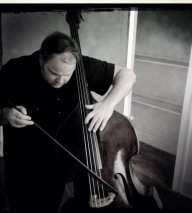
I was interested in finding more on playing in fifths on a bass but the website he listed at the end of the video takes me to a site that demands I install a web browser extension to continue. I suspect he hasn't paid his domain registration fees and someone took it over to go fishing (or "phishing"?) for people to install some spyware. Any idea where he's gone? Or a site with similar content?

I don't know if I'd tune in fifths like this as I'm just getting started. I am considering a small bass to save on space and weight. I'm just thinking that a tall guy like myself with a bass even slightly smaller than 3/4 might not find playing in fifths too difficult.

When I started taking lessons at the university the TA in charge of managing the instruments ran around to find the biggest bass they had. I quickly found that foot problems force me to sit to play. After that I think a smaller instrument might be better for me, "small" might still be considered a 3/4 but one that is perhaps on the shorter or thinner side. I've been playing while sitting on a stool that is 75 cm (29.5 inch) tall. That may actually be too high. I'm picking up lessons again after taking lessons about a year ago, and I don't recall how high the stool was that I used last time. I believe it was taller yet to better approximate standing but that put too much pressure on my feet and left me uncomfortable. I didn't measure the bass the university issued me this semester but I assume it's a 3/4 size. I'll still put the end pin out a few inches to play. If I need a shorter stool to sit comfortably and take the weight off my feet then I might need to get a slightly smaller bass or make some adjustment to how I play.

I'm considering an electric upright but I suspect there are people here that would want to talk me out of it. Am I right? I haven't decided on a budget yet but I've given myself a kind of time frame to buy. I'm not likely to buy a bass until I can convince myself I can play, so at least until summer when the semester ends. I don't want to be bass-less too long. That means continuing lessons next fall, or maybe summer, or buying my own.

PauFerro mentioned the possibility of building a bass from some premade parts. I'd consider that option too. That would not only allow me some freedom on getting something close to what I'd want to play but looks to be like a fairly inexpensive option and interesting project.

I know that's a lot there, ignore anything I wrote that's too far off topic for this discussion.
 
I am 186 cm tall and place both feet on the ground when playing seated. For that I prefer a stool of about 65 cm high. A 3/4 can be played in that position, but something smaller like a 5/8 is better suited. Most players playing bigger basses have higher stools and place at least one foot not on the floor, often leading to back problems because of the crooked position coming from that.
A normal 3/4 or even bigger bass can be played in 5th tuning. Best is to use a four finger technique with always just one finger down. Or use a Simandl hand shape with a Rabath pivot. Only if you want to use real Cello fingering with up/down extension,a smaller bass is needed (for that I use a 1/4 bass).
For Aomoris current page try
[Invalid or Expired Link Removed]
and for videos
Playthe5bass
 
Last edited:
  • Like
Reactions: Tom Lane
Thanks to PauFerro for directing me to this thread. Here is a clip of me playing an Ametto 1/4 size bass with a 35" scale. Nothing special about the performance, was late in the night and most everyone had left. Shows the proportion as I am six feet tall. Using a Krivo pickup on the bass, thanks also to Pau for that tip. Running into an Ampeg pf500 amp and a Fender Neo 115 cabinet. At this gig I was running my Fender pbass with gain and master volume halfway up on the amp, but needed to bump the gain up to almost three quarters for the Krivo. No preamp being used.
 
@PauFerro & @Jim Fenderman I will concede that you are both getting by in the videos. I know it has taken some time for PauFerro to post, so I don't want to be too harsh. Still, in the face of all the arguing, it is pretty much as imagined. A flat, one dimensional sound that is not a true double bass sound (those magnetic pick up sound terrible) and putting a lot of work and expense into something that could be done fine on a P-bass.

Neither performance has the nuance of true double bass playing and in the end sounds like bass guitarists "playing at" the double bass rather than playing it.
Of course there is a sense of time, song form and musicianship in both performances.
The only case that can be made here is that you can use these as a stand in for a bass instrument in a band.

As far as making a case for an entry to playing double bass I'd say you would still be at square one with any pro teacher - although they would likely be nicer about it than someone you've argued with for a year!
 
  • Like
Reactions: Tom Lane
@PauFerro & @Jim FendermanA flat, one dimensional sound that is not a true double bass sound (those magnetic pick up sound terrible) and putting a lot of work and expense into something that could be done fine on a P-bass.

Neither performance has the nuance of true double bass playing and in the end sounds like bass guitarists "playing at" the double bass rather than playing it.

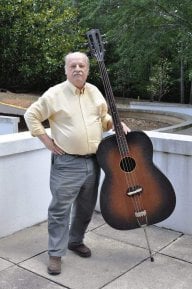
I think the sound and nuances are not so important. It is a pleasure for the musician and listener! The bass guitar will never give such a sensation of reality as a Double Bass. Even if DB is small.
 
Well, if I've learned anything from this discussion, it's that Double Basses come in a variety of sizes and can be played by a variety of bassists, in a variety of styles and settings, to create a very wide variety of sounds & music(s), some of which I like and some not-so-much.
Keep Calm (Or Not...) and Play Your Bass. (1/8 - 5/4!)

 
While we are subtle and not so subtle digs at each other, I would defend my above performance as meeting a high level of performance standards for that area of music - which I admit is not for everyone. It is less useful to compare to the other performances above, however.

I would offer these examples as extremely well played middle of the road jazz and pop at a pro level to compare to compare the examples @PauFerro posted to.

&
 
  • Like
Reactions: Tom Lane
I would like a less apples and oranges comparison. Not just pro versus non-pro but a more equal bass-in-the-mix selection and perhaps matching genres as well. The down-sized basses, with their expected emphasis on the mids, I am hearing much better than the 3/4 DBs, even though I know those are larger basses being played by more skilled players. But I cannot *hear* them, so no meaningful conclusions can be drawn.

And I do believe context plays a role. In an auditorium setting IMO the 3/4 is the way to go; that big body is needed.


But in a smaller context, I would be tempted to use a 1/4 played from the lap, using a lot of slides and left-hand vibrato like a fretless electric, as possibly here


and definitely here


where I honestly believe a 3/4 might be too much firepower for this ensemble and also that mids may better blend than deep lows. But then I don't look at my DBs as 3/4, 1/2, or 1/4; I look at them as auditorium (or concert hall) sized, busker, and large ABG.
 
While we are subtle and not so subtle digs at each other, I would defend my above performance as meeting a high level of performance standards for that area of music - which I admit is not for everyone. It is less useful to compare to the other performances above, however.

I would offer these examples as extremely well played middle of the road jazz and pop at a pro level to compare to compare the examples @PauFerro posted to.

&

Thanks!/Thanks?
 
  • Like
Reactions: PauFerro
Nonsense. Any of those qualities can be brought out on 3/4. It is common knowledge that a 3/4 is too small to contain the full range of the notes it has, you are just muddying the waters here as usual.
Fractional basses have the notes and can fill the role in certain groups so can a contra-bass clarinet, Basson, Sousaphone and guitarron.
The above posts are directed specifically at them as entry or replacement for the double bass for bass guitarists. They are not.


I would like a less apples and oranges comparison. Not just pro versus non-pro but a more equal bass-in-the-mix selection and perhaps matching genres as well. The down-sized basses, with their expected emphasis on the mids, I am hearing much better than the 3/4 DBs, even though I know those are larger basses being played by more skilled players. But I cannot *hear* them, so no meaningful conclusions can be drawn.

And I do believe context plays a role. In an auditorium setting IMO the 3/4 is the way to go; that big body is needed.


But in a smaller context, I would be tempted to use a 1/4 played from the lap, using a lot of slides and left-hand vibrato like a fretless electric, as possibly here


and definitely here


where I honestly believe a 3/4 might be too much firepower for this ensemble and also that mids may better blend than deep lows. But then I don't look at my DBs as 3/4, 1/2, or 1/4; I look at them as auditorium (or concert hall) sized, busker, and large ABG.
 
Nonsense. Any of those qualities can be brought out on 3/4. It is common knowledge that a 3/4 is too small to contain the full range of the notes it has, you are just muddying the waters here as usual.
Fractional basses have the notes and can fill the role in certain groups so can a contra-bass clarinet, Basson, Sousaphone and guitarron.
The above posts are directed specifically at them as entry or replacement for the double bass for bass guitarists. They are not.

Looked at one way, you are disagreeing with me. Looked at another, you appear to be concurring with some of my statements. But you are overlooking the principal point of my comment: your examples ill serve your intent because the videos you attached don't have bass that is very audible. In the one that features yourself, your left hand is all over the place -- formidable technique -- yet the notes are barely audible even if one is straining to hear them.

You have been after them, especially pauferro, to provide videos. They did, and although the videos are of less skilled players playing lower quality instruments, at least those basses can be heard. In spite of all their advantages, the ones in your videos cannot. They neither confirm nor deny whatever point you are trying to make.

And neither pauferro's nor Jim Fenderman's posts mention using anything as "entry or replacement for the double bass for bass guitarists." That is you, resurrecting a thread that was laid to rest some time ago. Even the guys on the electric side of TB know that EB and DB are quite different instruments.
 
This conversation has devolved into something I hesitate to even get back into. That being said I will comment anyway.

I have a problem with a lot of what has been recently said but most bothered by the insinuation that any 3/4 bass is better then these small basses. It's a huge generalization that has no basis. There is an entire world of plywood and hybrid basses that are one dimensional and lifeless. Not to say that they all generally are. But any comment that would put these fractional basses in the lack of depth camp can also be lumped with a large amount of cheap 3/4 basses that aren't that much different.

In Any case I make no assertion that my kolstein bussetto bass is going to compete with really great instrument acoustically but I can tell you it's a fine instrument with depth and nuance. Amplifies well and travels easily.

When this conversation is about ease of transport or amplifying it's valuable; when it gets into the it's easier for someone that plays electric it's really the wrong way to approach it.
 
But you are overlooking the principal point of my comment: your examples ill serve your intent because the videos you attached don't have bass that is very audible. In the one that features yourself, your left hand is all over the place -- formidable technique -- yet the notes are barely audible even if one is straining to hear them.

I didn't attach the video of me, Kasper did, it was a loud gig and I just plugged into a house Peavey amp. The bass is totally clear through headphones or stereo speakers, however. The "clarity" of the small basses in the videos come from the magnetic pick up not the instruments, let's not pretend.

The videos I posted of Kasper both have a beautiful bass sound heard clearly through decent speakers or headphones.

So, if you are trying to make some point about basses that can be heard through laptop speakers in live video recorded on phone - I don't think many of us are too worried about that, though again it has more to do with amplification than the fractional size of the instrument.