• TalkBass has been independent since 1998. Add your voice.
    Create a free account to reply to discussions, view embedded media, and browse with fewer display ads.
    Join freeLog in
    Want zero display ads or expanded classifieds tools? Compare plans.

Sonic Maximizer, is it worth it?

Wow, Frank...that's a heck of an explanation...thank you very much. So basically we're talking very slight delays that don't add up to anything for the typical listener as opposed to, say, backline sound vs. PA sound in a large room.

Exactly, the differences in the speed of sound between the different frequencies is insignificant as pglaser01 stated above.

But there are sound (time) delays that need to be considered in the listening environment. I am sure you are aware that the PA sound reinforcement set midway and at the back of arenas needs to be calibrated (delayed) to the time delay from the stage for clarity for the folks back there. It is also a feature in home theater receivers to calibrate the room with speaker placement.

-Frank
 
For a small gig PA with speakers on sticks, it was a nice and quick alternative to using a stereo 31 BAnd EQ and compression. For bass amp use, in general it was a waste of effort..
 
Also to remember...frequency will relate to energy rather than speed...think of light. Higher frequency light is more towards UV light which is higher energy. Lower frequency equals longer wavelength like infrared, lower energy.

2nd...how it made sense to the guy saying it made all frequencies leave at the same time I have no clue??? That insinuates that without one or before them, there would have been delays between instruments... that seems odd since latency probably would have caused a lot of mistakes and missed notes. Not to mention being completely unapealling to listeners if everything sounded off tempo
 
Maybe not needed for bass but the difference it made with my large church PA was huge for making muddy vocals sound clearer. All the eq in the world wasn't helping till we got the rack unit.
Some of the math you guys are using is way off. The speed of sound is extremely fast. We are not talking 5 or 10 seconds, we are talking about milliseconds. In our church it reduced the smearing of multiple echoes in the room by quite a bit.
 
I went looking for a recent thread on this subject. It is worth a read if you are considering buying this snake oil.
http://www.talkbass.com/threads/should-i-try-a-bbe-sonic-maximizer.1039324/
This video clearly demonstrates that is it not doing anything a simple shelving eq could do, but it is designed to cut your lows in bypass mode. That way when you switch it in you think it is adding low end.


Quoting this so maybe people will take the time to watch it. Demonstrates exactly why this thing is garbage.


Sent from my iPad using TalkBass
 
image.jpg

I JUST sold mine on CL!
Yeah!
image.jpg
 
Exactly! a dynamic high frequency expander. The video above does not demonstrate the dynamic HF aspects of this processor, because he is only using steady state amplitude for the input signal. Here is a copy of my post from the thread I linked to above:

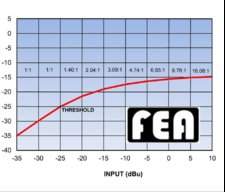
The BBE Sonic Maximizer uses a state-variable filter to divide the input signal into three bands (bass, mids and highs). It then remixes the bass signal (with its own level control) with the mids signal (no level control) and the highs "process" signal. The highs "process" signal has a level control along with a voltage controlled amplifier (VCA) that automatically adjusts the high levels.

BBE has JRC manufacturing most of the above circuitry on an IC, the NJM2153.

From the NJM2153 data sheet:
*************************************************
The NJM2153 is a sound enhancement audio processor for
professional audio equipments. It regenerates high definitive and
nearly real sound.

The internal VCA (voltage controlled amplifier) suppresses the
boost gain in high band to reduce noise when faint signals are
inputted.

The NJM2153 is suitable for mixer and effecter for musical
instruments, and high-end audio equipment requiring low distortion
and wide dynamic range.
**************************************************
The VCA on the high frequency band looks at the full-band input signal level and "turns-up" the high-band "process" signal level for stronger input signals and "turns-down" the level for weaker input signals. Acting more like a dynamic high frequency expander. If you look at the video again you will see the high frequencies flutter a bit as the signal generator sweeps the range. So there is a bit more going on than what he is demonstrating in his video. If he adjusted the generator levels you would have seen how the circuit was designed to operate.

I think that some people with a hissy signal chain may benefit from this processor, because it cuts HF levels for low amplitude signals. I had a guitar player in one of my bands that used it just for this purpose. It is a dynamic signal processor and does more than a simple EQ. If he demonstrated the dynamic functions of this processor it would have been an informative video... otherwise it is a misleading demonstration because he is entirely missing the scope of what this unit is designed to do.

-Frank

Quoting this so maybe people will take the time after watching that video to read why that video is misleading by not showing the dynamic aspects of this processor. The guy doing that video either had the intention to make you believe that the SM is nothing more than a 2-band EQ or he really didn't know about the dynamic function of the high frequencies... the whole purpose for this processor.

The SM does make for a decent hiss reducer for noisy signal chains.

-Frank
 
Thank you sir! It's good to get some expert angles on these things. I have an 882i, still in the box. :whistle: I was intending to use it mainly for tidying up some of my older audio relics, before they throw in the towel. But in an analog chain, and in mastering maybe too, I've got a hunch it might just come in handy.

 
Here is an experiment for anyone that is interested in hearing the phase relationships of pure tones.

http://www.falstad.com/fourier/

When you click on that link above a java app will launch that is a tone generator. The app defaults to square waves, so click the sine wave button on the right of the screen. Now the first tone slider of 220Hz will be all the way up… pull that slider back down to the zero (middle) position. Now click the “sound” box on the right of the screen so that the waveforms will be sent to your speakers. The second slider from the left in the “sines” row is 441Hz, slide that to the maximum up position (you may have to adjust your computers speaker level for an appropriate level).

Two sliders to the right of the 441Hz is the 882Hz slider. Turn up the 882Hz sines level to maximum, now you are hearing two pure sine tones. The result of the two tones is displayed on the top of the screen.

Now pull the 882Hz slider down to its minimum position. You are hearing the same two tones, but the phase relationships are completely different than before. The 882Hz tone is now 180 degrees shifted.

Now put the 882Hz “sines” slider in the middle position to turn it off. Under the “sines” sliders are the “cosines” sliders. Move your mouse to the fifth slider from the left in the “cosines” (882Hz) and turn it up and down to maximum and minimum positions. The cosine tone is shifting by 180 degrees.

This experiment is shifting the phase relationships of the two tones all over the place. The difference between sine and cosine is 90 degrees.

My cheap computer speakers and objects around my computer resonate differently with the different waveform amplitudes when the two tones are summed together, so I had to use headphones for a more accurate experiment. I chose 441Hz and 882Hz because they are exactly an octave apart.

-Frank
 
Does it make a difference? Yes, but you might not like it or need it. Not quite aural snake oil, but not a cure for every issue, either. In some cases, may create more problems than it solves, or have little effect. May actually induce listener fatigue, due to the frequencies it boosts.

Really, it's pretty subjective...the best way to know if it works for you is to try it.
 
I used one CONSTANTY for 2 years, but only in one context:

My church is amp-free, we go right into the DI to the board. Now, my old passive Jbass & Pbass don't necessarily love that situation, especially when I'm choosing NOT to use a preamp pedal, and my sound tech is a numbskull.

I put the sonic stomp at the end of my pedalboard, right before my radial j48, and left it always-on when I was in that particular situation. To me, it was a great solution to "amp-ing" my signal without an amp or a preamp. Was it really an "amped" signal? No. But with the slight boost and eq that the BBE delivered (combined with the 48v DI) it did the trick.

I have NEVER used it when playing in any other "normal" situation where I have my amp, as u don't really need it at all.

If the FOH knew what he was doing, this wouldn't be an issue and I'd never have needed the BBE. These days, I have given up the sonic stomp. Sold it. If I'm playing without an amp, I just insist on a good bass soundcheck. There's no reason we need to add things like sonic maximization to our signal if the FOH is good (or if we're playing with amps)

Thank God for talented sound men!!
 
I don't have fancy info or scientific evidence, and I am by no means an audiophile, but I have used a Sonic Stomp pedal for years and can't (or don't want to) live without it. Perhaps it's just the sound I prefer, or that I use SS heads mainly, who knows. Combined with a LMB Limiter Enhancer pedal, it really steps up my sound.

That said, there are two applications for it in which I have had mixed results. I have played with it two different ways: 1) isolated in my effects loop and 2) at the end of my pedal chain

When I used it with my old Ampeg SVT-450H, I found it was slightly better in the effects loop (although barely noticeable differences). In my GK MB500, I don't like it in the fx loop at all, it sounds MUCH better (to me) at the end of my chain.

I don't have top-end gear either, so perhaps that plays a factor (ie. it makes my mid-tier gear sound better).

Anyway, that's my experience. Take it for what it is worth
 
I am happy to see that most of you understand that the BBE spiel on the sonic maximizer is total snake oil. The "phase correction" they describe is the phase rotation that occurs in ANY equalizer. I do have to admit that the writing was very creative. I am sure that they had a lot of laughs while creating it. It's like a satirical article for The Onion.

The Aphex process is totally different. It creates new harmonics based on the existing sound and adds them back into your sound. The BBE process was created to compete with Aphex, but they couldn't do harmonics, as this is patented by Aphex, so they did a high frequency expander instead, and created this fantastic "time alignment" description because no one would buy it if they just said it was a HF expander. I was developing studio gear at the time, and we have analyzed both processed in detail.
 
I don't really use it on bass.

best uses I've had for those things is when I record something quickly, and when I go to mix, the signal doesn't have enough of something, so I slap the bbe on the insert, fiddle with it for a few seconds, and it does tend to help.

a stereo limitter & a bbe are known as ghetto mastering tools, but they do work.
 
It doesn't make the sound objectively better or worse. It has a very specific effect on the sound that you will notice immediately. Whether that change is an improvement will differ for everyone. For me, I can hear it, I can respect it, but it doesn't make the sound I want to hear, so I don't use it.
 
I used to own one. I liked it for a live FOH mix. Not into it for guitar and bass. Bass guitar cuts through at various points of the midrange, not really the highs. You may like it if you pop a lot, but otherwise I'd say don't bother.
 
I found the BBE to be fairly useless. The aphex can come in handy in some situations. It can add a nice touch (sometimes) to sample based synthesizers or loops both live and in the studio. I find it to be the bee's knees on Roland V-drums. It really opens them up, makes them sound more realistic. German audio company SPL makes a unit somewhat similar to the aphex called the Vitalizer which sounds quite good on bass tracks. When you need to unbury a bass track from a busy mix, but EQ changes are interfering with the track's character too much, the SPL can come in quite handy, but it can be finicky and hard to dial in.
 
The video was very interesting. The BBE has a new concept - improving your bass in the IN position by reducing bass in the OUT position! Sure it is going to sound better!!! HA!
The test in the video missed a very important part of the BBE process - the HF boost is dynamic - it increases even more as the HF input increases - a sort of reverse compressor.

re: The Vitalizer - this is another type of dynamic EQ - only the Aphex Exciter unit (and some of the early Behringer rip-offs) generate new harmonics.
 

Latest posts