
Enjoy the benefits of a premium membership!
Upgrade Account
-
TalkBass has been independent since 1998. Add your voice.
Create a free account to reply to discussions, view embedded media, and browse with fewer display ads.
Join free Log in
Want zero display ads or expanded classifieds tools? Compare plans.
You are using an out of date browser. It may not display this or other websites correctly.
You should upgrade or use an alternative browser.
You should upgrade or use an alternative browser.
Source of the P-sound
- Thread starter kampfgolem
- Start date
More options
Who Replied?

You can hit some pretty high notes without ever venturing past the 5th fret. They're called harmonics.

Liam Wald said:You can keep a solid bass line going by covering the 1/4 notes. I am not constantly soloing. In fact I seldom solo at all. I am a solid R&B groove player, but I play a lot of fills and 64th note arpeggios that end up at the top. I like being able to go all the way to the second octave on one string.
Got your point.
In fact, I do use all the 22 frets of my P plus for the same thing!

... I play a lot of fills and 64th note arpeggios that end up at the top. ....
 Man, you've got some technique there!
....no, you cannot play a P-bass without the Pickguard. The pickups and electronics all sit in one exposed rout.

....no, you cannot play a P-bass without the Pickguard. The pickups and electronics all sit in one exposed rout.
It depends on what year the bass was made. Some are not like that.

- Feb 16, 2008
- 21,240
- 23,636
- Disclosures
- John K Custom Basses
....no, you cannot play a P-bass without the Pickguard. The pickups and electronics all sit in one exposed rout.
sure you can. you just need a control plate for the pots and jack. the pickups are screwed directly into the body.
depending on the year and model, some of them have an exposed route for the leads from the pickup to the pots, but others don't. and same goes for the jazz bass.

Bend it till you get that 2nd octave!
So true. If I need to get to that high E on my P or Jazz, Ill just bend to it

As far as the number of frets go, some people have different style that require playing in a higher register; it can be a "just in case" application, but very proficient bassists (Jaco Pastorious) and not so proficient, but equally famous (Peter Hook), both played above the 12th fret.
But as far as the definitive "P-bass sound", as compared to a lot of other basses, is, also that the electronics are in a series circuit, rather than a parallel, like a jazz bass is wired in. I don't know from experience, but from what I've read, having alternate circuit paths can alter the tone in the lower-midrange/bass frequencies. The P-bass pick-up is pretty much in the same position as the neck pick-up in a jazz bass, so if the sweet-spot were really the case, then jazz basses would sound pretty similar to a Precision, if the neck was soloed. I'm working on my own Jazz bass by putting in Dimarzio model J's, which are split-coil and individually humcancelling, just like P-bass pickup, and putting in a push-pull pot to variate the circuit pattern, so it can travel in series. Hopefully, it will sound similar to a P-bass, because that's the only other factor that keeps it from sounding different from a Jazz bass. Body and neck shape play a minimal part in tone production...now body/neck materials on the other hand...
But as far as the definitive "P-bass sound", as compared to a lot of other basses, is, also that the electronics are in a series circuit, rather than a parallel, like a jazz bass is wired in. I don't know from experience, but from what I've read, having alternate circuit paths can alter the tone in the lower-midrange/bass frequencies. The P-bass pick-up is pretty much in the same position as the neck pick-up in a jazz bass, so if the sweet-spot were really the case, then jazz basses would sound pretty similar to a Precision, if the neck was soloed. I'm working on my own Jazz bass by putting in Dimarzio model J's, which are split-coil and individually humcancelling, just like P-bass pickup, and putting in a push-pull pot to variate the circuit pattern, so it can travel in series. Hopefully, it will sound similar to a P-bass, because that's the only other factor that keeps it from sounding different from a Jazz bass. Body and neck shape play a minimal part in tone production...now body/neck materials on the other hand...
Bend it till you get that 2nd octave!
From the 5th fret, of course. Can't go past that.


It's not just the pickups and the placement, it's the shape of the guitar and the neck and the wood used. I don't think you could just throw a P-Bass pickup on ANY bass, in the proper position, and get the P-bass sound. It's a whole system.That's why, if you are a sensitive player with good ears, you should hear and feel a little difference between the real Fender P's and the Squires, which are a slightly different design. They don't feel the same to me ...... I try them out without an amp to get the real feel of the instrument and the vibe of it. You need a quiet room for this.
As somebody in the recording industry said, "A precision bass sits in the mix like a cold beer in a glass." Nothing else records like it ....
Turtle
Yep. I am actually suprised someone has the same ideas as me. Around here, that is highly unusual.

[Invalid or Expired Link Removed] should be sufficient, and you get a P-bass and a Jazz all in one.
Invalid Link Removed
Invalid Link Removed
Thanks for all the quick replies...We do a bunch of drums+bass moments, and lots of "Open-E-Heavy-as-Hell" moments where having that high E (only available at the 21st fret - I do some harmonic work, but it's an entirely different sound) is a must
I was thinking about a P/J configuration too, since I like the sound of the Jazz Neck, but unfortunately the only ones from Ibanez that come to mind are Gios. ......:/
Historically speaking there's a host of Ibanez Precisionish Basses, some being more traditional than others. The number of frets and size of pickguard varied over the years.
I've NEVER had an Ibanez neck that felt "too big", although size does vary depending on age/model.
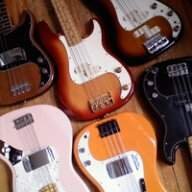
Here's a few I used to own(that have at least 21 frets
 ):
):


