• TalkBass has been independent since 1998. Add your voice.
    Create a free account to reply to discussions, view embedded media, and browse with fewer display ads.
    Join freeLog in
    Want zero display ads or expanded classifieds tools? Compare plans.

Special Edition Build Off - Ampeg AEB lookalike

With upfront apologies to @Bruce Johnson, I encourage him to avert his eyes while I make a pigs ear out of a silk purse.
This is what it's SUPPOSED to look like:
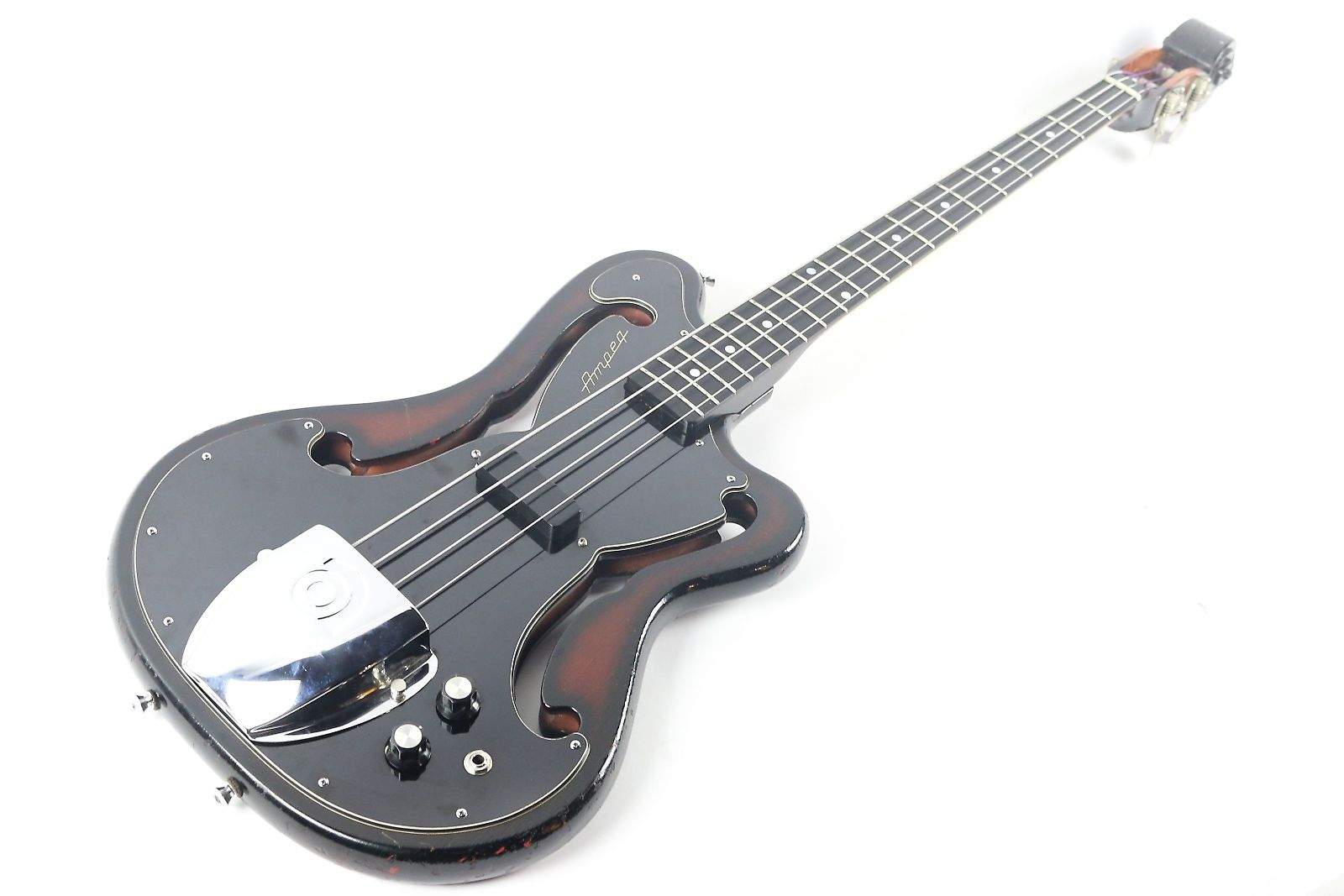
AEB.jpg


This is what it currently looks like:
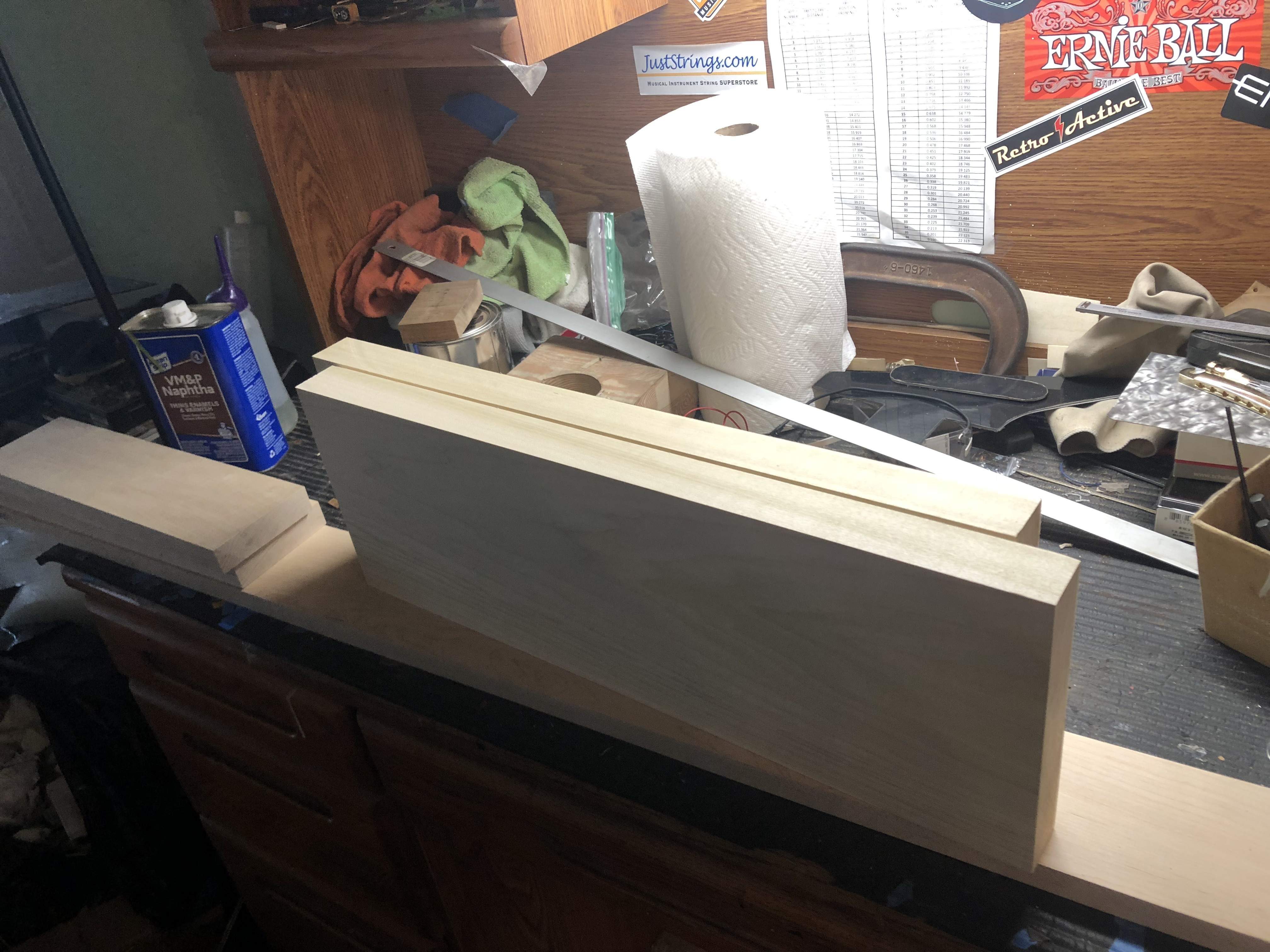
IMG_2429.jpg


That's a poplar body and maple neck.

Not to worry, I have a hi-tech paper cutout to work from:
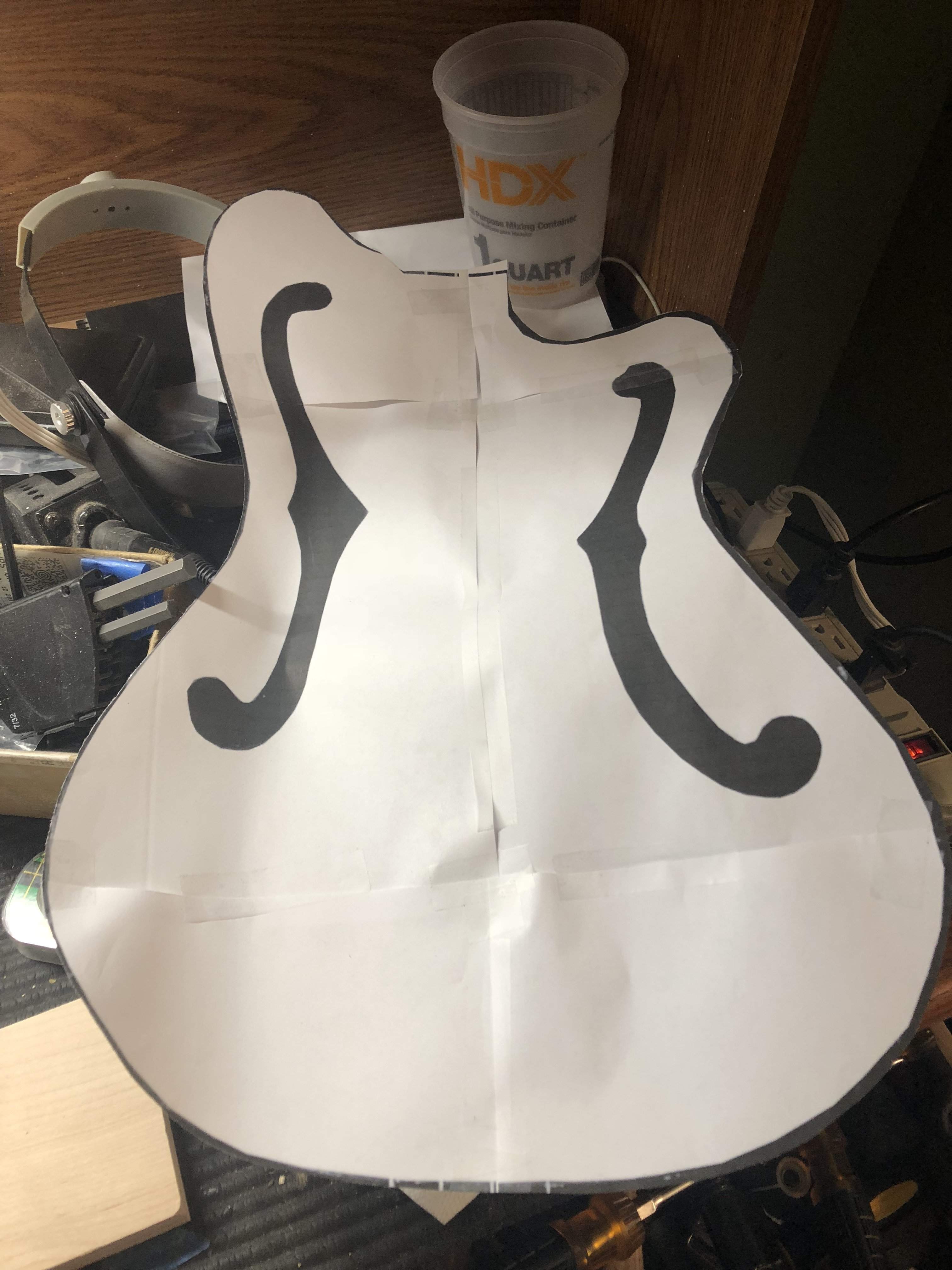
IMG_2430.jpg


The giant pickguard is proving to be a challenge, Bruce was nice enough to give me a source but they have been pretty unresponsive.

I'm pretty sure I'll be deviating from the classic method these are put together but then again, deviancy is a specialty of mine.
 
I'd think about a way to artfully include a break in the ginormous pickguard rather than trying to source a single piece.
I have considered it, but it's THE structural integrity in this bass. One of the things I like about the appearance so I'm unlikely to compromise there. I will find some if I have to buy a 4' x 8' sheet of the stuff.
 
  • Like
Reactions: TN WOODMAN
A few suggestions:

1.) A couple of years back, Chris Stambaugh made up a custom Ampeg-themed bass. Instead of a pickguard, he inlaid a solid contrasting wood into the face of the body, in the shape of the pickguard. Flush with the surface. Then he used a removeable wood panel on the back for the controls. It took some skilled woodworking, and it was handsome looking.

2.) Make a wood veneer pickguard. I've made up a couple of walnut ones. I bought a sheet of 1/16" black Garolite from McMaster-Carr as the structural backing. I epoxied the walnut veneer to it.

3.) Use 1/8" black Garolite by itself for the pickguard. It's not high gloss like the normal black vinyl pickguard material; it has a lightly textured semi-gloss sheen. It's very strong and scratch resistant. It's not a laminate, no white layers, just solid black. I've considered using it on my Scroll basses. It's not cheap, but it's available in small sheets from McMaster.

4.) Black acrylic (Plexiglas) is an option too. I don't like it because it's too brittle; easy to crack and break. It doesn't take stress well.

5.) If you really, really get desperate, I have a stack of at least 50 surplus vinyl Scroll Bass pickguards collecting dust. I had them made up on custom order by Chandler back around 1998, for my early Series I models. They are the same size and shape as the original Ampegs, although they have a non-standard rectangular pickup cutout, holes for a custom bridge, and a notch at the back for an inset tailpiece. They are brand new, and of no use to me. I could send you one.

But....That would be cheating! I'd much rather see you do something creative on this project, like what I listed above.
 
OK, here's where we go off the reservation. Plan B is to use perspex for a pickguard ( because I don't want to pay $75 for a big sheet of B/W/B pickguard material. So plan 1 is to try and make this walnut top work. I have every expectation that the top left corner will break off when I shape it but there's always Titebond :)

If I never mention this again, it's because it was a horrible failure!

walnut top.jpg
 
About the Scroll Inserts (the rosettes in the headstock):

In the original Ampegs, the scroll inserts are cast from black-tinted hard epoxy. They routed a shallow recess in each side of the headstock and glued them in.

On my Scroll Basses, I use three different methods to make them:

On my earlier Series I - Series IV headstocks, I machined the scrolls right into the headstock. That is, they are part of the headstock's maple block. I made up some complicated routing fixtures with eccentric rings on the bases to cut the main round rings. Then a whole lot of hand shaping and sanding. A lot of labor.

On my Classic AMB-2 models, I switched over to the way Ampeg did it. The scroll inserts became separate parts, glued in. I machined up an aluminum master in a lathe, and made a silicone rubber mold from it. Then I cast the parts in black hard polyurethane. Nice crisp parts, much more durable than the wood, and a fraction of the labor to make.

On my Walnut AMB-2 models, I worked out a way to keep the inserts as separate parts, but machining them from walnut. I use one of my large metal lathes to slowly turn the wood block, with a small router head mounted in the tool post. This works pretty well, and they don't take too long to make. But the walnut inserts are a little rough and fragile, easy to chip.

Coming up on my Walnut models, I'm planning to try a hybrid idea. I'll machine up a master insert from walnut, and make it clean and perfect. Then make a silicone mold from it, and cast the parts from dark brown polyurethane. Hopefully, they will have all the grain texture of the walnut, and look like walnut when the finish is on the headstock. But they will be tougher and more durable, and much faster to make.

For your one-off bass, you could try machining them from blocks of maple. Tape a disk of maple onto something that turns slowly. Then go at it with a Dremel tool and a ball-end cutter bit, holding it and controlling it tightly as the disk turns. It may take a few test pieces, but you can "router turn" parts like that.
 

Latest posts