I do on most of my basses. I'm not skittish about adjusting them though, so I tweak them every so often as needed.

Enjoy the benefits of a premium membership!
Upgrade Account
-
TalkBass has been independent since 1998. Add your voice.
Create a free account to reply to discussions, view embedded media, and browse with fewer display ads.
Join free Log in
Want zero display ads or expanded classifieds tools? Compare plans.
You are using an out of date browser. It may not display this or other websites correctly.
You should upgrade or use an alternative browser.
You should upgrade or use an alternative browser.
Spring & truss rod adjustment
- Thread starter bulldean
- Start date
More options
Who Replied?

Not really. I own more than a dozen basses , imagine having to set-up each one when the seasons change!!
High action ? No problem ! Nowadays I’ll only do a setup if the action is so low that every time I fret a note I only get fretbuzz from the 12th fret.
I have a whole lotta basses, too ... a few of which require minor tweaks with the change of seasons. I've made a concerted effort to purchase basses with truss rod access slots or rout them myself as it is WAY, WAY, WAY easier to make the required neck relief tweaks if you don't have to remove the neck to do them. However, in recent years, I've taken to gigging with my basses that vary with the seasons only when they're playing their best. This gives me a chance to spread my attention around to all my other basses and my basses that get off the mark a bit almost always return to their former glory totally on their own.
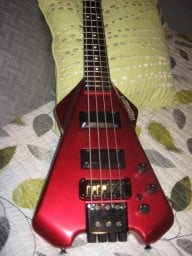
I usually only do a truss rod tweak when changing strings, i have lots of different styles of basses. Lots of temp and humidity swings here in MI.
Pretty substantial swings in average humidity here, winter to summer. Twice a year, or after making a change in string gauges. No biggie, once you know how. Erm, provided your bass(es) have decent access to the trussrod nut--ain't the vintage Fender screwdriver slot, IOW. That's a booger.

Whoever said that Kubickis, with their 32 ply laminated necks, don't need seasonal adjustments has never owned one over the course of a couple of seasons.
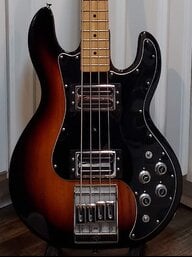
Yes it is. I have a Fender 60s J and I won't touch that. I really like that bass and I don't want it to be the guinea pig bass.Pretty substantial swings in average humidity here, winter to summer. Twice a year, or after making a change in string gauges. No biggie, once you know how. Erm, provided your bass(es) have decent access to the trussrod nut--ain't the vintage Fender screwdriver slot, IOW. That's a booger.


Ric5
Inactive
- Jan 29, 2008
- 29,772
- 30,452
- Disclosures
- I like 5, 8, 10, and 12 string basses
Does anyone else have to adjust the truss rod on your bass when the season changes?
I own several basses and they all need to be adjusted at least twice a year.
The reason is basses have wood necks, wood expands with humidity and contracts with low humidity. When the wood contracts you need to tighten the truss rod and when the wood expands you need to back off the truss rod.
If you store a bass in a humidity controlled room 35% to 50% 365 24/7 then you would theoretically never need to adjust the rods again. But the only people that do that are rich collectors.
Also if you change strings to a different brand or gauge then you need to do an adjustment as well.
Last edited:

Does anyone else have to adjust the truss rod on your bass when the season changes?
Yep, I do. I disassemble everything, loosen the rod and let it all settle before starting over.
The reason the neck moves is not so much to do with a change in temperature or season, it is the HUMIDITY change that causes the neck to move.
The fingerboard absorbs moisture from the air when it's humid, and it causes it to reverse bow, because the fingerboard expands from the added moisture more easily than the neck itself, which is more impervious to the moisture entering since the neck is fairly well sealed, whereas the fingerboard is full of slits that let moisture in. This fingerboard expansion and it's resulting reverse bow causes buzzing.
In winter, the fingerboard dries out and therefore shrinks, causing the neck to curl upward, giving you high action.
If you have an untreated softwood fingerboard (rosewood, pau ferro, ebony), its ability to gain and lose moisture can and should be limited if you keep it well oiled, such as with food grade mineral oil (sold as a laxative in the pharmacy), or Dunlop 65 or other such lemon oil product. This is a mandatory maintenance step that too many people ignore.
If you have a maple or treated fingerboard, don't bother oiling it since the oil won't soak in.
I invested in a dehumidifier (for summer) and a humidifier (for winter), and now I never, ever have to touch any truss rods, and almost never even have to even TUNE any of my basses or guitars. With over 100 stringed instruments in the room, this became a matter of necessity, otherwise I would spend my entire life doing setups and would never get to play anything.
Without the humidity control equipment, the humidity in the room would vary from 19% in winter to 85% in summer.
With the equipment, the humidity in the room fluctuates from 46% to 48%, and never moves outside of that range.
Both my humidifier and dehumidifier are "set it and forget it", completely hands free and maintenance free, which is totally awesome. Even if I go away for a few days, they keep working. They were not cheap, but I would buy them again in a heartbeat if I had the decision to do over again.
The fingerboard absorbs moisture from the air when it's humid, and it causes it to reverse bow, because the fingerboard expands from the added moisture more easily than the neck itself, which is more impervious to the moisture entering since the neck is fairly well sealed, whereas the fingerboard is full of slits that let moisture in. This fingerboard expansion and it's resulting reverse bow causes buzzing.
In winter, the fingerboard dries out and therefore shrinks, causing the neck to curl upward, giving you high action.
If you have an untreated softwood fingerboard (rosewood, pau ferro, ebony), its ability to gain and lose moisture can and should be limited if you keep it well oiled, such as with food grade mineral oil (sold as a laxative in the pharmacy), or Dunlop 65 or other such lemon oil product. This is a mandatory maintenance step that too many people ignore.
If you have a maple or treated fingerboard, don't bother oiling it since the oil won't soak in.
I invested in a dehumidifier (for summer) and a humidifier (for winter), and now I never, ever have to touch any truss rods, and almost never even have to even TUNE any of my basses or guitars. With over 100 stringed instruments in the room, this became a matter of necessity, otherwise I would spend my entire life doing setups and would never get to play anything.
Without the humidity control equipment, the humidity in the room would vary from 19% in winter to 85% in summer.
With the equipment, the humidity in the room fluctuates from 46% to 48%, and never moves outside of that range.
Both my humidifier and dehumidifier are "set it and forget it", completely hands free and maintenance free, which is totally awesome. Even if I go away for a few days, they keep working. They were not cheap, but I would buy them again in a heartbeat if I had the decision to do over again.
Last edited:
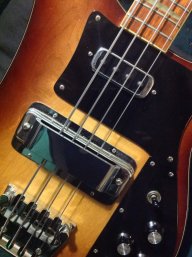
The humidity answer raised a couple of questions in my mind:
1) The neck on a Rickenbacker, such as my '15 4003, which needs seasonal adjustment, is sealed up pretty well; even the fingerboard has a heavy coat of finish. I don't think there is any part of it without finish on it. Does the humidity cross the finish barrier and still absorb into the wood?
2) Then why does my '83 4003 with the old-style hairpin truss rods never, ever need adjustment?
1) The neck on a Rickenbacker, such as my '15 4003, which needs seasonal adjustment, is sealed up pretty well; even the fingerboard has a heavy coat of finish. I don't think there is any part of it without finish on it. Does the humidity cross the finish barrier and still absorb into the wood?
2) Then why does my '83 4003 with the old-style hairpin truss rods never, ever need adjustment?
I /check neck/tweak every string change. Dynamic climes require more, but even in a static environment sometimes going from one extreme directly into another (warm/hot vehicle into cold AC venue) may-may-require it.

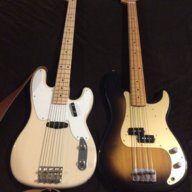
As mentioned, only my P Bass was affected somewhat but only because the action is set very low to begin with so any ever so slight bowing on the neck will affect the action of the strings and cause fret buzz. I probably should raise the action a bit but I've gotten used to having it this low.
You didn’t say your location, but if you experience different seasons you’ll likely have to adjust the rod twice a year. On my basses with the adjustment at the heel I tend to go with different tension strings in the winter and summer and live with slightly different action.

Yes usually I make seasonal truss adjustments. Wood shrinks slightly in the dryer winter allowing the steel truss to slacken a bit. Summer humidity swells the wood slightly. The steel truss of course remains stable. Result is a tighter truss adjustment. My piano also goes flat in the winter as the sound board and bridge dry and shrink. I like to think of this as the "shrinkage factor".

Yes, my Ltd got new strings and a set up 2 months ago. I keep the strings on it really low. Too much buzz now with the heat and humidity. Time to loosen the truss rod a bit.

I keep my basses in a room with a humidifier and maintain 45% humidity and almost never have to adjust a truss rod. I live in Texas where we run A/C all Summer and that really lowers the humidity. I bought the humidifier after one of my guitars developed fret sprout and that solved the problem.
I freely admit that it is a bit of a pain to keep a humidifier working correctly but for me it is worth it.
I freely admit that it is a bit of a pain to keep a humidifier working correctly but for me it is worth it.
Yes, twice a year for most of my basses.Does anyone else have to adjust the truss rod on your bass when the season changes?


