
If the bass doesn't inspire you to play in some way, you don't buy it in the first place. If it's pretty good, but there's one little thing that bugs you, then you change that one little thing - thats your upgrade. If, when you play it at the store, you start thinking "well, if I change these 3 things", maybe you should buy a different bass. In no circumstances would I buy a bass where the thing I need to change is the neck - that's the heart of a bass, and if it ain't right, I'd walk.

Enjoy the benefits of a premium membership!
Upgrade Account
-
TalkBass has been independent since 1998. Add your voice.
Create a free account to reply to discussions, view embedded media, and browse with fewer display ads.
Join free Log in
Want zero display ads or expanded classifieds tools? Compare plans.
You are using an out of date browser. It may not display this or other websites correctly.
You should upgrade or use an alternative browser.
You should upgrade or use an alternative browser.
Squire Affinity JB upgrade
- Thread starter Wyatt Walker
- Start date
More options
Who Replied?
Maybe.+1.
Selling the Affinity + your $200 will get you a much better bass (and then you can consider modding that one later).

I was keeping my first bass as a practice bass for maintenance, until I installed Fender pure vintage 72 jazz pickups. Honestly, this is an Ibanez GSR180, cheaper than a Squier. It now sounds every bit as good as a MIA Fender, is light as a feather and has a fast neck. It's now a keeper. I have also upgraded the bridge and am slowly shielding the cavity. If the bass body and neck feel good, then upgrading is a good way to go. If there is a little voice in your head saying "it's good but I wish..." then maybe you want to consider selling and getting something better.


What are the best ways to upgrade this model...
Bridge, nut, PU's, strings?
Sell it and get a Player model.
Not trying to be a smart-ass, I spent a lot of money "upgrading" an Affinity once, and in the end it sounded better stock Than with all the shite I put on it. It never had a truly jazz bass sound. It played great. It was a Chinese version.
I like the player series a lot. By the time you get the Affinity to where it might ought to be, you'll have paid more than the Player.

Strings first. All other things will be a minor improvement at best especially if you aren't playing the strings you like in the first place.
From there, figure out what you don't like about the bass. Sure, maybe some affinities have tuners that don't hold a tune that well - but if the tuners are fine, why would you replace them? Maybe the bridge needs replacing because a saddle screw got rounded out when you were adjusting the action and intonation. Why bother spending a hundred bucks on a bridge if the bridge is fine? The pots might crap out on you, and the pickups probably aren't the best - but again, if the pots are fine why change them, and further, a pickup could be had that might produce a sound that's right up your alley - but until you figure out what the bass's shortcomings are and your goals with new components - what's the point in trying to fix them?
Get cozy with your affinity - if it ain't broke, don't fix it.
From there, figure out what you don't like about the bass. Sure, maybe some affinities have tuners that don't hold a tune that well - but if the tuners are fine, why would you replace them? Maybe the bridge needs replacing because a saddle screw got rounded out when you were adjusting the action and intonation. Why bother spending a hundred bucks on a bridge if the bridge is fine? The pots might crap out on you, and the pickups probably aren't the best - but again, if the pots are fine why change them, and further, a pickup could be had that might produce a sound that's right up your alley - but until you figure out what the bass's shortcomings are and your goals with new components - what's the point in trying to fix them?
Get cozy with your affinity - if it ain't broke, don't fix it.
Which? I kind of think of those two things as different symptoms. Microphonic means the pickups hear things other than the strings... like you can talk near the pickups and hear your voice in the amp's output. I mean, you can with lots of pickups, but some are far worse than others in that way. Microphonic also can mean whistling feedback when turned up, or possibly howling feedback down low.It's a little 'boomy' or microphonic, the tone is not bad but can be improved.
Booming though - that's interesting. I wonder if that's a setup thing? or possibly an amp thing? What other basses have you tried playing through your current amp setup in it's location (in your home)? Like, if you haven't tried other basses in your setup, it could be the amp or it's settings or the location in the room, not the bass.
Also, the P pickup might be too close to the strings - I often put bridge pickups as close as possible and neck pickups further down, but balance between them is super important.
With well matched pickups (both electrically speaking and output level and tone-wise), you should be able to have them get similar output levels soloed, then blend really well together. But some pickups aren't well matched and that never works right.
One would THINK that those stock pickups are well matched, since the company that made the bass isn't stupid.
But setup could still affect things badly.
I owned an affinity jazz bass 5 string - it sounded like crap when I got it (For like $20 from a kid). I set it up like crazy (shimmed neck cuz couldn't get proper setup angles otherwise), adjusted bridge saddles, intonation, filed nut slots some, filed a couple of high frets in the upper octave (where they typically aren't well levelled on cheaper basses), and then put on a nice set of strings (I think I probably used elixers... that was back in one of my elixer periods). I also setup pickup heights - listening to only neck pickup, raise it as much as possible until it starts to sound bad when playing up the neck, then lower it a spec until it sounds great no matter where you play it, and so it isn't too high to mechanically get in the way when slapping or playing hard with fingers. Then I transitioned back and forth with only neck pickup then only bridge pickup, adjusting bridge higher and higher until it's level matches or very slightly exceeded that of the neck pickup (personal taste), and then put them both on full , made sure it sounded awesome, and voila. It because an excellent instrument that i'd be perfectly happy recording with or gigging with. I sold it for a profit (made like a hundred bucks! LoL).
I know the 4 and 5 string ones have different hardware (tuners, pickups), but I'm sure the 4 can be setup to sound great also.

May I also add to the argument that installing new stuff and learning to adjust it properly is very rewarding on its own, and is definitely a worthwhile skill in this hobby. An affinity is an excellent starting point for this, imo, since theyre so modular and parts are readily available.

I think if you want to learn how to do it, learn how to do it on an Affinity. If you're going to pay people to do it, just get a bass that is closer to what you want.
First stop would be assess and "mod" the points that affect playability- fret ends, fret leveling , neck finish, setup.
Maybe a new nut if needed (for proper setup,) or a hi mass Bridge can balance out those very light bodies (this saved one of my Squiers!) Tuning machines if it won't stay in tune. But, If it ain't broke...
Then electronics. Those pots and jacks are pretty cheap-o, yet low cost to swap out. If you're gunnin' for new pickups, I'd cruise the TB Classifieds (just saw a set of American Performer Jazz for $55.)
But, if you're gonna go Motown- flats, roll off the treble, foam mute- why bother?
strings, 100%. Cheap and easy route to a better tone.
BUT... IMHO: Having a tech do all this take the value out of it, and frankly, takes the fun out of it! Modding basses is a gamble, but can be a rewarding and educational experience. If you're paying bench time fees, that puts me in the "just buy a better bass" camp
good luck, and welcome to talkbass!
Maybe a new nut if needed (for proper setup,) or a hi mass Bridge can balance out those very light bodies (this saved one of my Squiers!) Tuning machines if it won't stay in tune. But, If it ain't broke...
Then electronics. Those pots and jacks are pretty cheap-o, yet low cost to swap out. If you're gunnin' for new pickups, I'd cruise the TB Classifieds (just saw a set of American Performer Jazz for $55.)
But, if you're gonna go Motown- flats, roll off the treble, foam mute- why bother?
strings, 100%. Cheap and easy route to a better tone.
BUT... IMHO: Having a tech do all this take the value out of it, and frankly, takes the fun out of it! Modding basses is a gamble, but can be a rewarding and educational experience. If you're paying bench time fees, that puts me in the "just buy a better bass" camp
good luck, and welcome to talkbass!
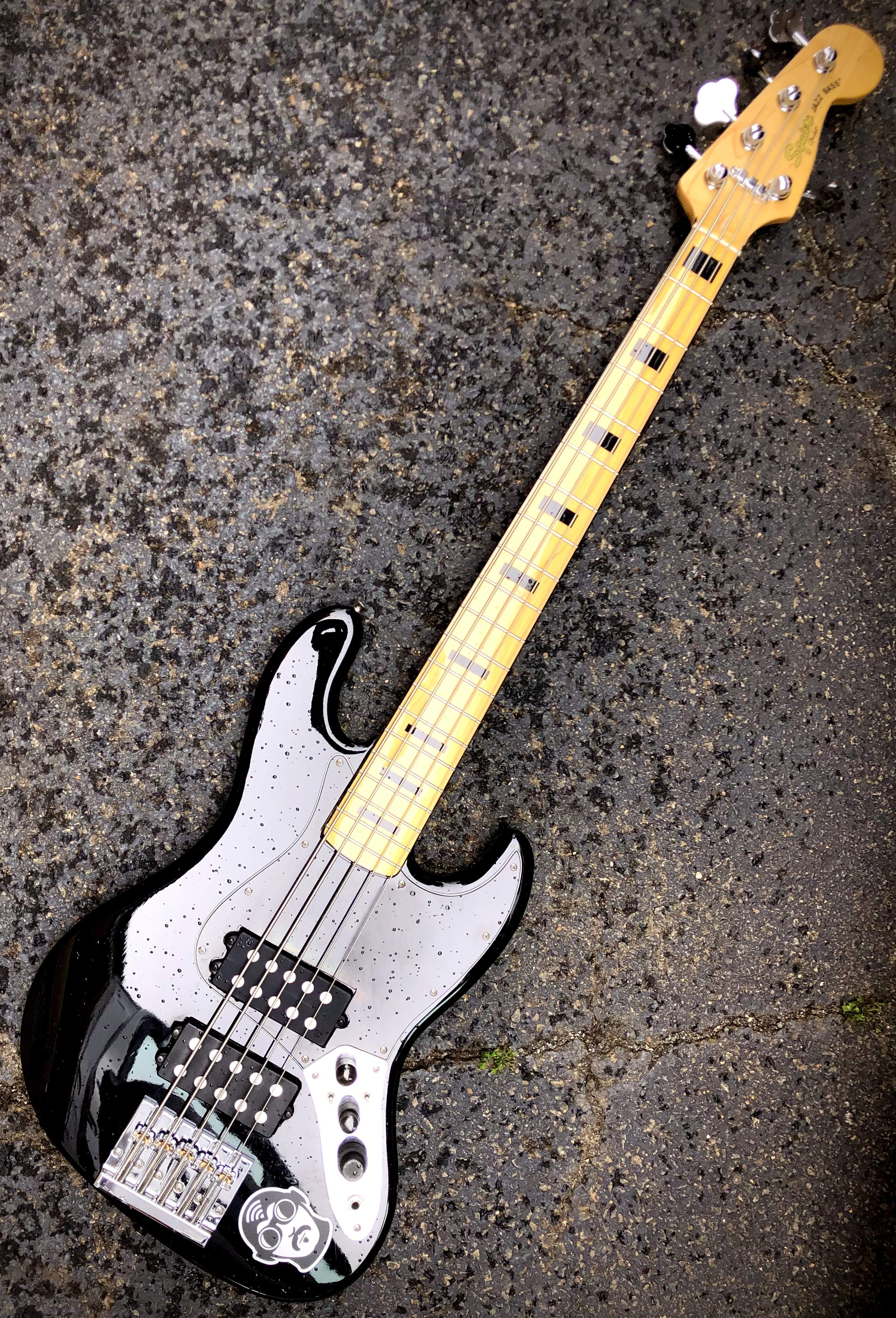
The Affinity IS a good modding platform. I have two.
Modded to Hell:
Somewhat minimally modded:
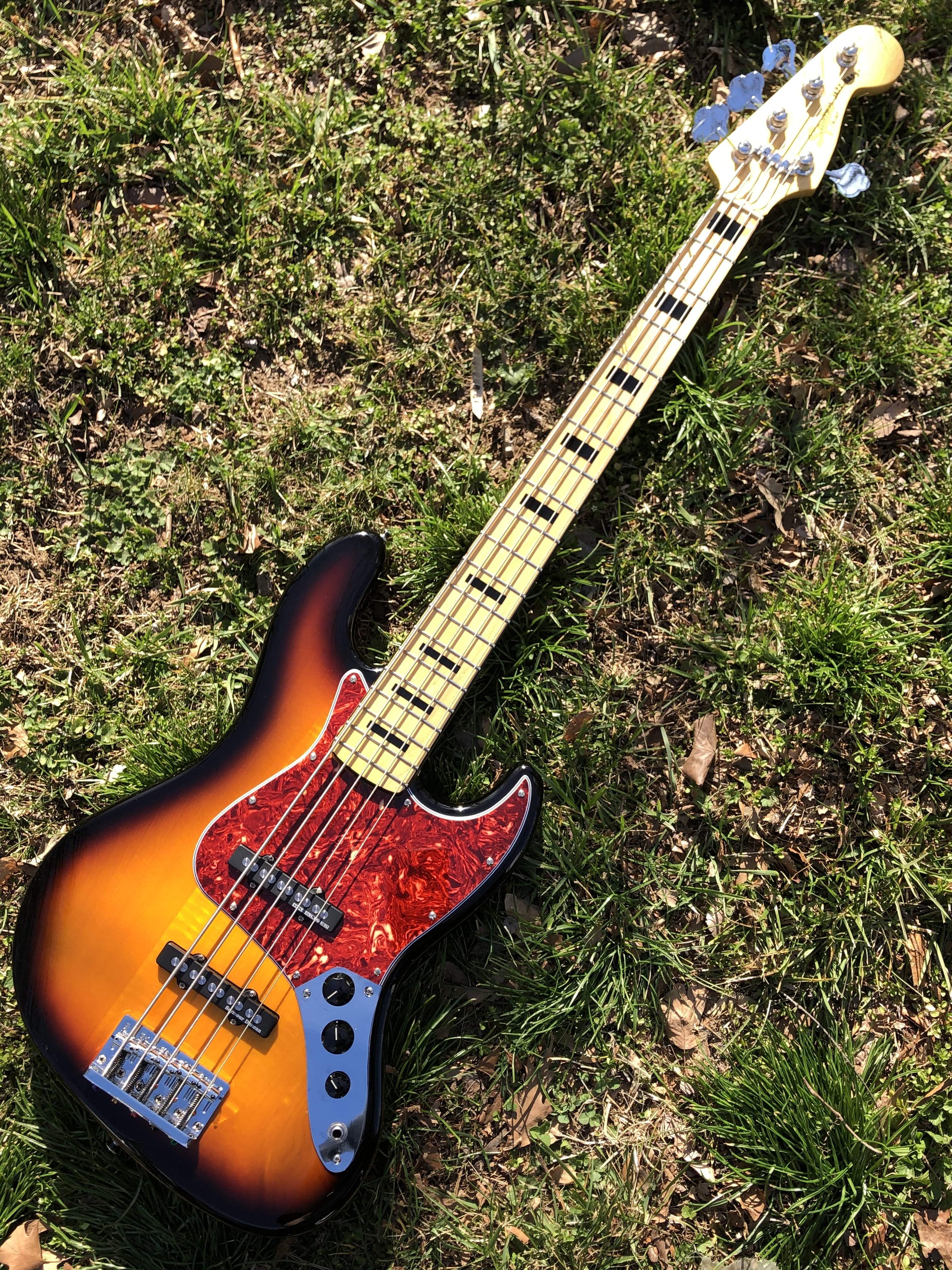
The black one I bought used for $120, defretted the original neck and used it on another bass.
The Sunburst one I bought as a body-only. Both have VMJV necks.
Modded to Hell:
Somewhat minimally modded:
The black one I bought used for $120, defretted the original neck and used it on another bass.
The Sunburst one I bought as a body-only. Both have VMJV necks.
If the bass doesn't inspire you to play in some way, you don't buy it in the first place. If it's pretty good, but there's one little thing that bugs you, then you change that one little thing - thats your upgrade. If, when you play it at the store, you start thinking "well, if I change these 3 things", maybe you should buy a different bass. In no circumstances would I buy a bass where the thing I need to change is the neck - that's the heart of a bass, and if it ain't right, I'd walk.
Well hell, I never thought I'd get this much diverse advice but it all has value to me, many many thanks.
Here's the deal.., I have not played bass in 20 years- I luv it but this instrument is savior to boredom and my bassist having to bring their axe for reh.
So.., out of the box in can make it work but a set up maybe dif strings yes!
I don't mind spending $200 a month to upgrade to a decent instrument 'noth
Here's the deal.., I have not played bass in 20 years- I luv it but this instrument is savior to boredom and my bassist having to bring their axe for reh.
So.., out of the box in can make it work but a set up maybe dif strings yes!
I don't mind spending $200 a month to upgrade to a decent instrument 'noth

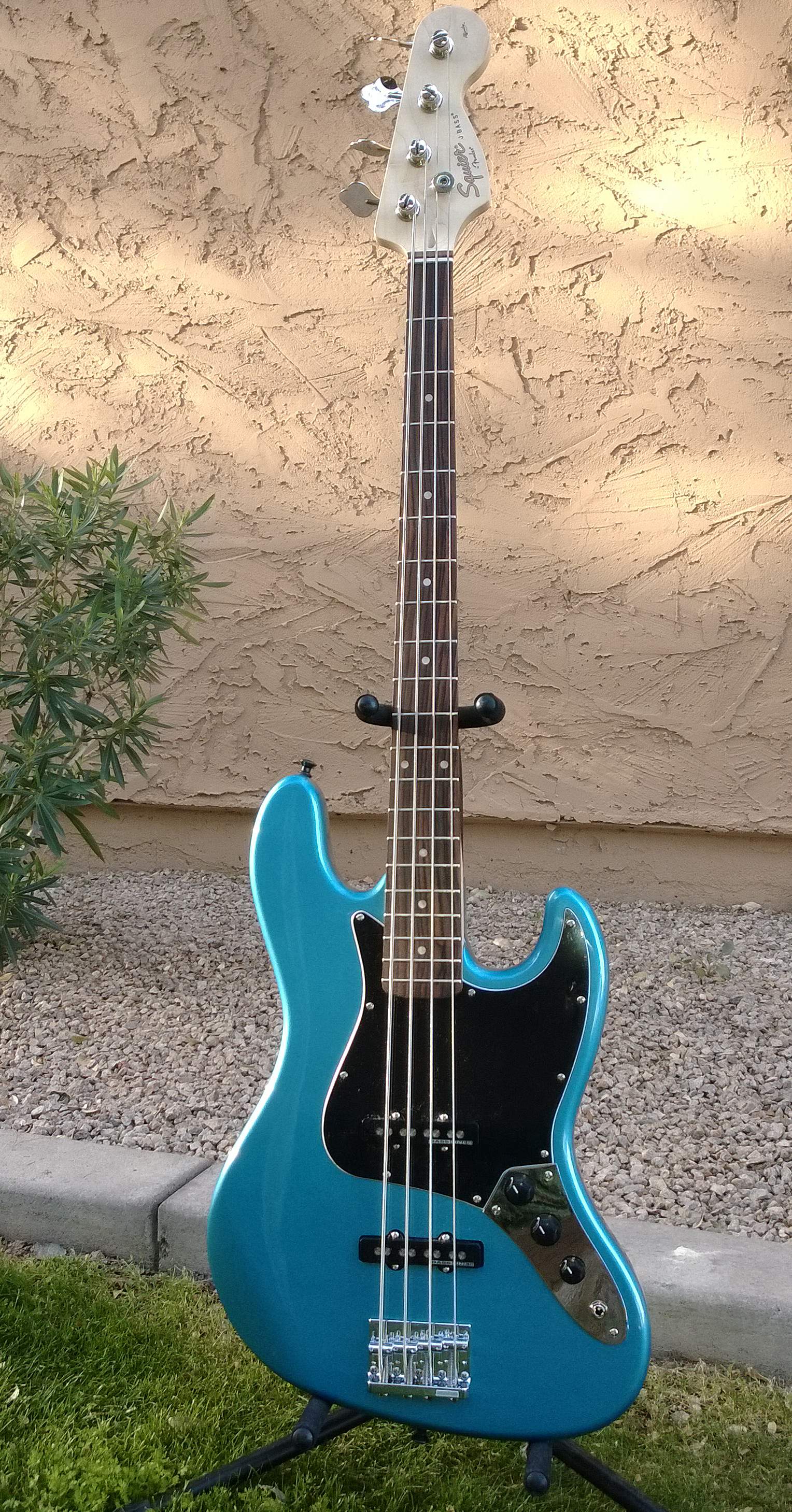
The Blue Bomber (a 2013 Affinity) got a black pickguard, Gotoh bridge and a few different pickup changes, all while paying for itself 5 times over in gig money, before I pulled the Gotoh, left in the DiMarzio Model Js, and still got $120 for it from a dude who still adores it. This pic is from when I first modded her, with Quarter Pounders. Dunlop straplocks are also present, as I view them as essential, although these black ones were in my parts bin from an earlier instrument. I also shimmed the neck, and did my own soldering work. I suppose that doing this DIY from scratch would come in around $450US, but that is still less expensive than a MIM new.

JeezyMcNuggles
Inactive
- Feb 23, 2018
- 14,723
- 20,970
- Disclosures
- I suck, but nobody really notices
Pots, pickups, strings. Bridge and nut won't do anything unless they're bad. As in, broken or string slots filed to far.What are the best ways to upgrade this model...
Bridge, nut, PU's, strings?


