
If you’re happy with your bass and your amp, I’d say stick with what works for you. Aside from a tuner, maybe a bass overdrive or a compressor of you like that sort of thing. I use various pedals when I play guitar, but on bass keeping things simple is better. On bass I use a chorus (EHX Bass Clone) to thicken the tone and occasionally some overdrive (EHX Nano Battalion) for a bit of grit.

Enjoy the benefits of a premium membership!
Upgrade Account
-
TalkBass has been independent since 1998. Add your voice.
Create a free account to reply to discussions, view embedded media, and browse with fewer display ads.
Join free Log in
Want zero display ads or expanded classifieds tools? Compare plans.
You are using an out of date browser. It may not display this or other websites correctly.
You should upgrade or use an alternative browser.
You should upgrade or use an alternative browser.
Starting pedals
- Thread starter Mason Satterman
- Start date
More options
Who Replied?
Why would you think you need an EQ if you have a good amp coming and modded your bass to your idea of completion.
That seems like an odd thing, if the above things are true.
But a good tuner (TC Electronics Polytune Mini is perfect) is a must, and a good compressor is a great idea (I use a Mark Bass Compressore which is a tube model).
And for a little ambience a good Chorus could be useful. I have a Tech 21 Bass Boost / Chorus that is great.
That seems like an odd thing, if the above things are true.
But a good tuner (TC Electronics Polytune Mini is perfect) is a must, and a good compressor is a great idea (I use a Mark Bass Compressore which is a tube model).
And for a little ambience a good Chorus could be useful. I have a Tech 21 Bass Boost / Chorus that is great.
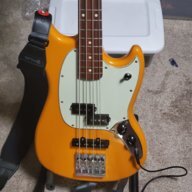
Thanks for the replies and help everyone, I'll definitely continue researching and probably wait until the ampeg ba 115 150 watt comes in the mail before I buy anything. Supposed to be tomorrow. For those curious my main bass (I have 3) is a fender pj mustang in bright orange. The only mod I've done to it is replace the bridge with a hipshot kickass, which made the bass go from meh to amazing. Still need to shield the pickguard and get a better switch but thats for another time
Attachments


Somewhat of a different reply... I went a different direction. I noticed that most pedals were between $100 - $300 each. Then when you add in an amp it was another $150 - $400 or more. Given that I didn't want a bunch of different pedals on the floor, especially since I wasn't sure what the heck I wanted sound wise, I just decided to go with the Fender Rumble Stage 800 Bass Amp. One it sounded great (400 watts by itself, 800 watts if you add an extra speaker cab), but secondly to your question it came with some really good effects built in, plus Tuner, plus 60 second looper, bluetooth & wifi (for streaming music to it that you can along with). The bluetooth also allows you to control all your pedal effects from your smartphone or tablet as well!
It has 52 built in effects (Stompbox, Modulation, Reverb and Delay), plus 36 Cab & Amp models, with a foot controller as well. All in, I found a used one for $590 and I couldn't be happier. For a person who would like to try a lot of different pedal and or amp sounds out, it's a great and simple way to experiment without having to buy a bunch of different expensive pedals, power cords for each, pedalboard, etc.. Once you find your sound, you can then later down the road add specific "name brand pedals" if you desire (which can be used here as this has an effect loop which allows you to add extra effects pedal). Just a different consideration for you. They also make a 40 watt version as well with a lot of the same effects/amps/cabs. Good luck in your search. Here's a list of all the pedals/effects/cabs you get:
52 ONBOARD EFFECTS
18 Stompbox effects
13 Modulation effects
12 Reverb effects
09 Delay effects
STOMPBOX EFFECTS
1. Modern BassOD DI with overdrive inspired by the Tech 21 SansAmp Bass Driver
2. Greenbox Overdrive effect inspired by the original late-'70s Ibanez TS808 Tube Screamer
3. Overdrive Versatile Fender overdrive specially designed for flexibilty
4. Blackbox Distortion effect inspired by the Pro Co RAT
5. Yellowbox Distortion effect inspired by the '70s-era MXR Distortion Plus
6. Orangebox Distortion effect inspired by the original late-'70s Boss DS-1
7. Big Fuzz Distortion effect inspired by the Electro-Harmonix Big Muff
8. Varifuzz Versatile Fender fuzz with bass tightness control
9. Octobot Synth-like combination of octave-down effect plus octave-up fuzz
10. Ranger Boost Distortion effect inspired by the '60s-era Dallas Rangemaster Treble Booster
11. Simple Comp Compressor effect inspired by the classic MXR Dyna Comp
12. Compressor Compressor with added gain, threshold, attack and release controls
13. Pedal Wah Dual-mode wah inspired by the Dunlop Cry Baby and '60s-era Vox Clyde McCoy wah pedal
14. Touch Wah Similar to Pedal Wah above, but controlled by picking dynamics rather than an expression pedal
15. Envelope Filter Inspired by the funktastic 1970s Mu-Tron III.
16. EQ Parametric Parametric midrange equalizer plus bass and treble controls
17. EQ7 Graphic (Bass) Seven-band graphic equalizer based on the Boss GE-7B
18. EQ7 Graphic (Wide) Seven-band graphic equalizer based on the Boss GEB-7
MODULATION EFFECTS
1. Sine Chorus Smoothly rounded chorus effect that uses a sine wave for modulation
2. Triangle Chorus Distinctive chorus effect that uses a triangle wave for modulation
3. Sine Flanger Smoothly rounded flanging effect that uses a sine wave for modulation
4. Triangle Flanger Distinctive flanging effect that uses a triangle wave for modulation
5. Vibratone Classic late-'60s/early-'70s Fender effect with a rotating speaker baffle
6. Vintage Tremolo Classic Fender “stuttering” photoresistor tremolo, as heard in Fender Twin Reverb
7. Sine Tremolo Smoothly pulsating tube bias tremolo, as heard in Fender Princeton Reverb
8. Ring Modulator Creatively non-harmonic dissonance from the early era of electronic music
9. Step Filter Rhythmically choppy modulation effect that dices notes into distinctly alternating “steps”
10. Phaser Long-indispensable jetliner “whoosh” heard on countless recordings
11. Phaser 90 Phase shifter effect inspired by the classic '70s MXR Phase 90
12. Pitch Shifter Simple pitch shifter that adds another note above or below the dry signal pitch
13. Diatonic Pitch Pitch shifter that produces a chosen musical interval to create harmonized notes in key
DELAY EFFECTS
1. Mono Delay Clean, simple and pristine signal repetition
2. Tape Delay Based on the analog classic Maestro Echoplex, which had tape imperfections that created distinctive “wow” and “flutter”
3. Stereo Tape Similar to Tape Delay above, but with stereo expansion
4. Multi Tap Rhythmic delay that can be subdivided into multiple “taps” with differing time intervals
5. Mono Echo Filter Mono echo with an evenly spaced wah-like effect on the signal repetitions
6. Stereo Echo Filter Stereo echo with an evenly spaced wah-like effect on the signal repetitions
7. Reverse Delay Reverses the shape of notes for the classic “backwards guitar” effect
8. Ping Pong Delay Repetitions in the stereo field alternate between right and left, imparting a “ping pong” effect
9. Ducking Delayed notes “duck” out of the way while playing, and fill in gaps when not playing
REVERB EFFECTS
1. Small Hall Simulates the kind of bright reverb often heard in, for example, a hall the size of a movie theater
2. Large Hall Strong, bright reverb simulating the size of, for example, a major performance hall and other large, cavernous spaces
3. Small Room Warmer, less echo-y reverb typical of smaller spaces and classic echo chambers
4. Large Room Warm-sounding kind of reverb heard in larger rooms, such as many nightclubs
5. '63 Spring Classic early-'60s standalone Fender reverb effect
6. '65 Spring Fender reverb effect built into classic mid-'60s Fender amps
7. Large Plate The reverb type heard on countless recordings, based on the classic (and pool table-sized) EMT 140
8. Arena Simulates the long-trailing reverberation typical of large stadiums and arenas
9. Ambient Subtle reverb effect typical of notably smaller spaces (even smaller than Small Room reverb above)
10. Small Plate Resonantly metallic reverb with more density and flatness than room and hall reverbs
11. Shimmer Sonically radiant combination of reverb and two-octave pitch shift
12. GA-15 Reverb Based on the '60s-era Gibson GA-15 guitar amp reverb, unique in its ability to go “full wet” (no dry signal)
AMPLIFIER AND CABINET MODELS
1. Studio Preamp Direct-to-mixing-desk studio purity with clean, uncolored tonal response
2. Tube Preamp Similar to the above, but like a tube console for increased harmonic coloration
3. Rumble® V3 Based on the clean-to-gritty tone of Fender's best-selling bass amps
4. Bassman® TV Based on the original-era boom of Fender's vintage “TV-Front” Bassman
5. Dual Showman® Based on the '60s/'70s all-tube Fender classic used on big stages everywhere
6. '59 Bassman® Based on Fender's celebrated open-back 4x10 combo of the late 1950s
7. Rumble V2 Based on Fender's popular Rumble V2 series of 2010-2014
8. Bassman® 300 Pro All-tube giant with distinctively versatile tone shaping and blendable overdrive
9. Monster High-gain all-tube boutique guitar amp model re-imagined for bass
10. '70s British Inspired by a late '60s/early '70s Marshall Super Bass, a quintessential early hardrock bass amp
11. British Colour Inspired by the “sludgy” majesty of 1970s-era Orange amps
12. British Watts Inspired by the classic cleaner-toned British stack, the original 100-watt Hiwatt DR103
13. Redhead Inspired by the full-range high-end 1990s indispensability of the SWR® Redhead
14. KGB-800 Based on the '80s/'90s-era power and clarity of the Gallien-Krueger 800RB
15. Rockin' Peg Inspired by the seismic all-tube sound of the Ampeg SVT
16. Super Bassman Based on the “Vintage” channel of Fender's present-day flagship bass amp
17. Super Bassman OD Fender's present-day flagship bass amp, with blendable tube overdrive
18. '66 Flip-Top Based on the beloved mid-'60s Ampeg B-15NF 16
AMP MODELS
1. 1x8 Under-powered vintage small-speaker sound with interesting bass tonality
2. 1x10 Rumble® V2 Variation on single 10” Fender combo amp punch
3. 1x12 Rumble V2 Variation on single 12” Fender combo amp punch
4. 1x15 Rumble V2 Variation on single 15” Fender combo amp boom
5. 1x10 Rumble V3 Based on the tight punch of Fender's Rumble 40 Combo
6. 2x10 Rumble V3 Based on Fender's popular and versatile Rumble 500 Combo
7. 1x15 TV Based on the single 15” boom of Fender's vintage “TV Front” Bassman®
8. 1x18 Based on the single 18” might of SWR's earth-shaking Big Ben subwoofer
9. 2x10 Redhead Based on SWR's acclaimed full-range hi-fi combo, the Redhead
10. 2x12 Open Based on the sound of the open-back Fender Twin-Reverb®
11. 2x12 Sealed Based on the sound of the closed-back Fender Bandmaster® cab
12. 2x15 Pro Based on the deep double wallop of Fender's 2x15 cab with cast-frame drivers
13. 2x15 D130 Based on the Fender Showman® cab with the distinctive attack of JBL® D130F speakers
14. 4x10 Pro Based on the powerful punch of Fender's 4x10 cab with cast-frame drivers
15. 4x10 Goliath Based on the first truly full-range, high-end 4x10 cab, the SWR® Goliath
16. '59 Bassman Based on Fender's celebrated open-back 4x10 combo of the late 1950s
17. 4x12 75 Watt Based on the Marshall 1960B cabinet with four 12” 75-watt Celestion® speakers
18. 4x12 GB Based on a Marshall cabinet with four 12”Celestion® Greenback speakers
19. 4x12 V30 Based on a Marshall cabinet with four 12”Celestion® Vintage 30 speakers
20. 8x10 Vintage Inspired by the old-school seismic might of the Ampeg SVT 8x10 cabinet
21. 8x10 Neo Based on Fender's 8x10 cab with neodymium speaker magnets
22. 8x10 Pro Based on Fender's clear-sounding 8x10 cab with ceramic drivers
23. 1x15 Flip-Top Based on a mid-'60s Ampeg B-15NF speaker cabinet
40 WATT SMALLER MODEL
It has 52 built in effects (Stompbox, Modulation, Reverb and Delay), plus 36 Cab & Amp models, with a foot controller as well. All in, I found a used one for $590 and I couldn't be happier. For a person who would like to try a lot of different pedal and or amp sounds out, it's a great and simple way to experiment without having to buy a bunch of different expensive pedals, power cords for each, pedalboard, etc.. Once you find your sound, you can then later down the road add specific "name brand pedals" if you desire (which can be used here as this has an effect loop which allows you to add extra effects pedal). Just a different consideration for you. They also make a 40 watt version as well with a lot of the same effects/amps/cabs. Good luck in your search. Here's a list of all the pedals/effects/cabs you get:
52 ONBOARD EFFECTS
18 Stompbox effects
13 Modulation effects
12 Reverb effects
09 Delay effects
STOMPBOX EFFECTS
1. Modern BassOD DI with overdrive inspired by the Tech 21 SansAmp Bass Driver
2. Greenbox Overdrive effect inspired by the original late-'70s Ibanez TS808 Tube Screamer
3. Overdrive Versatile Fender overdrive specially designed for flexibilty
4. Blackbox Distortion effect inspired by the Pro Co RAT
5. Yellowbox Distortion effect inspired by the '70s-era MXR Distortion Plus
6. Orangebox Distortion effect inspired by the original late-'70s Boss DS-1
7. Big Fuzz Distortion effect inspired by the Electro-Harmonix Big Muff
8. Varifuzz Versatile Fender fuzz with bass tightness control
9. Octobot Synth-like combination of octave-down effect plus octave-up fuzz
10. Ranger Boost Distortion effect inspired by the '60s-era Dallas Rangemaster Treble Booster
11. Simple Comp Compressor effect inspired by the classic MXR Dyna Comp
12. Compressor Compressor with added gain, threshold, attack and release controls
13. Pedal Wah Dual-mode wah inspired by the Dunlop Cry Baby and '60s-era Vox Clyde McCoy wah pedal
14. Touch Wah Similar to Pedal Wah above, but controlled by picking dynamics rather than an expression pedal
15. Envelope Filter Inspired by the funktastic 1970s Mu-Tron III.
16. EQ Parametric Parametric midrange equalizer plus bass and treble controls
17. EQ7 Graphic (Bass) Seven-band graphic equalizer based on the Boss GE-7B
18. EQ7 Graphic (Wide) Seven-band graphic equalizer based on the Boss GEB-7
MODULATION EFFECTS
1. Sine Chorus Smoothly rounded chorus effect that uses a sine wave for modulation
2. Triangle Chorus Distinctive chorus effect that uses a triangle wave for modulation
3. Sine Flanger Smoothly rounded flanging effect that uses a sine wave for modulation
4. Triangle Flanger Distinctive flanging effect that uses a triangle wave for modulation
5. Vibratone Classic late-'60s/early-'70s Fender effect with a rotating speaker baffle
6. Vintage Tremolo Classic Fender “stuttering” photoresistor tremolo, as heard in Fender Twin Reverb
7. Sine Tremolo Smoothly pulsating tube bias tremolo, as heard in Fender Princeton Reverb
8. Ring Modulator Creatively non-harmonic dissonance from the early era of electronic music
9. Step Filter Rhythmically choppy modulation effect that dices notes into distinctly alternating “steps”
10. Phaser Long-indispensable jetliner “whoosh” heard on countless recordings
11. Phaser 90 Phase shifter effect inspired by the classic '70s MXR Phase 90
12. Pitch Shifter Simple pitch shifter that adds another note above or below the dry signal pitch
13. Diatonic Pitch Pitch shifter that produces a chosen musical interval to create harmonized notes in key
DELAY EFFECTS
1. Mono Delay Clean, simple and pristine signal repetition
2. Tape Delay Based on the analog classic Maestro Echoplex, which had tape imperfections that created distinctive “wow” and “flutter”
3. Stereo Tape Similar to Tape Delay above, but with stereo expansion
4. Multi Tap Rhythmic delay that can be subdivided into multiple “taps” with differing time intervals
5. Mono Echo Filter Mono echo with an evenly spaced wah-like effect on the signal repetitions
6. Stereo Echo Filter Stereo echo with an evenly spaced wah-like effect on the signal repetitions
7. Reverse Delay Reverses the shape of notes for the classic “backwards guitar” effect
8. Ping Pong Delay Repetitions in the stereo field alternate between right and left, imparting a “ping pong” effect
9. Ducking Delayed notes “duck” out of the way while playing, and fill in gaps when not playing
REVERB EFFECTS
1. Small Hall Simulates the kind of bright reverb often heard in, for example, a hall the size of a movie theater
2. Large Hall Strong, bright reverb simulating the size of, for example, a major performance hall and other large, cavernous spaces
3. Small Room Warmer, less echo-y reverb typical of smaller spaces and classic echo chambers
4. Large Room Warm-sounding kind of reverb heard in larger rooms, such as many nightclubs
5. '63 Spring Classic early-'60s standalone Fender reverb effect
6. '65 Spring Fender reverb effect built into classic mid-'60s Fender amps
7. Large Plate The reverb type heard on countless recordings, based on the classic (and pool table-sized) EMT 140
8. Arena Simulates the long-trailing reverberation typical of large stadiums and arenas
9. Ambient Subtle reverb effect typical of notably smaller spaces (even smaller than Small Room reverb above)
10. Small Plate Resonantly metallic reverb with more density and flatness than room and hall reverbs
11. Shimmer Sonically radiant combination of reverb and two-octave pitch shift
12. GA-15 Reverb Based on the '60s-era Gibson GA-15 guitar amp reverb, unique in its ability to go “full wet” (no dry signal)
AMPLIFIER AND CABINET MODELS
1. Studio Preamp Direct-to-mixing-desk studio purity with clean, uncolored tonal response
2. Tube Preamp Similar to the above, but like a tube console for increased harmonic coloration
3. Rumble® V3 Based on the clean-to-gritty tone of Fender's best-selling bass amps
4. Bassman® TV Based on the original-era boom of Fender's vintage “TV-Front” Bassman
5. Dual Showman® Based on the '60s/'70s all-tube Fender classic used on big stages everywhere
6. '59 Bassman® Based on Fender's celebrated open-back 4x10 combo of the late 1950s
7. Rumble V2 Based on Fender's popular Rumble V2 series of 2010-2014
8. Bassman® 300 Pro All-tube giant with distinctively versatile tone shaping and blendable overdrive
9. Monster High-gain all-tube boutique guitar amp model re-imagined for bass
10. '70s British Inspired by a late '60s/early '70s Marshall Super Bass, a quintessential early hardrock bass amp
11. British Colour Inspired by the “sludgy” majesty of 1970s-era Orange amps
12. British Watts Inspired by the classic cleaner-toned British stack, the original 100-watt Hiwatt DR103
13. Redhead Inspired by the full-range high-end 1990s indispensability of the SWR® Redhead
14. KGB-800 Based on the '80s/'90s-era power and clarity of the Gallien-Krueger 800RB
15. Rockin' Peg Inspired by the seismic all-tube sound of the Ampeg SVT
16. Super Bassman Based on the “Vintage” channel of Fender's present-day flagship bass amp
17. Super Bassman OD Fender's present-day flagship bass amp, with blendable tube overdrive
18. '66 Flip-Top Based on the beloved mid-'60s Ampeg B-15NF 16
AMP MODELS
1. 1x8 Under-powered vintage small-speaker sound with interesting bass tonality
2. 1x10 Rumble® V2 Variation on single 10” Fender combo amp punch
3. 1x12 Rumble V2 Variation on single 12” Fender combo amp punch
4. 1x15 Rumble V2 Variation on single 15” Fender combo amp boom
5. 1x10 Rumble V3 Based on the tight punch of Fender's Rumble 40 Combo
6. 2x10 Rumble V3 Based on Fender's popular and versatile Rumble 500 Combo
7. 1x15 TV Based on the single 15” boom of Fender's vintage “TV Front” Bassman®
8. 1x18 Based on the single 18” might of SWR's earth-shaking Big Ben subwoofer
9. 2x10 Redhead Based on SWR's acclaimed full-range hi-fi combo, the Redhead
10. 2x12 Open Based on the sound of the open-back Fender Twin-Reverb®
11. 2x12 Sealed Based on the sound of the closed-back Fender Bandmaster® cab
12. 2x15 Pro Based on the deep double wallop of Fender's 2x15 cab with cast-frame drivers
13. 2x15 D130 Based on the Fender Showman® cab with the distinctive attack of JBL® D130F speakers
14. 4x10 Pro Based on the powerful punch of Fender's 4x10 cab with cast-frame drivers
15. 4x10 Goliath Based on the first truly full-range, high-end 4x10 cab, the SWR® Goliath
16. '59 Bassman Based on Fender's celebrated open-back 4x10 combo of the late 1950s
17. 4x12 75 Watt Based on the Marshall 1960B cabinet with four 12” 75-watt Celestion® speakers
18. 4x12 GB Based on a Marshall cabinet with four 12”Celestion® Greenback speakers
19. 4x12 V30 Based on a Marshall cabinet with four 12”Celestion® Vintage 30 speakers
20. 8x10 Vintage Inspired by the old-school seismic might of the Ampeg SVT 8x10 cabinet
21. 8x10 Neo Based on Fender's 8x10 cab with neodymium speaker magnets
22. 8x10 Pro Based on Fender's clear-sounding 8x10 cab with ceramic drivers
23. 1x15 Flip-Top Based on a mid-'60s Ampeg B-15NF speaker cabinet
40 WATT SMALLER MODEL
Last edited:
Another vote for Zoom B1 four. Bought one last year and loved it ever since. It has tuner, it has metronome, it has looper and on top of it all you get quite a few modifiable effects you can layer in your own patches. Some effects are not so great but pretty adequate for practise. On the other hand for a bit of a compression, light OD and EQ it is really great. And you get all that for <100 bucks.
Another vote for "get a multi-fx", perfect for figuring out what you really need / want. This will depend greatly on the kind of music you play, there are no universal must-haves, except a tuner.
Not sure why you'd want an EQ pedal at this point. Unless you need to radically change EQ / levels mid-song, or to switch between different instruments, I don't see the point.
Not sure why you'd want an EQ pedal at this point. Unless you need to radically change EQ / levels mid-song, or to switch between different instruments, I don't see the point.
In my opinion, the question is not "what pedals should I get" in the abstract. There's no pedal that everyone needs regardless of situation. The question is, "What is the sound I want for the music I'm playing?" If you get that sound just plugging straight into your amp, then don't buy any pedals. If you don't, then start thinking about what will get you that sound.
Having said that, I agree with the general idea of many people that getting a multi is a good idea if you want to explore what different effects do to your sound. For myself, I could never really get into the kind of digital multi where you're scrolling through menus of presets. I prefer to have a pedal that I just click an effect on or off and fiddle with a knob to adjust its parameters - analog feeling, even if it's actually digital circuitry inside.
What I use these days for rehearsals and simpler gigs is the Tech 21 bass Flyrig, which is basically four or five such pedals combined in a single housing. The fuzz and octave aren't very usable, but for EQ, chorus, compression, overdrive, envelope filter, and a tuner (and DI), it's a good all-in-one for pretty much everything I actually use in current projects.

Having said that, I agree with the general idea of many people that getting a multi is a good idea if you want to explore what different effects do to your sound. For myself, I could never really get into the kind of digital multi where you're scrolling through menus of presets. I prefer to have a pedal that I just click an effect on or off and fiddle with a knob to adjust its parameters - analog feeling, even if it's actually digital circuitry inside.
What I use these days for rehearsals and simpler gigs is the Tech 21 bass Flyrig, which is basically four or five such pedals combined in a single housing. The fuzz and octave aren't very usable, but for EQ, chorus, compression, overdrive, envelope filter, and a tuner (and DI), it's a good all-in-one for pretty much everything I actually use in current projects.
There are basically two ways to approach this - figure out what you are trying to accomplish with your sound and then buy the appropriate pedals, or just buy the bright and shiny pedals that everyone recommends and hope you stumble on to something good. The latter is much more expensive and frustrating.

My first thought is that your 150 watt amp is probably not going to cut it for gigging. The smallest amount of power I've ever had for gigging was 350, and there were instances where it wasn't enough. Unless you are just playing with a couple of other acoustic instruments and no drummer, you will likely need more power.
Having said that, there should be more than enough EQ on the amp and bass to take care of your needs. No need for an EQ pedal. For someone starting out, pedals really aren't necessary, but can be fun.
Compression - Not necessary, and honestly hard to hear the difference when you are first getting started. However, when used correctly, it can really add a lot to your tone and how well you are heard in the mix. I use a Seymour Duncan Studio Bass Compressor, and it is terrific. I just sold my Darkglass Hyper Luminal compressor because, for my setup, the Duncan sounded better and performed better. You can find those for around $100-$120.
Octave - This is the effect that I use most. It is amazing how much of an impact you can have by kicking on an octave pedal and going up the neck on a chorus or bridge of a song. It seems to bring the whole band up to a new level. I use the MXR Bass Octave Deluxe, and love it. I had a Boss OC-3, and this one sounds much better to me.
Filter - Filters are just fun. My favorite filter is a Bassballs filter. I have it, and I have a Mooer Bass Sweeper, which is a clone of the Bassballs. I actually like it better, because the trim pots from the Bassballs have been moved to the top as knobs on the Mooer. If you really want to use the Bassballs to it's fullest potential, you would definitely benefit from running a blend pedal with it so you can retain your dry signal as well. Bassballs is notorious for killing low end. You can find the Mooer for like $40.
OD/Distortion/Fuzz - I don't really use these. I have a Bass Big Muff, and it's fine, but I rarely need any dirt on my signal.
Having said that, there should be more than enough EQ on the amp and bass to take care of your needs. No need for an EQ pedal. For someone starting out, pedals really aren't necessary, but can be fun.
Compression - Not necessary, and honestly hard to hear the difference when you are first getting started. However, when used correctly, it can really add a lot to your tone and how well you are heard in the mix. I use a Seymour Duncan Studio Bass Compressor, and it is terrific. I just sold my Darkglass Hyper Luminal compressor because, for my setup, the Duncan sounded better and performed better. You can find those for around $100-$120.
Octave - This is the effect that I use most. It is amazing how much of an impact you can have by kicking on an octave pedal and going up the neck on a chorus or bridge of a song. It seems to bring the whole band up to a new level. I use the MXR Bass Octave Deluxe, and love it. I had a Boss OC-3, and this one sounds much better to me.
Filter - Filters are just fun. My favorite filter is a Bassballs filter. I have it, and I have a Mooer Bass Sweeper, which is a clone of the Bassballs. I actually like it better, because the trim pots from the Bassballs have been moved to the top as knobs on the Mooer. If you really want to use the Bassballs to it's fullest potential, you would definitely benefit from running a blend pedal with it so you can retain your dry signal as well. Bassballs is notorious for killing low end. You can find the Mooer for like $40.
OD/Distortion/Fuzz - I don't really use these. I have a Bass Big Muff, and it's fine, but I rarely need any dirt on my signal.
Last edited:

If you feel you must have pedals, then it depends on what styles you are playing. Lately I'm playing 70's covers and my board has 3 different dirt/overdrives on it and occasionally a Phaser. When I was doing jam-band type stuff, I had more auto-wah/flanger/chorus things.When I did Country or Jazz, I had no pedals. IMHO, EQ can be done on the amp and left alone. Tuners can be clipped on and then taken off and put in a pocket (if you leave them clipped on and visible during a set then someone, somewhere misses a note. True fact).
One approach is to get a Multi-FX pedal, find out what you use, then go get better individual pedals if desired.
One approach is to get a Multi-FX pedal, find out what you use, then go get better individual pedals if desired.

BOSS makes excellent pedals for not a lot of money. Depending on the genre of music you play, you might invest in an octave pedal, an overdrive or distortion, a delay, or some modulation.Hey everyone, first post in pedals as in getting ready to start my journey into the world of pedals and pedal boards, im hoping to start gigging soon, I have a relatively good amp coming tomorrow, my bass is modded to the point im happy with it. Im hoping to play with a local band and also once the local dinner theater opens up them as well. What would you suggest I start with? I figured a compressor, a tuner and an eq pedal for sure. Any other suggestions and good relatively inexpensive brands?
I strongly recommend to checkout the MBD-1 or MBD-2 for dirt/distortion. It's very flexible and keeps your low end signal intact.
DAMNATION AUDIO
DAMNATION AUDIO
Surprised no one has mentioned a Sansamp yet. Simple controls, great tone control and you can dial in plenty of overdrive to simulate a warm tube sound. Gives you a much warmer sound, plus it has a DI
People have given you a lot of good advice here, maybe I can add a note:
TC electronics pedals are pretty great because of the Toneprint feature. You can download an unearthly amount of tweaks to your sound. Very versatile.
For Christmas I just got a Cooper FX Arcades. It has chips you buy ($50) and pop in to get different sounds, like a game console. Each chip has 8 effects. I got 4 chips and I'm ready to ditch my old chorus, reverb, delay, phaser, trem, octave, univibe and looper. There are a few other modular effects brands that may be worth checking out.
A looper might be a first good pedal because its useful in practice.
A EHX Freeze pedal is useful for the same thing. You can practice playing to a drone.
To play out: a tuner. The TC Polytune is great because it also acts as a mute switch, has a signal boost, has battery compartment so you can use it wherever you want to practice and it powers another pedal.
Compressor is great to tailor your sound. I like JHS Tighty Whitey but there are lots of great ones.
On the more exotic side: an envelope filter is super fun and really changes up your playstyle. The Fender Pour Over Filter is great and it also has a distortion circuit built into it. A good two in one value.
Have fun!
TC electronics pedals are pretty great because of the Toneprint feature. You can download an unearthly amount of tweaks to your sound. Very versatile.
For Christmas I just got a Cooper FX Arcades. It has chips you buy ($50) and pop in to get different sounds, like a game console. Each chip has 8 effects. I got 4 chips and I'm ready to ditch my old chorus, reverb, delay, phaser, trem, octave, univibe and looper. There are a few other modular effects brands that may be worth checking out.
A looper might be a first good pedal because its useful in practice.
A EHX Freeze pedal is useful for the same thing. You can practice playing to a drone.
To play out: a tuner. The TC Polytune is great because it also acts as a mute switch, has a signal boost, has battery compartment so you can use it wherever you want to practice and it powers another pedal.
Compressor is great to tailor your sound. I like JHS Tighty Whitey but there are lots of great ones.
On the more exotic side: an envelope filter is super fun and really changes up your playstyle. The Fender Pour Over Filter is great and it also has a distortion circuit built into it. A good two in one value.
Have fun!
The one pedal I cannot do without is my Boss TU-2 tuner. I’ve had it over 15 years and swear by it. A limiter and a compressor are handy as well if your amp doesn’t already have that built in .

I figured a compressor, a tuner and an eq pedal for sure. Any other suggestions and good relatively inexpensive brands?
Here's the advice I can offer:
1. Get the basics right the first time. The basics are the board itself, the power supply, the cables and the tuner.
Get a good power supply. One with isolated outputs. I like these that get fed power from the socket, not from a wall wart. So you have a normal plug (and not a bulky one) and a sturdy cable.
I bought two cheap power supplies, then got a good one and many problems simply disappeared.
I also cheaped out on the cables, but got a decent board and a decent tuner. Still have both tuner and board. Those cables were replaced by better ones about a week in. I'm not talking about Vovox-Voodoo here. The size of the jacks is important, as is the flexibility of the cable. You don't want to ruin half of your real estate with bulky angled jacks and unbendy cables.. There are pricey but cool custom solutions like Lava Cable or George L.'s, if you have the cash. If not, a few years back EBS introduced their - quite affordable - flat cables which were embraced by the pedal community and became somewhat of a standard. EBS has reacted and offers golden ones and whatnot, but the standard ones are still available and they still are fine.
2. You said, you wanted a comp. Here's what I'd do with the knowledge I have now:
I'd buy a good one. Comps will, by design compress your signal and use makeup gain to retain the output volume. When you amplify your signal, you also amplify unwanted noise. Many cheap comps are known to introduce a certain floor noise that gets louder, the more makeup gain you use.
And when you take your pick of the good units, make sure you get one with LEDs or any other kind of meter that tells you not only that it's working, but also how hard. Compressors are weird effects. They are harder to grasp than you might suspect. More often than not, they are very subtle. That's why one with a meter is so handy, because it tells you when it is working and by how much.
once that's set, you have built a nice cradle to rock your pedals in.
songwriter21
I have an obsession for wood. The musical kind.
Hey everyone, first post in pedals as in getting ready to start my journey into the world of pedals and pedal boards, im hoping to start gigging soon, I have a relatively good amp coming tomorrow, my bass is modded to the point im happy with it. Im hoping to play with a local band and also once the local dinner theater opens up them as well. What would you suggest I start with? I figured a compressor, a tuner and an eq pedal for sure. Any other suggestions and good relatively inexpensive brands?
Like others have said, you can have all of that in a Zoom MS60B...AMAZING little gem of a pedal for a still very affordable price. I've had one for ages and it's options are insane.
Last edited:


