• TalkBass has been independent since 1998. Add your voice.
    Create a free account to reply to discussions, view embedded media, and browse with fewer display ads.
    Join freeLog in
    Want zero display ads or expanded classifieds tools? Compare plans.

Steinberger Synapse

I once owned and loved a Steinberger L2, and I'm wondering if anyone out there who owned one of the original 'Bergers has played one of the new Synapse basses and how it compares. I know that the Synapse is not all graphite and that the bridge doesn't have adjustable saddles. However, I also know that Steinberger knows what he's doing and that bass should be pretty good -- if Gibson hasn't screwed it up. Any opinions on the Synapse?
 
If you want to get a bass that has the same basic shape and profile as an L2, the Synapse is a great choice. They're great for travel.

If you want to get a bass that sounds like your old L2, you'll need to get an old L2. The materials that they were made from were a HUGE part of the sound -- it just doesn't sound like wood. The electronics are different as well.

And yes, Gibson screwed it up, but that's another story.
 
[Invalid or Expired Link Removed]

Please tell.

The primary reason for the shape of the Steinberger bass was the one-piece composite construction -- it's very rigid, but also very dense, and a full sized body would have weighed a ton. Gibson stopped making the L-series basses, which were unique in their construction and sound due to the density and rigidity of the body. They were expensive to make.

Now they make headless wood basses with a graphite neck like a number of other companies. What made them truly distinctive is no more.

They're not bad basses -- the US ones are quite good, in fact. They're just not the same basses that they were. It may even have been a good business decision to stop making the L-series basses. But the sound of the bass isn't quite the same.
 
I find that hard to believe.
Is the synapse not equipped with the same bridge assembly as the "original" steinberger ?

Same tuning system, but no individual bridges anymore. It's a one piece phenolic bridge that can be raised or lowered on each side, kinda like the bridges on the NS EUBs. I know there were issues with the original metal bridge saddles rusting over time, but I think that with care, thye could have been maintained.
 
If you want to get a bass that sounds like your old L2, you'll need to get an old L2. The materials that they were made from were a HUGE part of the sound -- it just doesn't sound like wood. The electronics are different as well.

Yeah .. I shoulda hung on to my L2 -- it was one of the first 300 made. But it sat unused in my closet for 15 years and I figured that I had retired. A year later, I started playing again.:mad: Don't even see the L2s on EBay now.
 
Sorry, I've been waiting for a chance to do that. :rollno:

The original problem with the Synapse bridge was that you had a single bar for string contact point, rather than individual saddles, so individual string intonation could not be set.
 
I think the reason for the different bridge is that the Synapse uses a piezo bridge. IIRC Ned Steinberger's last experiment before he sold the company was on a piezo bridge, but it was never added to the origional product line and only a few prototypes were made.
 
Yeah .. I shoulda hung on to my L2 -- it was one of the first 300 made. But it sat unused in my closet for 15 years and I figured that I had retired. A year later, I started playing again.:mad: Don't even see the L2s on EBay now.

I've seen them sell there once in a while. Usually the good condition ones go for nearly $2k. I'd still rather pay $1600 for a used XL-2 or $2K for a used L-2 and get that distinctive tone than than $1500 for a brand new USA Steinberger which would depreciate the moment you got it out of the box. The originals will likely continue to appreciate in value (though probably very slowly in the near term due to the economy), as there aren't really any other basses that sound like them (good or bad thing depending on your tastes) and they stopped making the XL basses in 1998 IIRC.

People are selling a lot of nice basses these days as everyone is nervous. There might be a good opportunity to buy one in the coming months. I've seen people put up basses for sale that they swore they'd keep forever.

Personally, I'm keeping my XL-2, and it would quite possibly be the last bass I would ever sell. That won't likely change any time soon.
 
Below is a blurb on the synapse bridge from an interview with Ned Steinberger on the synapse line:

"The Synapse piezo bridge system is different from most electric guitars in that the saddle is one piece, rather than 6 individual saddles. While it is nice to have an individual (hex) output for each string, in my experience it is not possible to create the optimal piezo sound with individual saddles. I’m convinced the piezo sound of the single saddle bridge, which takes it’s design from the Polar pickup system offered on NS instruments, is superior to individual saddle configurations. The object of the Synapse piezo bridge pickup is not to try to recreate the sound of an acoustic instrument, but rather to open up new sounds for the electric instrument. I think of it as the “missing link” between the smooth power of the magnetic electric, and the complexity and detail of an acoustic instrument."
 
Below is a blurb on the synapse bridge from an interview with Ned Steinberger on the synapse line:

"The Synapse piezo bridge system is different from most electric guitars in that the saddle is one piece, rather than 6 individual saddles. While it is nice to have an individual (hex) output for each string, in my experience it is not possible to create the optimal piezo sound with individual saddles. I’m convinced the piezo sound of the single saddle bridge, which takes it’s design from the Polar pickup system offered on NS instruments, is superior to individual saddle configurations. The object of the Synapse piezo bridge pickup is not to try to recreate the sound of an acoustic instrument, but rather to open up new sounds for the electric instrument. I think of it as the “missing link” between the smooth power of the magnetic electric, and the complexity and detail of an acoustic instrument."
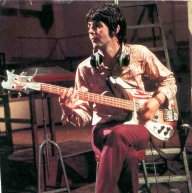
Ned's like this "mad scientist" type dude with design, yet he admittedly doesn't play. The Synapse, from what I've gathered from VERY reliable sources in a great sounding instrument with a number of useable tone variations, however Ned's idea wasn't to recreate the sound of the XL two but do something different all together.
 
Maybe I´m one of the lucky guys, who ownes a L2 aswell as a Synapse.
The last one I bought last week (after 2 years waiting for them to reach Europe!) and the L2 I bought one and a half years ago, for a guy from Switserland (maybe it was once the guitar from mccartneyman ?).
First and for all, there´s no way to compare those two basses. I personally think the L2 is the ¨holy grail¨ of basses. Nothing compares to that.
The Synapse on the other hand, is still a typical Steinberger bass (I also own a 2 XP´s & a XT so I know how these guitars ¨feel¨). It´s a very comfortable playing bass, with a very very good sound.
I compared it also with a few other Steinie clones, and this one just blows them out of the water. :)
 
Maybe I´m one of the lucky guys, who ownes a L2 aswell as a Synapse.
The last one I bought last week (after 2 years waiting for them to reach Europe!) and the L2 I bought one and a half years ago, for a guy from Switserland (maybe it was once the guitar from mccartneyman ?).
I sold mine on EBay to, IIRC, two brothers from the Midwest USA. Never know what they did with it, although I hope they are playing it every day.
 
Synapse owner here. I really like it for what it is, and how it plays/sounds. I don't think it compares well to the (X)L-2, it was meant to be its own thing. I think if you take it for what it is, and don't penalize it for what it isn't, you'll be happy with it.

I think you can get a better price on them now. I've seen them barely used on evilBay for about $900.00 USD or less.