• TalkBass has been independent since 1998. Add your voice.
    Create a free account to reply to discussions, view embedded media, and browse with fewer display ads.
    Join freeLog in
    Want zero display ads or expanded classifieds tools? Compare plans.

Stingray Classic or Stingray Retro 70s

Which is the better bass?

  • Stingray Classic

    Votes: 45 52.3%
  • Stingray Retro 70s

    Votes: 45 52.3%

  • Total voters
    86
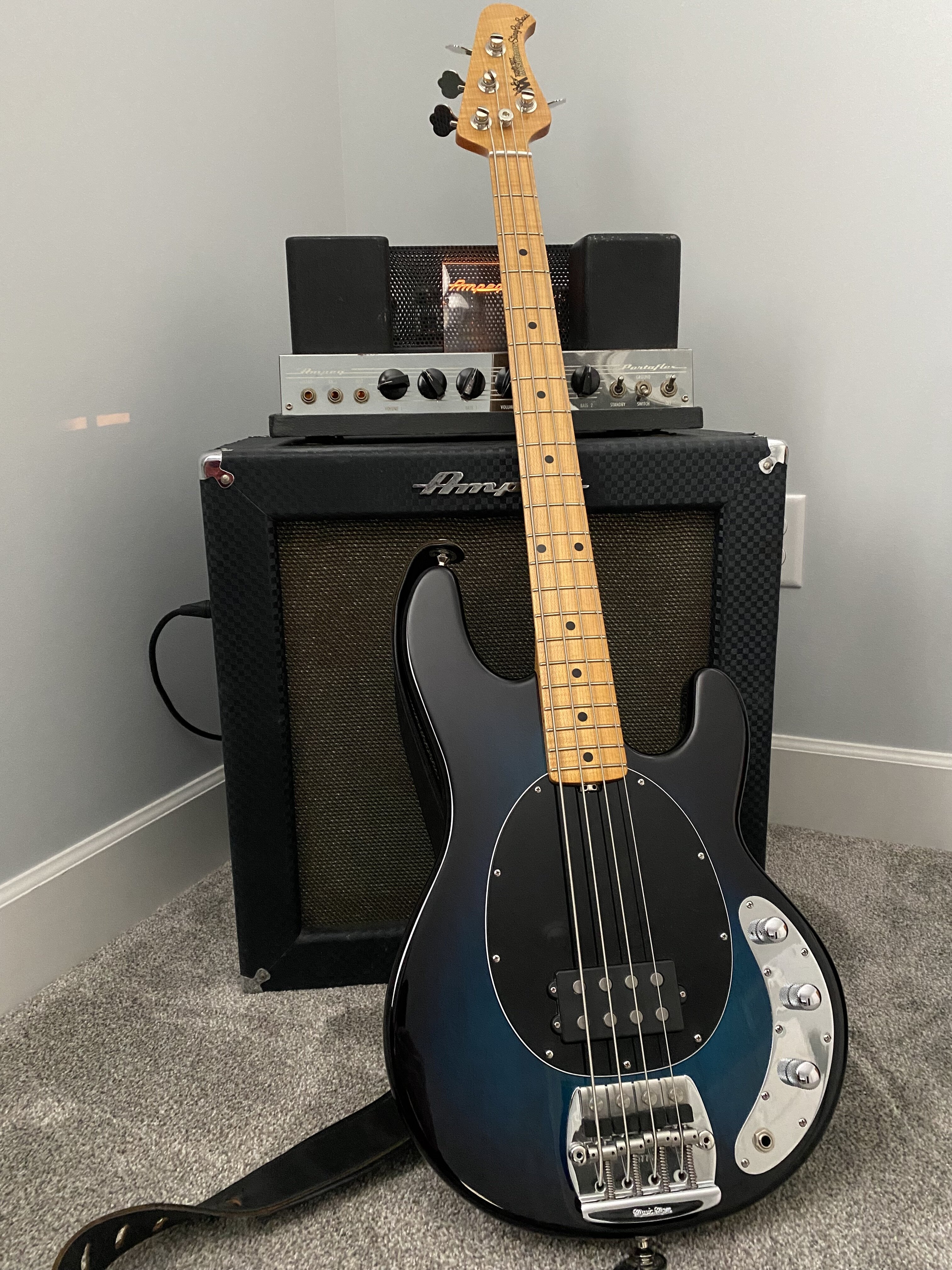
I haven’t played a retro, but I would really like to try one. I have a few bases with microtilt and they are fine, but the neck can be a little shifty even with a tight neck pocket. I think the six bolt is an improvement. Also, I know a lot of these can be heavy, but I got lucky with my classic at 8 1/2 pounds.

I’m not as interested in a true reissue so I think the classic is good. For those that want those details definitely get a retro.
IMG_5730.jpeg
 
I owned a Classic and a Retro at the same time. They do sound slightly different. The Retro was slightly punchier and warmer but that is really listening close and in a live setting you probably wouldn't notice.
If you want to get as close as possible to a pre EB get the Retro. If you want the modern trussrod wheel, get the Classic.
Currently I only own the Retro because I want that pre EB vibe.
I would like to see somebody do the side by side comparison.
 
When all is said and done, the main reason I went with a 2nd Classic is because of the rosewood board. I'm just a rosewood player and never feel the maple boards the same way. I think it's the varnish. It seems like once in a great while an actual 70s stingray will show up with a rosewood board. Apparently it was an option as far back as the 70s but I don't know a lot about that.
 
Have both, but I really like the Classic more.
It’s in a league of its own, with the same 2 band preamp but with the modern touches(spoke wheel adjustment, string retainer on the A and D, 6 bolt). The biggest plus is that the Classics have either an awesome birdseye or flamed neck.
Is it the same preamp? Is it the same pickup? I know the classic and retro are both alnico 5 but someone above was claiming that the basses sound different.
 
  • Like
Reactions: SteveFromBerlin
When all is said and done, the main reason I went with a 2nd Classic is because of the rosewood board. I'm just a rosewood player and never feel the maple boards the same way. I think it's the varnish. It seems like once in a great while an actual 70s stingray will show up with a rosewood board. Apparently it was an option as far back as the 70s but I don't know a lot about that.
I’m very far from being an expert but I don’t think I’ve ever seen a rosewood board on a ‘70s ray.

I can appreciate people’s desire to get as close to vintage specs as possible but I also have to be realistic. My ‘78 is a great bass but it’s also very heavy and a bit temperamental. My USA S.U.B., 26 years newer, is a very similar instrument at its core but it’s actually a little better built and I’d be kidding myself if I didn’t admit that the six-bolt neck and wheel truss rod were improvements. Okay, the neck isn’t as nice but that’s the only place it falls short.

Speaking of necks, the OP mentioned the difference in neck widths between the Classic and Retro. FWIW, the nut on my ‘78 is 1-5/8”. I don’t know if that’s typical or not. It’s a very comfortable neck but I’d like it even more if it were slightly wider and slightly flatter, which is what I like about the late ‘80s instruments’ necks.
 
  • Like
Reactions: LadyLoveStingRay5
I’m very far from being an expert but I don’t think I’ve ever seen a rosewood board on a ‘70s ray.

I can appreciate people’s desire to get as close to vintage specs as possible but I also have to be realistic. My ‘78 is a great bass but it’s also very heavy and a bit temperamental. My USA S.U.B., 26 years newer, is a very similar instrument at its core but it’s actually a little better built and I’d be kidding myself if I didn’t admit that the six-bolt neck and wheel truss rod weren’t improvements. Okay, the neck isn’t as nice but that’s the only place it falls short.

Speaking of necks, the OP mentioned the difference in neck widths between the Classic and Retro. FWIW, the nut on my ‘78 is 1-5/8”. I don’t know if that’s typical or not. It’s a very comfortable neck but I’d like it even more if it were slightly wider and slightly flatter, which is what I like about the late ‘80s instruments’ necks.
The spec on the retro is 1 and 11/16". Same with the special.
 
I really love my Classic V. All covered in nice shiny PU, one-piece body with great grain ... and that neck! figured to boot.

And ... it seems to be one piece, I can't make out where there would be a seperate fretboard. Although that would be impossible I think,

View attachment 7102220
EBMM does a nice job of aligning the maple neck cap after the truss is installed. They are all 2 piece though.
 
Is it the same preamp? Is it the same pickup? I know the classic and retro are both alnico 5 but someone above was claiming that the basses sound different.

The 2 band preamp remained the same throughout 1978 - 2018, when the "Special" 3 band replaced earlier designs (with the exception of the few limited edition models, that include the 2 band).

Fundamentally, the functional design of the 2 band never changed, but there were several revisions between 1976, and 1978, where apparently supplier issues necessitated some components being replaced by those of the exact same electrical value, from a different manufacturer (this meant some cables were a different colour, or that their solder points were in a slightly different place). Subsequent changes were made, simply in terms of the shape of the circuit board, and length of the legs on the pots, etc in the 90's.

In 1979 they simply stopped bothering to dollop epoxy on the preamp, as a means of protecting their IP from being copied (the preamp was unchanged). The 70's Retro includes the dollop of epoxy.

The one difference that is a divisive topic, is that the 1976-1977 pickup had longer pole pieces.

There is speculation as to why Music Man stopped making them this way ; many assume it was a cost cutting measure (in Louis Johnson's bass tutorial video, he talks about the pickup in his StingRay being made especially for him by Leo Fender, using more powerful magnets, and that it would be to expensive for the production models to be made that way).

Another theory is that the additional magnetic pull affected the note envelope in an unintended way.

Interestingly, when Ernie Ball bought the company, they shut production down, and spent a long time analysing the best sounding, and playing examples of the StingRay they could get their hands on - apparently the longer pole pieces actually cause notes higher up the neck to choke out (which I can only assume is down to magnetic pull, as the additional length of the poles extends into the body cavity). The 70's Retro includes longer pole pieces.

As part of their analysis, they found that there were surprising variances in the pickups, due to them being hand wound. So they collected the best sounding examples, and standardized on a machine wound pickup matching the average spec of the best. I don't believe the 70's Retro has hand wound pickups.

Suffice to say, even StingRays with the exact same neck construction, same preamp, and machine wound pickups can sound noticeably different from one another.

Not surprisingly, throw in hand wound pickups (with inconsistent machinists, and QC), and it's no wonder pre-EB StingRays can sound very different from one another.

The 70's Retro might not have hand wound pickups, but there are enough differences in neck geometry, neck attachment, truss rod design, when compared to the "Classic" series , that it's just going to exacerbate the inherent differences between otherwise identical instruments made of wood.
 
EBMM does a nice job of aligning the maple neck cap after the truss is installed. They are all 2 piece though.

Yeah, but it's one piece, split in two, then glued back together (which is why the join us virtually invisible).

Fender (and most other production line instrument manufacturers), on the other hand glue two unrelated pieces of maple together, and not only is the join clearly visible, the colour rarely matches.
 
Is it the same preamp? Is it the same pickup? I know the classic and retro are both alnico 5 but someone above was claiming that the basses sound different.

In my opinion, you can't really trust what people say when they compare 2 basses like this unless they've actually tested at least dozens of them. If you're referring to the guy who said he owned 1 classic and 1 retro and compared the sound and found that one was warmer sounding, is that really a good sample? The same person could realistically try another classic or retro and find that it sounds different as well. There's just too many variables at play when comparing 2 individual instruments to make any comparison that is going to be true of all of the other instruments.
 
I'm a stingray tragic having owned three classics and many specials. I currently own an unmodified special, a PDN mahogany and a special that's been retrofitted with a Pre-EBMM 2-band. I've played hundreds of gigs with stingrays. This is to provide context for what follows.....

I understand that people have nostalgia and enjoy reissues. But, forgive me if I'm wrong I had never heard of the retro70 and had to look this up.... but it seems to me like the retro70s has the bullet truss rod, the 3-screw neck plate and micro-tilt which I always thought was Fender's way of saying "we can't figure out how to make a neck/pocket fit, you sort it out yourself". So the retro70s is missing the stuff which improved (just IMO) stingrays over the years?

Ok it's got the mute pads and the string-through option, but the Classic has that too, right?

Honest question, what am I misunderstanding here? The retro70s seems like three steps backwards to me. Someone please edumucate me.
 
I'm a stingray tragic having owned three classics and many specials. I currently own an unmodified special, a PDN mahogany and a special that's been retrofitted with a Pre-EBMM 2-band. I've played hundreds of gigs with stingrays. This is to provide context for what follows.....

I understand that people have nostalgia and enjoy reissues. But, forgive me if I'm wrong I had never heard of the retro70 and had to look this up.... but it seems to me like the retro70s has the bullet truss rod, the 3-screw neck plate and micro-tilt which I always thought was Fender's way of saying "we can't figure out how to make a neck/pocket fit, you sort it out yourself". So the retro70s is missing the stuff which improved (just IMO) stingrays over the years?

Ok it's got the mute pads and the string-through option, but the Classic has that too, right?

Honest question, what am I misunderstanding here? The retro70s seems like three steps backwards to me. Someone please edumucate me.

The "Classic" series was pre-EB style, with modern EB appointments (truss rod wheel, 6 bolt neck).

The 70's Retro is a faithful recreation of an early (1976) pre-EB StingRay (bullet truss rod, 3 bolt micro-tilt, preamp using period correct capacitors and covered in epoxy, long pole piece pickup).


The Classic was clearly a means for EBMM to take a slice of used vintage market.

They were forced to cease production, and streamline during the pandemic, but vowed they would return.

During the pandemic there was a limited edition run of a completely accurate recreation of Cliff Williams (AC/DC) pre-EB StingRay, that was priced exhorbitantly high to raise money for charity.

They sold out in record time.

There was subsequently a lot of demand for more, and apparently EBMM felt that having put all the work in, and the knock on effects of the Pandemic etc having stabilised, it was a good time to capitalise on that R&D to effectively bring back the mothballed Classics, but in a truly authentic pre-EB configuration - so basically you're getting a brand new Cliff Williams StingRay, as opposed to the road-worn limited edition StingRay.

It's basically a 1976 instrument, made to much tighter modern tolerances.
 
I really love my Classic V. All covered in nice shiny PU, one-piece body with great grain ... and that neck! figured to boot.

And ... it seems to be one piece, I can't make out where there would be a seperate fretboard. Although that would be impossible I think,

View attachment 7102220

I think they install the rods in the trees when they are still growing. When they cut the trees down the truss rods are already in place. I couldn’t believe my classics were two piece until I watched the factory tour video. That’s why I love y Classics
 

Latest posts