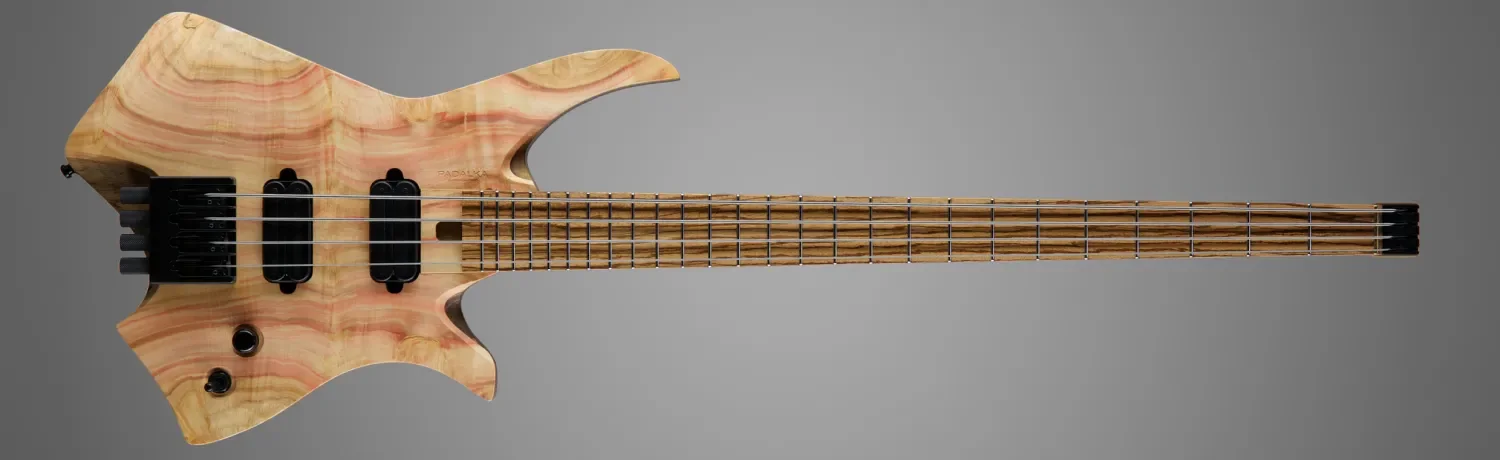
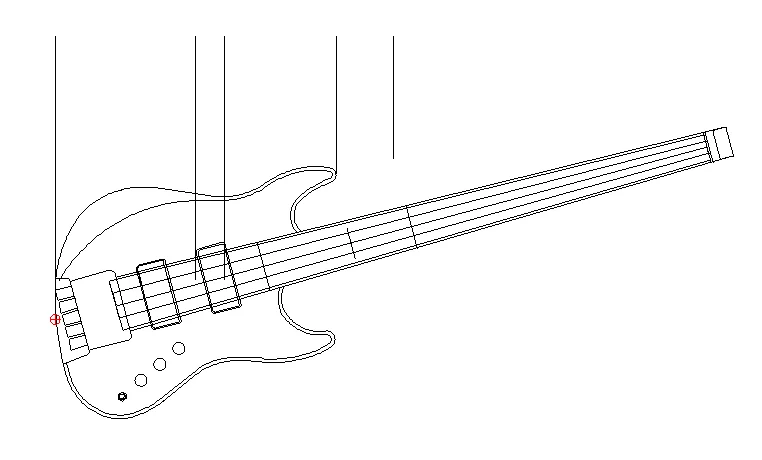
Basses with headstocks often have the strap button over the 12th fret, for balance. I'd guess that headless basses don't need that. Where is a good place for it? Here's a picture of a Padalka headless bass with the upper horn over the 16th fret. Is that too close to your body? I would have thought that would alter where the bass sits when playing it.

Enjoy the benefits of a premium membership!
Upgrade Account
-
TalkBass has been independent since 1998. Add your voice.
Create a free account to reply to discussions, view embedded media, and browse with fewer display ads.
Join free Log in
Want zero display ads or expanded classifieds tools? Compare plans.
You are using an out of date browser. It may not display this or other websites correctly.
You should upgrade or use an alternative browser.
You should upgrade or use an alternative browser.
Strap button position on a headless bass
- Thread starter smart51
- Start date
More options
Who Replied?
Strap button placement is not purely about balance. It also affects the position of bridge and nut relative to your body.Basses with headstocks often have the strap button over the 12th fret, for balance. I'd guess that headless basses don't need that. Where is a good place for it? Here's a picture of a Padalka headless bass with the upper horn over the 16th fret. Is that too close to your body? I would have thought that would alter where the bass sits when playing it.
View attachment 7566143
The most obvious example is: If the neck-side strap button is closer to the neck heel, the body shifts towards the nut and makes you reach farther to the first fret. There is a lot of variations at play so the assumed "Button should be at 12th fret" rule is not as simple and universal as you might expect. For example, moving the lower bout button north of the bridge (as shown in your pic) rather than centered behind it also affects reach.
The original Steinberger basses, as compact as they are, balanced fine but were kinda notorious for having awkward reach when using the buttons at the lower bout and neck heel: Steinberger made an optional "boomerang" hanger to compensate for that.

I should add that these assumptions are usually made for 34-35" scale basses.
Guitars and short-scale basses have entirely different issues regarding balance and reach. You don't see a whole lot of complaints about head-diving Les Paul guitars, for example.
Guitars and short-scale basses have entirely different issues regarding balance and reach. You don't see a whole lot of complaints about head-diving Les Paul guitars, for example.
I'm planning to build a headless 5 string with a 34" scale length. More than neck dive my concern is that with both the headless tuner and a shorter upper horn both pulling the strap pins further left, the 1st fret will move out to the right.I should add that these assumptions are usually made for 34-35" scale basses.
Guitars and short-scale basses have entirely different issues regarding balance and reach. You don't see a whole lot of complaints about head-diving Les Paul guitars, for example.

The middle is the middle, doesn’t matter if there’s a headstock or not. In my opinion, the 12th fret is always preferred if possible, but sometimes it depends on the design of the body, of course. That determines the reach to the nut, which is what most are concerned with. So unless you have really long arms, it matters.
That upper horn position has certainly influenced instruments that I have kept, or not.
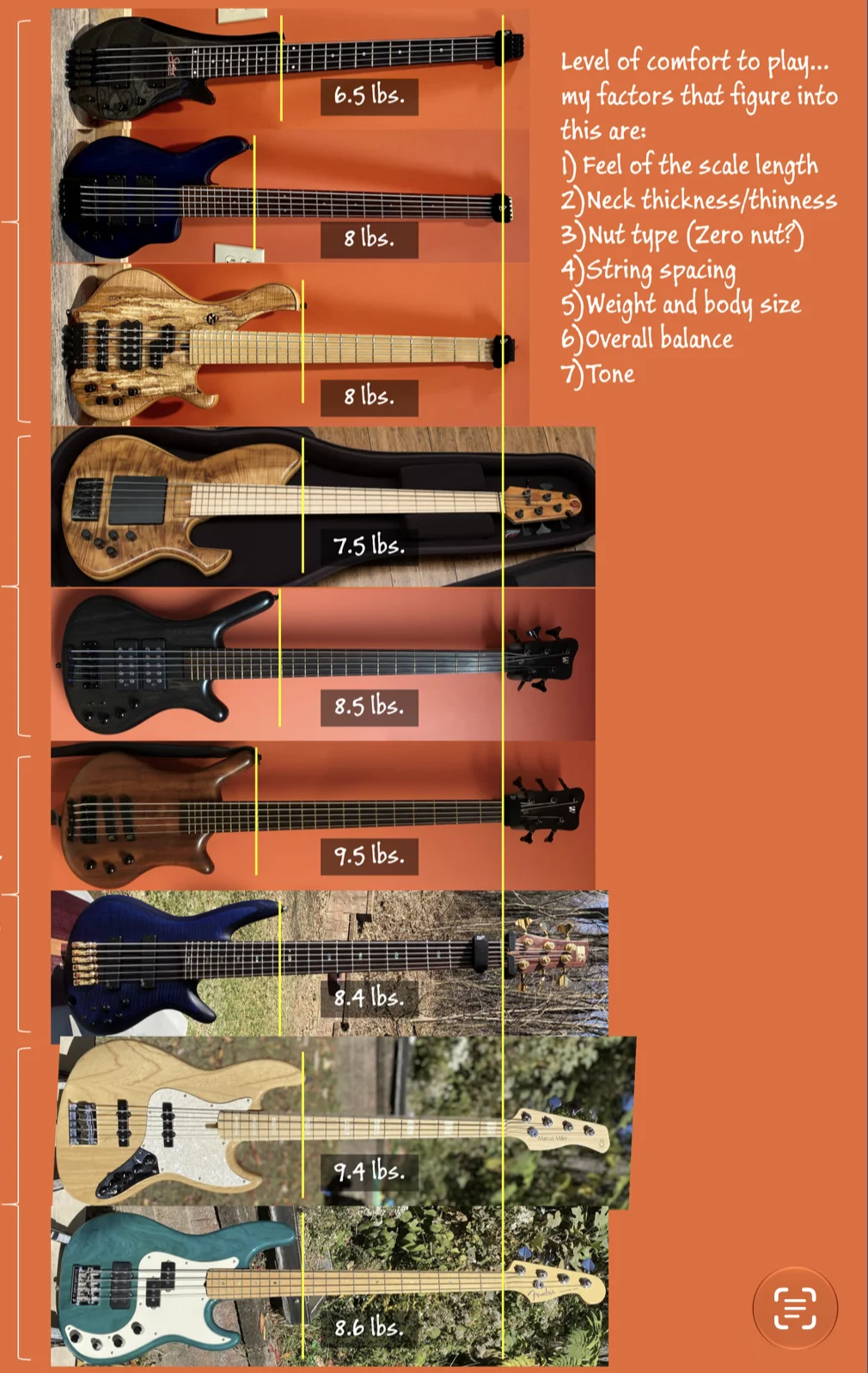
Another great example
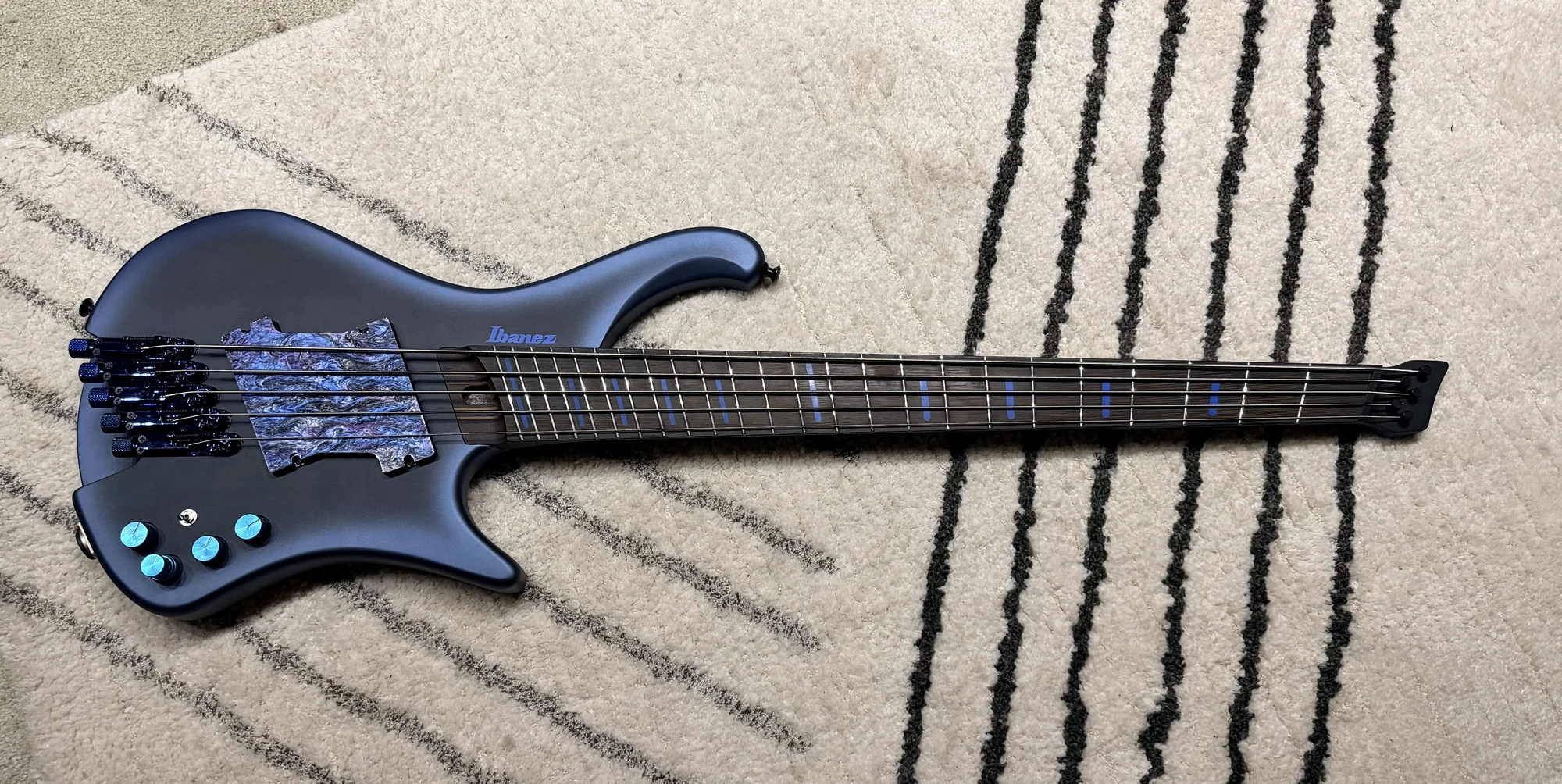
That upper horn position has certainly influenced instruments that I have kept, or not.
Another great example
Last edited:

I feel these subjects don't get talked about/emphasized enough.
How the bass fits to the body, feels in the hand, where it hangs when standing, where/how it sits when sitting, how far/close the nut is in all positions, hand/wrist position in all positions, on and on.
body shape, size, weight, scale length, lower body shape, belly carve, upper horn length, shape, position, all of it just as important to playing well as all the technical and cosmetic stuff that is focused on.
Being able to influence and shape all this stuff is the biggest advantage to building yourself/having an instrument built IMO.
How the bass fits to the body, feels in the hand, where it hangs when standing, where/how it sits when sitting, how far/close the nut is in all positions, hand/wrist position in all positions, on and on.
body shape, size, weight, scale length, lower body shape, belly carve, upper horn length, shape, position, all of it just as important to playing well as all the technical and cosmetic stuff that is focused on.
Being able to influence and shape all this stuff is the biggest advantage to building yourself/having an instrument built IMO.
But that’s because a solid mahogany body is really heavy. If you take a short scale violin bass with a hollow body and a heavy neck, you’re gonna have neck dive.I'm planning to build a headless 5 string with a 34" scale length. More than neck dive my concern is that with both the headless tuner and a shorter upper horn both pulling the strap pins further left, the 1st fret will move out to the right.
it won't tell you anything for weight and weight balance, but one thing you can do to help determine how the bass will sit in your lap, or how it will hang on a strap, is to mock up your design out of foam, or maybe even scrap plywood.Basses with headstocks often have the strap button over the 12th fret, for balance. I'd guess that headless basses don't need that. Where is a good place for it? Here's a picture of a Padalka headless bass with the upper horn over the 16th fret. Is that too close to your body? I would have thought that would alter where the bass sits when playing it.
View attachment 7566143
I had a big sheet of 2" rigid xps foam that I carved the prototype of the body from (a few times) and used a scrap of 5mm plywood for a mock neck. The foam helped in getting a full 3D replica.
It helped me refine the shape until it sat comfortably in my lap. Both holding it over my knee and between my legs (like a classical guitar).
I focused more on sitting because I'm not in a band and standing for long periods is something my spine doesn't enjoy.
Last edited:

I've done a rough estimate of the centre of gravity of the bass. It is closer to the the centre of the strap if the strap was at the 12th fret than if it were at the 16th. I'm confident there would be no neck dive. I do think the 1st fret would be about 40mm further away, which I'd rather avoid. The wood I have for the body wings isn't long enough to reach any further.
a longer upper horn shifts the fulcrum of the the strap and not only more easily balances and holds up neck dive, it shifts the nut closer to your body. From the perspective of the player (right-handed), Longer upper horn shifts the bass to your right side, shorter upper horn shifts it to the left.
a shorter upper horn/attachment point for the strap, shortens the strap, changes the fulcrum point of the strap and moves the whole instrument away from you, increasing the reach to the nut.
a shorter upper horn/attachment point for the strap, shortens the strap, changes the fulcrum point of the strap and moves the whole instrument away from you, increasing the reach to the nut.
Weight and weight distribution plays a factor too, ultimately, but that's the gist of the upper horn length deal.
Depending on how involved you want to get, you can dial in shape/feel/how it sits with a foam mockup and then fiddle with adding/removing weight from the final body before final glue up.
Depending on how involved you want to get, you can dial in shape/feel/how it sits with a foam mockup and then fiddle with adding/removing weight from the final body before final glue up.
If I don't get around to it, I want someone to design a general-purpose, affordable bass, like a Pbass, or Ibanez sound gear, etc., refine the shape a bit, give it a longer upper horn and then install 3-4 lower strap buttons and 4-6 strap buttons along the back of the upper horn.
I should add that these assumptions are usually made for 34-35" scale basses.
Guitars and short-scale basses have entirely different issues regarding balance and reach. You don't see a whole lot of complaints about head-diving Les Paul guitars, for example.
idk i've seen endless complaints about the Gibson SG neck diving (and the SG was the LP standard from 61-63). it's the standard Gibson scale. I bet there are LP jr's that neck dive too

My rule of thumb is that the body+body stuff (electronics, bridge) needs to weigh more than 2x the neck+tuners. I target the strap around 11th fret. Just my 2 cents, all of this is very subjective and based on how you play and how your body exists. My best advice is to design the body with posterboard + posterboard neck to determine good ergonomics for you, make an mdf body template of it, and make your own body


- Apr 18, 2008
- 16,016
- 1
- 31,730
- Disclosures
- I'm highly opinionated and extremely self-assured
Maybe. Not really for me. I like the strap long, so it doesn’t really matter. I can always reach the nut.a longer upper horn shifts the fulcrum of the the strap and not only more easily balances and holds up neck dive, it shifts the nut closer to your body. From the perspective of the player (right-handed), Longer upper horn shifts the bass to your right side, shorter upper horn shifts it to the left.
a shorter upper horn/attachment point for the strap, shortens the strap, changes the fulcrum point of the strap and moves the whole instrument away from you, increasing the reach to the nut.


As others said, the bridge-end strap button placement and length of the upper horn are in the same general area they would be on a Spector bass.
Spector bass ergonomics are unique. Some people love them, others do not. Spector basses definitely sit differently than, say, FSOs or Soundgears.
It took me a while to "get jiggy" with Spector ergonomics. About 7 years ago, I used to have a Spector ReBop 5 that should have been a forever bass, but I ended up selling, thinking "Spector ergonomics are not for me."
Go figure, earlier this summer I picked up a preowned Spector Legend 5 to serve as a backup to my recently acquired Aria 5 and I find myself preferring to play the Spector (despite the Aria being the higher-end "superior" bass). I guess something clicked in me regarding Spector ergonomics. I love this Spector Legend bass. Yes, it sits very differently from my Aria and other basses I've owned, but it works for me.
Spector bass ergonomics are unique. Some people love them, others do not. Spector basses definitely sit differently than, say, FSOs or Soundgears.
It took me a while to "get jiggy" with Spector ergonomics. About 7 years ago, I used to have a Spector ReBop 5 that should have been a forever bass, but I ended up selling, thinking "Spector ergonomics are not for me."
Go figure, earlier this summer I picked up a preowned Spector Legend 5 to serve as a backup to my recently acquired Aria 5 and I find myself preferring to play the Spector (despite the Aria being the higher-end "superior" bass). I guess something clicked in me regarding Spector ergonomics. I love this Spector Legend bass. Yes, it sits very differently from my Aria and other basses I've owned, but it works for me.


