

Enjoy the benefits of a premium membership!
Upgrade Account
-
TalkBass has been independent since 1998. Add your voice.
Create a free account to reply to discussions, view embedded media, and browse with fewer display ads.
Join free Log in
Want zero display ads or expanded classifieds tools? Compare plans.
You are using an out of date browser. It may not display this or other websites correctly.
You should upgrade or use an alternative browser.
You should upgrade or use an alternative browser.
String Growl
- Thread starter Linnin
- Start date
More options
Who Replied?

Here's an excellent example of growl. Chris Squire with his famous white Rickenbacker strung with Rotosound roundwounds.
Another excellent example of bass growl. I'm not a RUSH freak so i don't Know if Geddy is playing a Fender Jazz here or not. If you know please chime in.
For a very different growl Jaco's double tracked defretted Fender Jazz with roundwounds. Seriously lush and sexual growl, and his Mmmmmwahhhh is the very best and not to be confused as growl.
And perhaps the 'King of Growl' Lord Thunderfingers himself, John "The Ox" Entwistle
Ok, I've chewed on this for a bit (I almost posed the same question in another thread, in reference to a certain strings ability/inability to growl)So what's string growl to you? What is it and where does it come from?
 so here goes...To me, growl is accentuated attitude. A comparison might be the difference in one softly speaking a simple phrase like " rock and roll," and the totally different sound of those same words GROWLED at the end of a kickass show, "ROCK AND ROLL..."Same phrase, it's the attitude that takes it somewhere else. When I think of growl from a bass, it (like most other things tone related) is in the fingers. Strings, and electronics play an obvious role, but minus the attitude behind the fingers, any bass can sound anti-growl, IMO. The right combination plays a part too. But...it's in the hands. So,
  back to the other thread. I would respectfully disagree with your comment about flats. In my experience, Fender flats not only growl, they can be downright rude: If one so desires.
I don't think I'm traveling too far afield here if I copy this from a thread I started on the Fender Forums a couple of years ago.
We often express tone in artistic terms such as an artist's palette. If something sounds hot or is warm it is red, or if it is cool or cold then it is blue. So here we have some temperature descriptors also. If it sounds green it is sick or bad. The colloquialisms of the day can be confusing where if something sounds sick or nasty that means it sounds great. Sometimes if something is said to be bad, it is actually good. In the 1950's if somthing sounded good, it was said to be 'Boss'. In the mid 1960's we became 'Groovy'. It is little wonder we have a difficult time describing tone in terms we can all understand.
Sometimes we use terms of violence like 'Punch', and 'Attack'. I love my hot rod Precision because it has extreme purcussive attack and punch like a heavyweight champ. Your highs may have some 'spank'.
Animal terms are also used, especially in describing jazz bass tone such as 'snarl' in the high-mids and 'growl' in the low-mids. Precisions can also exhibit outrageously great growl. A good sounding jazz bass bridge pick-up will 'bark' out the notes and exhibit highs that spank, or have good 'bite'. My jazz bass custom shop bridge pick-up has all three at once and very well balanced too.
We also use sexual terms to describe the low or 'bottom' end of our tone. I happen to like my lows to be: full, round, and tight. Never flabby. We may like our tone to be thick and rich. Thin may be in for guitars, but most bass players like fat bottom tone. If you have huge aggressive tone, you have 'balls'. Your total tone package may present itself with a lot of 'thrust' and be 'in-your-face'.
We also describe tone in terms of light. GHS Precision Flats are 'dark' sounding. Your highs may be 'crystalline', and 'sparkle'.
Invalid Link Removed
We often express tone in artistic terms such as an artist's palette. If something sounds hot or is warm it is red, or if it is cool or cold then it is blue. So here we have some temperature descriptors also. If it sounds green it is sick or bad. The colloquialisms of the day can be confusing where if something sounds sick or nasty that means it sounds great. Sometimes if something is said to be bad, it is actually good. In the 1950's if somthing sounded good, it was said to be 'Boss'. In the mid 1960's we became 'Groovy'. It is little wonder we have a difficult time describing tone in terms we can all understand.
Sometimes we use terms of violence like 'Punch', and 'Attack'. I love my hot rod Precision because it has extreme purcussive attack and punch like a heavyweight champ. Your highs may have some 'spank'.
Animal terms are also used, especially in describing jazz bass tone such as 'snarl' in the high-mids and 'growl' in the low-mids. Precisions can also exhibit outrageously great growl. A good sounding jazz bass bridge pick-up will 'bark' out the notes and exhibit highs that spank, or have good 'bite'. My jazz bass custom shop bridge pick-up has all three at once and very well balanced too.
We also use sexual terms to describe the low or 'bottom' end of our tone. I happen to like my lows to be: full, round, and tight. Never flabby. We may like our tone to be thick and rich. Thin may be in for guitars, but most bass players like fat bottom tone. If you have huge aggressive tone, you have 'balls'. Your total tone package may present itself with a lot of 'thrust' and be 'in-your-face'.
We also describe tone in terms of light. GHS Precision Flats are 'dark' sounding. Your highs may be 'crystalline', and 'sparkle'.
Invalid Link Removed

I tried to put strings on a grizzly. It was the most natural growl id ever gotten


- Sep 9, 2007
- 5,309
- 4,977
- Disclosures
- Endorsing Artist: Eventide, GHS Strings, G&L Guitars, NS Design, Tsunami Cables
For me, string growl is when you "give her a little" and there's a metallic edginess (and like DuShauh said, an attitude) to the tone that may not be there when you're playing normally. I use light gauge strings (30-40-55-75-95-120) which require a pretty light touch to get a smooth and gentle tone, but can growl pretty easily when you want them to.

scottfeldstein
Roots and fifths and a little extra.
To me it's the intersection between the fret noise of aggressive playing and the upper harmonic content from light overdrive. Together, they're magic and add that sizzle, that definition...that growl...to notes.
I dial my VT Bass so that it does two things: growls with a nice crunchy sound when played aggressively around the G on your E string. while at the same time giving a warm, fat tubey sound when played up around frets 10 or 12 on the E, A and D strings.
I dial my VT Bass so that it does two things: growls with a nice crunchy sound when played aggressively around the G on your E string. while at the same time giving a warm, fat tubey sound when played up around frets 10 or 12 on the E, A and D strings.

After months of research, experimenting and listening there are 4 main ingredients (it would seem) for growl:
strong mids, aggressive playing, slight overdrive and a touch of fret noise.
Anything else is personal preference, these are the 4 constants, where as things like:
passive/active pick ups, single coil/split coil/humbucker pick ups, round/flat wound, neck/bridge pick up, low/high mids, low/high action, etc, .....
These only seem to effect the type or sound of the growl.
However ... growl is subjective.
For me this is the definition of growl.
<iframe width="420" height="315" src="//www.youtube.com/embed/tGBcckebs24" frameborder="0" allowfullscreen></iframe>
strong mids, aggressive playing, slight overdrive and a touch of fret noise.
Anything else is personal preference, these are the 4 constants, where as things like:
passive/active pick ups, single coil/split coil/humbucker pick ups, round/flat wound, neck/bridge pick up, low/high mids, low/high action, etc, .....
These only seem to effect the type or sound of the growl.
However ... growl is subjective.
For me this is the definition of growl.
<iframe width="420" height="315" src="//www.youtube.com/embed/tGBcckebs24" frameborder="0" allowfullscreen></iframe>
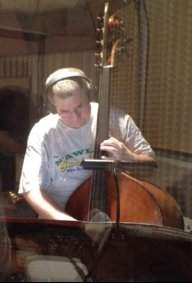
Extreme string excursion, which can be highlighted with certain pickups and EQ settings.So what's string growl to you? What is it and where does it come from?
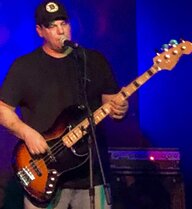
Another excellent example of bass growl. I'm not a RUSH freak so i don't Know if Geddy is playing a Fender Jazz here or not. If you know please chime in.
It's his 72 Jazz bass.
Thanks. Do you know what string he's playing? Rotosounds? Boomers?It's his 72 Jazz bass.
He always uses Rotosound Swing Bass 66 Stainless rounds. At least to my knowledge.Thanks. Do you know what string he's playing? Rotosounds? Boomers?
Of course I have my own ideas, but I want to hear yours first. I only make these comments concerning elements of: fret noise, attitude/aggression, and overdrive. I would just direct your attention to the Joni Mitchel clips with Jaco on bass. No Frets. No Aggression. Indeed he and Joni were reportedly living together and having their own private love-in. No obvious overdrive. Only a few people know what was actually used in the studio. Yet beautiful lovely growl. Jaco's approach to his bass on these recordings is a tender caress.
And Flea has his own signature set of GHS Boomers now, but has always played Boomers.Flea's Stingray/Modulus sound = growl to me.
I think that type of pickup is a big part of it.
PJ with everything dimed is also very growly.
Ernie Ball Cobalts bring instant growl to most basses.
For me "growl sound" comes from a relative heavy finger attack with distinctive brittle mid frequency presence. It also need to have a somehow nice sustain.
But lets face it, we sometimes just use that name when we find that a bassist that have a very nice sound
But lets face it, we sometimes just use that name when we find that a bassist that have a very nice sound


