• TalkBass has been independent since 1998. Add your voice.
    Create a free account to reply to discussions, view embedded media, and browse with fewer display ads.
    Join freeLog in
    Want zero display ads or expanded classifieds tools? Compare plans.

String theory?

I was also taught to thumb pluck and use the tug bar
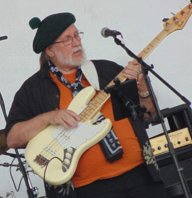
Seriously? I don't think I've ever seen anyone doing that other than the odd pic of this guy

LeoFender-bass.jpg
 
  • Like
Reactions: Levent
I hope this is just a theory to you, because I wouldn’t want to offend you personally.
But if I’m understanding what you’re saying correctly: the theory is moronic.
It’s a good thing nobody told Chris Squire this, before he recorded “Roundabout”
 
When I started on bass I noticed the open strings have a different tone to fretted notes, so I tended not to use open A, D, or G but was never fanatical about it. They don't sound that different, and sometimes open strings just make for much more practical fingering.
 
I like not using open strings, especially on a 5, so the patterns are the same all over. But sometimes an open string is inevitable: the riff for "Born Under A Bad Sign" has an E1, so that's necessarily open on a 4, but even playing it the same way on a 5, or shifting up to use the B string, that fretted E1 on the 5th fret is an awkward reach either way. So open it is.
 
  • Like
Reactions: EatS1stBassist
LOL - yeah probably........I could swear it was Jaco. I also remember other various Jaco-isms from other articles such as (paraphrasing) "Playing the blues in F is weird",

Why in the world would a blues in F be weird? I highly doubt Jaco would have ever said that. F is one of the most common blues keys in the jazz world. It would only be weird to a guitarist, who has never played with horn players, at an all guitar, E minor pentatonic wankfest, blues jam. LOL
 
  • Like
Reactions: 12BitSlab
Do you play open strings ?

This to me is a strange question.

A lot of Videos on YouTube call it bad form, while others say you can use open strings for upright bass and fretless but not so much on an electric fretted bass.
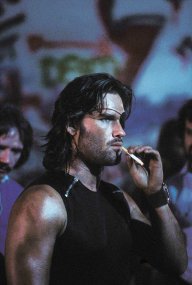
Sir James used open strings in his playing to increase his speed. So yes they do have a place sometimes.

So like what has been said here before; What say you?

Thanks

Clayton

Yes and no. Depends on what I'm playing. If I want a lot of sustain on an E, A, D, or G on my 4-string, yes I'll use it because it rings out longer than a fretted note on a previous string. I also will use an open string when I'm shifting positions on the neck where it otherwise would be tough to play a note smoothly in the run

For instance there's a nice run in A on the song Time after Time by Cyndi Lauper that I like to play starting on the 5th fret of the E string. Notes are ACEA(octave)ECAF. It goes up and back down and the last A is a short passing note on the way to the F. So I'll hit the open A on the way to the F and the run comes across smoother and it's easier to play.

So if playing an open A (or other open string) allows me to keep my fretting hand in the same spot without shifting my hand, I'll use the open string. I'll also use it where it I need to shift hand position and playing that open string makes the move more relaxed and easier to do.
 
Can I tell a difference between open and fretted notes? Yup.

Can other bassists tell a difference between open and fretted notes? Some, maybe most.

Can the audiences tell a difference between open and fretted notes? Maybe.

Do they care? Nope. Never once, in 30 years of playing, have I ever had someone in the audience, or even bass players, come up to me and call me out for playing open notes. And that includes plenty of years in a Rush tribute.

Because empirical evidence suggests that it has no practical consequences on my performance, I play open and fretted notes as it suits me.
 
Thanks for the replies Bass people. I asked this question for I use open strings for some things and I like the way it sounds and the depth they can bring.
In the book about about Sir James, it does say he used open strings so he could move to the next place he wanted to go on the frett/finger board faster.

So I just learned how to do. Yes another tool in the tool box.

My main bass for a long time is a Warwick thumb bass. Brass nut, 2 piece bridge and very consistent to play. Open strings are not weaker, they stay in tune and often provide a very nice sonic depth as I mentioned.

One day I tried the same passage on my fretless fender Jazz Bass. It was not as rewarding and did basically what a lot of you mentioned here all ready.

Yes playing the Warwick has shown me a lot of things that maybe would of not of been if I had learned on another brand of bass.

Now all most seven years later, I know what my playing style is.

Always search for new discoveries and use everything found to the best of my abilities.

Thanks
Clayton
 
Do what works for you.

^^^This ...but also, do what works for the music. With some material it doesn't matter whether you play a note on an open or stopped string; but other material makes more stringent sonic demands of the performer and it behooves you to understand how your fingering choices impact the sound of your lines, and whether one approach is preferable to another.
 
Do you play open strings ?

This to me is a strange question.

A lot of Videos on YouTube call it bad form

I think I know one of the videos and people you're referring to. That person is an idiot.

Open strings are great for certain kinds of rhythmic patterns for certain triads (F, Bb, Eb, F#m, Bm, Em), they can be played as drones while you hit the 3rd and/or a little melody on a higher string, you can play on an open string for a while if the part calls for it and use the free hand to grab some water/a drink (not joking; this is important on a long gig), they have a particular timbre that's different from fretted notes, and you're sure as hell never going to play a low E on a 4 string without using an open string.

Most of Youtube is people making stuff up and then talking about it really seriously, as if they know what they're talking about. You just ran into that.
 
  • Like
Reactions: CaribooBass
One thing I have noticed... it seems like a lot folks who don't like open strings, mention patterns a lot. I suspect that comes from not knowing multiple fingering patterns all across the neck. Especially in the half position. I had one teacher long ago, who had me play all my scales and arpeggios around the circle of 4ths, and I had to remain in the first 4 frets and open strings only. Give that a go, if you think you know your fretboard.
Another teacher gave me a book of Random Notes. Just random note heads on the staff.... starting from half position for a few pages, and then it expanded more up the neck every 3-4 pages. No patterns..just random notes.... for sightreading training. You would do different keys in your head... and your eyes were on the paper, and not on your left hand.
 
Last edited:
  • Like
Reactions: CaribooBass