

Enjoy the benefits of a premium membership!
Upgrade Account
-
TalkBass has been independent since 1998. Add your voice.
Create a free account to reply to discussions, view embedded media, and browse with fewer display ads.
Join free Log in
Want zero display ads or expanded classifieds tools? Compare plans.
You are using an out of date browser. It may not display this or other websites correctly.
You should upgrade or use an alternative browser.
You should upgrade or use an alternative browser.
More options
Who Replied?
It adds "growl"
...because when I have to do a quick string change, I'm usually cursing and muttering and growling under my breath.
...because when I have to do a quick string change, I'm usually cursing and muttering and growling under my breath.


Nothing really. Some people think a string-through contributes to longer sustain or greater string tension. But beyond making your life more difficult if you like heavy-gauge flats, they don't add anything sonically IMO. It's one of those "what's better: tort or pearloid" questions. It's all a matter of personal taste. I have basses that are stung through the body and the bridge. And after careful listening, I've never been able to discern a significant difference in sound or feel between the two methods.
Your ears or mileage may vary.
Your ears or mileage may vary.

I've got two strung-through P's and a whole bunch more that aren't strung-through and I cannot determine any advantage., although it's not a scientific test since they're all different anyway.

I've never noticed any difference in sound, and I much prefer top load bridges ... besides that - there's a wider range in string choices with top load bridges.

On the other hand, it does lend itself to putting a really fun bend in your strings about 3" from the ball-end.

Both my Fenders can be strung either way. I haven't noticed any significant tone/feel difference either way. I go string through so the ferrules don't fall out!

I always use string through if it's available, always have. I like to think it feels more "solid" somehow, whether I really believe that's scientifically true, wellll.......

I use it when the option is there, those metal inserts can fall out and get lost if you have no strings through too 
Edit-Planespotter beat me to it
Edit-Planespotter beat me to it
Last edited:

Other than making it unlikely that the bridge screws will pull out of that basswood body, and keeping the bridge squashed down on the body (better vibration transfer?)? No, I don't think there's any appreciable advantage, either..
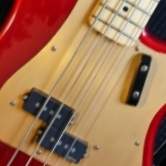
I have never detected a tonal difference from running the strings through the body on either string-through guitars or basses, which is good, because I find it a PITA. Not so much on basses, but on my Tele with block saddles, it's a MAJOR hassle. Actually, top-loading isn't much easier with those saddles either.

On guitars with top loader bridges I've noticed the saddles can wiggle around and rattle against each other, because the shallower break angle of the strings doesn't provide as much downward pressure as a string through, but that has not been a problem on my bass with a top load bridge.

String through body puts pressure on the saddles downwards generally which is a good thing. Instead of coming from behind the saddle, the string comes up from under the saddle.
Other than that, it's very handy for Fender type basses where the E or B string tuner is close to the nut. Depending on the string, going through body can prevent the outer wraps from going around the tuner post.
Other than that, it's very handy for Fender type basses where the E or B string tuner is close to the nut. Depending on the string, going through body can prevent the outer wraps from going around the tuner post.
Latest posts
-

-
-
 Need Recommendation for Repair Shop In Western Connecticut
- Latest: buldog5151bass
-

-
