• TalkBass has been independent since 1998. Add your voice.
    Create a free account to reply to discussions, view embedded media, and browse with fewer display ads.
    Join freeLog in
    Want zero display ads or expanded classifieds tools? Compare plans.

String Tree needed, but which one

DaveParker39

World Heavyweight Champion
Supporting Member
Feb 28, 2022
3,036
6,093
My 70 reissue P-Bass has a rattle on the A string that can only be solved with downward pressure behind the nut. Tech has tried recutting the nut multiple times, we tried Fender's Stealth String Retainer and unfortunately it didn't fix the rattle.
Putting a zip tie between the A and D strings fixes it, but looks ugly.
I don't really want to delete the existing string retainer because it is a 70 reissue, but I need another.
This looks horrible to me:
jazz.png

So I want to avoid that.
A floyd rose style bar may be too wide for the P-Bass without looking silly.
Hipshot's string retainers don't look too obtrusive but I have yet to see one on a vintage style axe that still has the old circular one for the D and G.
Thoughts?
 
I've got three Fender-shaped basses currently and I've owned four other actual Fender basses. The ones I owned in the past were made in the U.S. and Japan. One was made early in 1965 and the others made in the '80s and '90s.

Granted it's not a big sample size but I've never had this problem with A strings on Fender or type basses. I've seen others talk about having this problem though. I suspect it's due how people, who experience this problem, install their strings.
 
Last edited:
Put at least four string wraps on the tuner capstan and make sure the a string is right down on the deck where it exits the tuner capstan.

I go four wraps in my E and 4-5 on my A. Enough to push the string to the bottom of the capstan and keep it from slipping upward.

And no, more wraps making tuning unstable is a fable. Once the wraps are drawn good and tight, they’re dead stable.
 
I've got three Fender-shaped basses currently and I've owned four other actual Fender basses. The ones I owned in the past were made in the U.S. and Japan. One was made early in 1965 and the others made in the '80s and '90s.

Granted it's not a big sample size but I've never had this problem with A strings on Fender or type basses. I've seen others talk about having this problem though. I suspect it's due how people, who experience this problem, install their strings.

You're not alone. I've owned at least 14 Fender basses of the Jazz and Precision variety, and not one of them had a problem with the A string. I still have 4 of them. 3 US and one Japan.
 
You're not alone. I've owned at least 14 Fender basses of the Jazz and Precision variety, and not one of them had a problem with the A string. I still have 4 of them. 3 US and one Japan.

Considering the 70 years long accumulation of Precision and Jazz basses (60 years for JBs) out in the world, made by Fender and others, a massive sample size beyond my ability to estimate in terms of firm numbers, versus the occasional anecdotal reports of this A string problem, I think its reasonably plausible that there isn't an inherent problem with the basic design, beyond remedy through proper setup.
 
Last edited:
Considering how many Precision and Jazz basses out the world, made by Fender and others over the last 70 years, a massive sample size beyond my ability to estimate in terms of numbers, vs occasional anecdotal reports of this A string problem, I think its reasonably plausible that there isn't an inherent problem with the basic design, beyond remedy through proper setup.

We've been through this. Recently I believe. It is just as plausible that a huge percentage of people do not know how to change their strings correctly. Regardless, it's not necessary to put more hardware on a Fender neck to get the A string to not buzz. No need to drill extra holes and make your head stock look like a collection of washers. Just keep the string low on the post. It's easiest with more wraps.
 
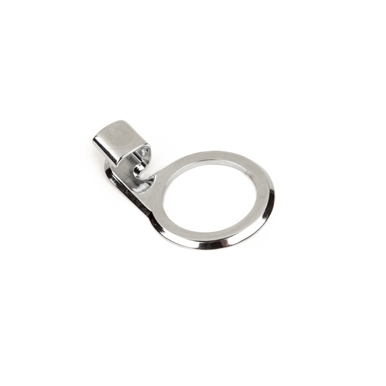
No extra holes to drill with the Invalid Link Removed by Fender.
0078972049_merch_frt_001_nr.jpg


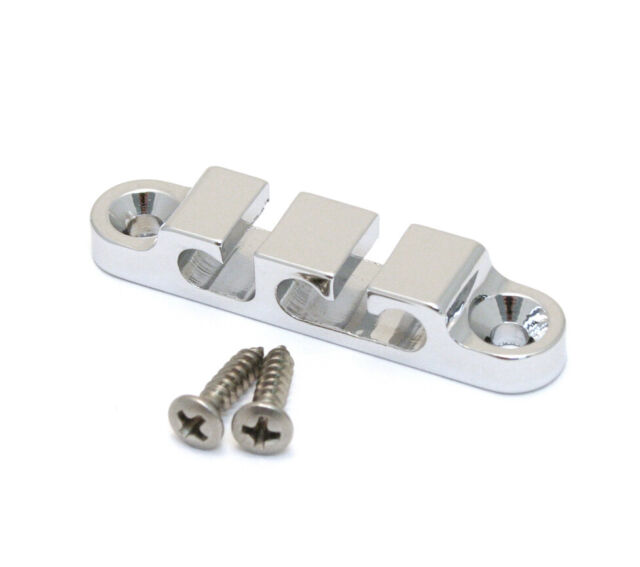
Otherwise you also have the Hipshot 3-string Retainer, quite large but extremely light,
s-l640.jpg


or a generic 3-string retainer that can be found on eBay for cheap, smaller but heavier.
$_57.JPG
 
Would an extra winding around the peg help provide more down-pressure? I measure my strings to 3" past the peg; that's where I crimp and cut, leaving 1/2-3/4" past the crimp to go down into the hole.

Since you have been to a tech, I am guessing you already considered that. It is just that on the E and A, I am used to seeing another winding.
 
No extra holes to drill with the Invalid Link Removed by Fender.
0078972049_merch_frt_001_nr.jpg


Otherwise you also have the Hipshot 3-string Retainer, quite large but extremely light,
s-l640.jpg


or a generic 3-string retainer that can be found on eBay for cheap, smaller but heavier.
$_57.JPG
Cool, I did not even know that made the first one
The second one is easiest to string of the last two btu the third one above takes up the least re-estate on the bass. I believe my favorite to be the third one here
 
  • Like
Reactions: Vinny_G
Put at least four string wraps on the tuner capstan and make sure the a string is right down on the deck where it exits the tuner capstan.

I go four wraps in my E and 4-5 on my A. Enough to push the string to the bottom of the capstan and keep it from slipping upward.

And no, more wraps making tuning unstable is a fable. Once the wraps are drawn good and tight, they’re dead stable.

...but having the windings overlapping can, no, WILL cause unstable tuning. So, follow his advice but ensure your wraps aren't overlapping. I measure from the point the string will make contact with the post and add the length of the head stock to the string length. That gives me enough string length to get five wraps on the G, D, and A strings, and four wraps on the E.
 
Last edited: