- Jan 26, 2014
- 1,525
- 1,946
- Disclosures
- I teach lessons and perform live music in and around San Diego CA. Sometimes I even make money doing it!
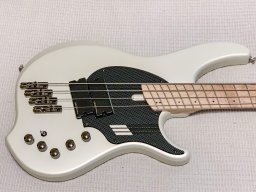
I've heard that some guys like a few string wraps around the tuner pegs...and some don't. Here are two manufacturers varying opinions...... the Jake P has about 3 or 4 wraps..the Dingwall barely has one.
Any opinions on why each is different and/or your own personal opinions on which is better or does it make any difference at all?View attachment 1101484
Enough winds to keep it securely on the capstan, while delivering as equal a break angle as possible. Each capstan size will want a different length, and each string thickness too. I generally go about 2 "peg distances" past the B or E peg to make my first cut, assuming that's perfect, I go a little longer on each additional string as they get thinner. I don't get anal at all, after a while you'll get good at guestimating it.
If you have an angled headstock, I just try to have the winds be as equal as possible, each string thickness will dictate how many winds that is. The only time I ever had a string pop off of a bass was when I was borrowing a friend's who used maybe one wind. That taught me not to do that right quick. I'm not really sure what's going on with that Dingwall, it doesn't make sense that with one wind the string would stick that close to the bushing, they seek the path of least slack. Must be something I don't know about their design.
For flat headstocks I try to aim for the most equal break angle possible. Again, it's not a capital offense if it's not perfect, sometimes it's impossible, and you can't guarantee perfection when you're trying new string brands and gauges.
The Schack here is pretty much perfect break angle wise.
Flat headstocks with string trees are pretty much a hopeless case as far as break angle goes. Just let the string tree do what it does for the high strings, and compensate the best you can on the low strings. Again, I recommend and use a minimum of two windings.
Last edited: