• TalkBass has been independent since 1998. Add your voice.
    Create a free account to reply to discussions, view embedded media, and browse with fewer display ads.
    Join freeLog in
    Want zero display ads or expanded classifieds tools? Compare plans.

Stringing an American Standard Jazz...Through body, or top load??

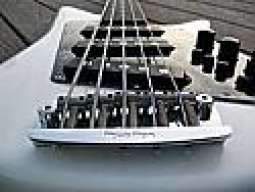
So while shopping for some DR Sunbeams, I realized that there are not that many options for strings with the tapered wind for the E-string on an American Standard body through configuration.

After asking a related question as to the suitability for the Sunbeams loaded through the body, someone mentioned that I should load them through the top. Goes to show you how much of a bass newb I am. I didn't even know that was an option, but low and behold, there it is before me. Quite embarrassing, actually!

So the question is, how would top loading the strings affect the tone vs. a through the body load? I would think there would be little to no affect, as many of the top builders (Sadowsky being one of them) top load, and do not offer a string through setup (at least on the Metros that I looked at).

So....What's the verdict? Is there a difference in tone, and if so, what can I expect?

Thanks in advance for any insight you can lend.

Regards,
Dave
 
Hey Dave. I have an '08 Am. Std. Jazz, as well as an '08 Am. Std. P. Right now I have the P strung through the body, but the Jazz is top loaded. I honestly haven't been able to hear a difference in tone either way.

Because I can't really hear a difference, from now on I'll probably stick to the top-load option. My strings of choice are Chromes, and when I go through the body, I have to trim back the silks at the headstock end to keep them (the silks) from sitting in the nut. That doesn't happen when I top-load them.

One think I noticed though when I top-loaded: The ferrules were loose if you DON'T string through the body. I remedied that by pulling them out and putting a little wood glue on them, then putting them back in and letting them sit overnight. Now I don't run the risk of them falling out. Just something to be aware of...
 
Try it both ways and see. My Laklands offer the option of going either way. I strung one up once with the E and D thru-body while the A and G were top-loaded. I strung the other the opposite. There, in a true side-by-side comparison I couldn't tell the difference at all. And before I did that I was one who swore there was a difference in how the strings felt. But the truth is that it doesn't make any difference. So, now I generally go through body so the ferrules don't come loose. It does limit your string choices a bit- D'Addario regular long-scale strings don't work on most through-body basses, and the one set of Elixer's I tried didn't fit either.

John
 
Two of my basses have both options (my carvin bunny and my G&L L2500) and on both I far prefer top loading.

There's zero tonal difference and top loaded strings I have found to stay in tune noticeably better. I'm always having to tweak the tuning ever so slightly when stringing through-body, but top loaded I can wail away and not have to touch the pegs for days.

Not to mention that strings that fit are a lot easier to find...

LS
 
Great! Thanks everyone. I am going to try a set of DR Sunbeams, top loaded, and see how I like them, compared to the Fender 8250M strings, which I happen to like very much.

If the DR's sound better, than I will stay with the top load config. If I prefer the Fender strings, then I will just run them through the body as they were intended from the factory.

Thanks again,
Dave
 
When top loading, you are putting a lot of force on the bridge screw threads. I have seen these strip and pull out over time, especially on bridges with few screws. For this reason, I prefer to string through the body. (There is a similar problem with vintage style tuners that screw in with 4 screws into the back of the neck.)

Also, you don't need the tapered E to string through the body.
 
When top loading, you are putting a lot of force on the bridge screw threads. I have seen these strip and pull out over time, especially on bridges with few screws. For this reason, I prefer to string through the body. (There is a similar problem with vintage style tuners that screw in with 4 screws into the back of the neck.)

Also, you don't need the tapered E to string through the body.

There are many other manufacturers (Sadowsky, Nordstrand, etc.) that install top load bass bridges, so are you saying that their setups are less stable, as well?

Also, do you think Fender would offer that option if it were not stable?
 
When top loading, you are putting a lot of force on the bridge screw threads. I have seen these strip and pull out over time, especially on bridges with few screws. For this reason, I prefer to string through the body. (There is a similar problem with vintage style tuners that screw in with 4 screws into the back of the neck.)

Well, there's a TON of old Fender basses from 1957 onward that don't have any trouble with the bridges coming loose, so that's rather an inconsequential reason for STB. Same with Fender (and Fender-style basses including Music Man, G&L, and Lakland) tuning machines.

John
 
Also, do you think Fender would offer that option if it were not stable?

There is a reason they changed the design, no? Time will tell, but I suspect the tuners that tighten around the full circumference of the peg hole, and bridges are strung through body, are going to hold up better when you look at the instruments in 30 years..

Of course, these designs can be done fairly well, but they aren't ideal for variable quality assembly line stuff like a lot of Fenders. The more space that exists between the peg and the edge of the hole, the more leverage exists to rip the screws out. If there is a tight fit, then the design should work much better. This isn't the case on most Fenders though.

Well, there's a TON of old Fender basses from 1957 onward that don't have any trouble with the bridges coming loose, so that's rather an inconsequential reason for STB. Same with Fender (and Fender-style basses including Music Man, G&L, and Lakland) tuning machines.

John

Well, I have a 90s fender that had this problem with the tuning machines.. I am not just making stuff up. The G&L Tributes only had 2 bridge screws and those things were getting ripped out left and right.
 
Still a very limited number of basses exhibiting the problem compared to the number with those features. I think it's a red herring, especially for this discussion.

John

I agree it isn't that big of a deal, and if those issues occur, there are a multitude of ways to deal with them.

That said, there is pretty much nothing else to differentiate the two methods, so why not pick the slightly safer bet?