• TalkBass has been independent since 1998. Add your voice.
    Create a free account to reply to discussions, view embedded media, and browse with fewer display ads.
    Join freeLog in
    Want zero display ads or expanded classifieds tools? Compare plans.

Double Bass Strings for bluegrass?

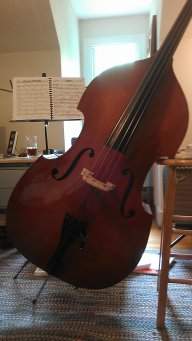
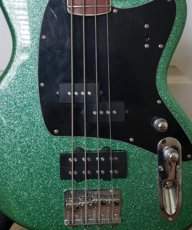
View attachment 5145098 View attachment 5145097 Electric bassist and guitarist here. I bought an Englehardt and the seller says the strings are pretty old. You can see visible wear.
I'm wondering if a string change would improve clarity, especially for the E and A strings.
I was thinking about trying some Spiros but wondering if there is a cheaper option that would work mainly for bluegrass. Would be nice if they would work for pizzo and a little arc.

Would D'addario Hellicore Hybrids be a good and more affordable option? Thanks!
 
Last edited:

IMG_1635.jpeg
IMG_1636.jpeg
 
If you are noobie to upright, maybe have a friend or luthier give this bass a once over, otherwise I would just clean the strings and fingerboard with a little alcohol and a non scratch scrubber. Dry everything really well with a clean rag. The silks being worn shouldn't make any difference but if the strings are dead, the Heliocores with get you going.
*based on these fotos, I'm concerned about the E string slot alignment in the nut AND the E and the G string windings are up tight against the cheeks in the pegbox.
 
  • Like
Reactions: PBandJazzBass
I've seen just about any kind of strings on double basses in the wild at bluegrass festivals... They range among the common all-metal, metal wrap over synthetic core, all-synthetic, synthetic wrap over metal core, wackers, and guts, in all ranges of tension and stiffness. I don't see guts often, but they're out there sometimes. There doesn't seem to be a strong standard pointing to one kind of string in bluegrass.

So, primarily pizz with some slap technique, acoustic tone and volume, and how they treat your hands, should probably be the string criteria for a primarily bluegrass double bass.

I'd highly recommend lessons -- bass guitar and double bass are very different instruments. But unless your double bass teacher has specific bluegrass experience, he or she may recommend strings that are used more for other genre. Specifically, while the bow may be used occasionally in bluegrass, pizz is used the majority of the time, so I wouldn't recommend using strings that are optimized for arco.

Hybrid pizz/arco strings might be useful, since arco is very helpful in practice for intonation. And being lower tension for slap-compatibility would also be handy.

P.S. You mentioned wanting louder E and A strings. That could be a setup issue -- the sound post positioning can make a big difference in the volume balance and tone of your strings. Maybe a visit to your local qualified double bass luthier would be helpful?

Also, as mentioned, double bass strings can last a very long time. The wear on the silks of your existing strings doesn't necessarily mean they are in need of immediate replacement.
 
Last edited:
I'd suggest you try dirty guts. Not sure there are any strings cheaper, and they will give you a sense of guts w/o laying down full cost for the real deal.

My personal faves are Evah slap guts - not the synthetics. But they are 5x the cost of dirty guts.

Personally, I'm not at all a fan of spiros for BG, but many pros disagree.
I'm not a pro, but certainly disagree on the Spiro question. I've played bluegrass for close to 40 years now, with Spiro mittels. I even have them on my EUB, which I use for bluegrass. But everyone's experience is valid, as is their opinion.
 
I've seen just about any kind of strings on double basses in the wild at bluegrass festivals... They range among the common all-metal, metal wrap over synthetic core, all-synthetic, synthetic wrap over metal core, wackers, and guts, in all ranges of tension and stiffness. I don't see guts often, but they're out there sometimes. There doesn't seem to be a strong standard pointing to one kind of string in bluegrass.

So, primarily pizz with some slap technique, acoustic tone and volume, and how they treat your hands, should probably be the string criteria for a primarily bluegrass double bass.

I'd highly recommend lessons -- bass guitar and double bass are very different instruments. But unless your double bass teacher has specific bluegrass experience, he or she may recommend strings that are used more for other genre. Specifically, while the bow may be used occasionally in bluegrass, pizz is used the majority of the time, so I wouldn't recommend using strings that are optimized for arco.

Hybrid pizz/arco strings might be useful, since arco is very helpful in practice for intonation. And being lower tension for slap-compatibility would also be handy.

P.S. You mentioned wanting louder E and A strings. That could be a setup issue -- the sound post positioning can make a big difference in the volume balance and tone of your strings. Maybe a visit to your local qualified double bass luthier would be helpful?

Also, as mentioned, double bass strings can last a very long time. The wear on the silks of your existing strings doesn't necessarily mean they are in need of immediate replacement.
Thanks for the info. The wear I was speaking of is on the strings themselves and not just the silks.
IMG_1639.jpeg
IMG_1639.jpeg
 
  • Like
Reactions: Don Hergert
Thanks for the info. The wear I was speaking of is on the strings themselves and not just the silks. View attachment 5146068View attachment 5146068

Ahhh, I see. I'm not a metal string user so I cannot comment about changing those specific strings, but they do look pretty gnarly.

I use low-tension synthetics, my 1930s Alcoa DB is aluminum and for better acoustic tone and for old-hand reasons I stay away from high tension and metal strings. I'm using Innovation SilverSlaps E and A under Superior Bassworks (SBW) Deluxe Dirty Guts D and G; both string types have been discussed here previously... I have tried other strings over the last year, but keep coming back to this mixed set for their acoustic tone, volume and touch, for pizz and slap, plus they are surprisingly good for arco and they do also amp very well.

Double bass strings are a rabbit hole. They are just one part of a huge equation of setup details that together make a double bass sound the way it sounds. It's very easy to try this and that set of strings, and this and that setup tweak, ad infinitum. It can be distracting. I consider myself lucky to have been pretty well settled with strings and setup on my DB for the last 5 or so years.
 
After you've had the bass looked over by a luthier, I'd actually recommend the D'Addario Preludes.

1) They're not super expensive.
2) They get a dark and thumpy pizzicato sound without a ton of sustain.
3) They're fine under the bow.

I've seen plenty of bluegrass players use them with good results. The only caveat would be they're probably not the best choice for slapping.
 
Light or med is a compromise and personal
And really depends on how your bass is setup, if your string height is high or bass has a deep chamber, med will be hard to play but will be louder (mostly)
You can compare the tension figures on the hybrids with the dominant you have on now to get a little sense of how it will feel just make sure to account for the string length they used for the measurements

Simply if you have low string height and its easy to play up the neck get med
If your strings are high without adjusters or there is a big scoop in fb get light
 
  • Like
Reactions: squeally dan
Tomastik Dominants are synthetic core string. Expensive. And loud strings. They are prone to breakage, and that these are still holding up I'd be careful about ditching them in a haste. DD hybrid lights will def not be as loud as doms. The doms may break when your luthier does the setup.

The winding separation happens when the nut/bridge grooves are too tight and/or grooves not lubed properly. If the separation does not feel too bad, you might want to keep these strings (or just replace the E) and focus on the setup, including what @JeffKissell noted above. Any string may break when pinched against the side of the peg box, or damage to the tuner machine if forced to tighten.

If the doms break during setup retuning, then I'd go for DD zyex lights.
 
The separation in the vibrating part from synthetic core strings comes from the stretching of the core over time, not from tight grooves.
A tight nut groove leads to stretching and winding separation in the peg box.
Separation of the windings are only bad if they may cut into your skin or if they are not evenly distributed.

Synthetic core strings stretch easier when pressed down to the fingerboard than steel core strings, so if you want to go steel core and are used to synthetic core, rather get a lower tension string set. Also the steel core strings are thinner and might cut more into your left hand fingers.

The higher the action the more the string needs to get stretched by pressing it down onto the fingerboard.
So you might get disappointed because of the enlarged finger pressure you need for your left hand if you change to steel core strings from synthetic core.

Just a serious warning. Your decision.
 
If you can spare the extra money, I'd seriously consider getting a set of Spirocores over the Helicores. They are more expensive, but sound better in most cases and last forever. They'll get you everything the Helicores do, and more.

When I used to use Helicore Hybrids, I changed them about every 7-8 months. The set of Spiros on my bass are over 2 and a half years old.