
Use softer rounds on a hard fretboard. Something nickel plated at least.

Enjoy the benefits of a premium membership!
Upgrade Account
-
TalkBass has been independent since 1998. Add your voice.
Create a free account to reply to discussions, view embedded media, and browse with fewer display ads.
Join free Log in
Want zero display ads or expanded classifieds tools? Compare plans.
You are using an out of date browser. It may not display this or other websites correctly.
You should upgrade or use an alternative browser.
You should upgrade or use an alternative browser.
Strings for fretless
- Thread starter bassfootballguy
- Start date
More options
Who Replied?
To which I will counter with EB Cobalt Flats.
Further, it is my experience that 'mwah' is much more a function of setup and technique than strings. Almost any string can be made to mwah on a flat board with low action. Since 1984 I've played Roto 66, 55 and 707, Dean Markley Half-Round, d'Addario ProSteel, Nickel and Chrome and EB Slinky and Cobalt Flats. Adding in some relief and raising the action will kill the mwah from even the brightest of shiny new SS rounds.
On the question of fingerboard damage, it is a real thing. The problem is it is easy to mistake minor wear or other imperfections for mwah. In this sound clip from a month or so ago there is slight wear around the F on the D string (14.5s and 27s onwards). The board was Plekked to perfection in September 2017 and this started happening in April 2021, with daily use.
I agree 100% with you on BOTH counts. I had a GL L2000 Fretless (should never have sold it). I was told it would sound better with rounds, and that any cosmetic damage would take a long time to develop. I tried rounds. Immediately putting marks into a pristine fingerboard. I eventually sold the bass (regrettably) but now I use LaBella 750N. I have low action, and get the mwahhh sound without screwing up the instrument. People who only play BG want that twangy sound of the rounds. But I started on DB, so I accept the warm, nasal mwahh that they produce. I prefer nylon tape wound or flats to the crisp bass guitar sound. If I need that, I have a couple of fretted Jazz basses with rounds to supply it. But I play a fretless P bass usually, with nylon tape-wound, and have the mellow tone without the fingerboard damage. Just my preference and opinion.

TI Jazz Flats or EB Slinky Cobalt Flatwounds. Since I'd a Double Bassist roundwounds aren't to my liking. Tapewound strings feel weird and sound weird to my ears.
I had a pair when Labella first introduced them, so I only used them once. Just my take however.
I had a pair when Labella first introduced them, so I only used them once. Just my take however.

I used rotosounds when I started in the 80s because at that time that's what you put on bass guitars. I recently switched to TI jazz flats because I've always used TI spirocores on upright, but the jury's still out on that. The cheapo 6-string fretless I bought last year came with some kind of flat I took a real liking to.
As for note bloom ("mwah"), i think i got more out of rounds, fwiw, but it's more about technique than strings IMO.
As for note bloom ("mwah"), i think i got more out of rounds, fwiw, but it's more about technique than strings IMO.

Rounds + lower action + play near fingerboard.
He nailed the recipe. Good round wounds are the beginning but that mwah sound is all in the set up and plucking hand. Actually, I'm a little surprised that the subject of setting up a fretless isn't discussed more often. In my experience a fretless is much more sensitive to set up than a fretted instrument. The nut will typically need to be filed down (or lowered if you have a Warwick), the neck will need to be just a touch off perfectly flat and the strings need to be as low as possible. The "mwah" sound is the string changing length as it vibrates against the fingerboard. That won't happen if you set it up like a fretted bass. My fretless instruments are set up so low that a minor temperature change will cause them not to ring properly. Then I rest my thumb on the end of the fingerboard and pluck the strings in front of the neck pickup #mwah
Setting intonation is a PIA since you can't really play a perfectly fretted note. You will need to use harmonics (not sliding ones though
 )
)
I use Dunlop Super Bright Nickel Roundwounds.
As for plek, the machines work just as well with fretless as they do with frets. Mike Lull plek'd a fretless for me before he sadly passed on, and it's great. Also at least while he was alive, he plek'd all of the Lull fretless basses that he sold.
The OP states his fingerboard is already epoxy coated, so that's covered.EDIT: If you're really worried about wear, coat the fingerboard with epoxy or CA glue.
How exactly does a fretless bass get Plekked?
As for plek, the machines work just as well with fretless as they do with frets. Mike Lull plek'd a fretless for me before he sadly passed on, and it's great. Also at least while he was alive, he plek'd all of the Lull fretless basses that he sold.

Well, I learned something new today! Thanks!I use Dunlop Super Bright Nickel Roundwounds.
The OP states his fingerboard is already epoxy coated, so that's covered.
As for plek, the machines work just as well with fretless as they do with frets. Mike Lull plek'd a fretless for me before he sadly passed on, and it's great. Also at least while he was alive, he plek'd all of the Lull fretless basses that he sold.
- Sep 4, 2010
- 3,304
- 2,730
- Disclosures
- Endorsing: Martin Keith Guitars
- Fingerboard: I've used steel roundwounds on a bare ebony board intensively and I've not experienced problems. With proper applied epoxy you should be good for many years in terms of maintenance - just like you'd re-dress and level your frets every 5-10 years too with intensive playing
- For the mwah go with low setup and roundwounds.
D
Deleted member 165050
Guest
If you could play a fretless bass with rounds(or pressurewounds for that matter) over a large white piece of paper on the floor under the neck for a period of time(pause).......you will not see fingerboard sawdust on it.
The extent of wear from rounds has been greatly exaggerated.
You will see winding marks after a great while.
Which are easily sanded out with a radius block and some super fine sand paper.
Edit:
Now.
If you slap,tap,double thumb and push the palm of your hand down the strings over the neck on your fretless(Jaco did this on occasion)the deal is off!
It was never about sawdust, always about pressure marks. I would only worry if it's bare rosewood. I've seen a rosewood board with absolute tram lines down it, old bass though.
D
Deleted member 165050
Guest
Anyone who answers with anything besides roundwounds isn't answering the question. You may like flats or half wounds but for classic mwah you need rounds.
I disagree! I get mucho mwah with TIJFs, LTFs and Roto 77s on a variety of basses. There should be a mwah contest held somewhere

TI Flats are on mine and I love those strings and can get plenty of mwah out of them. They aren't cheap though, especially if your looking at a 5 or 6 string set.
I used GHS ground rounds on my '76 Fretless Precision. (Long gone….) Not pressure wounds, but ground rounds. They made great mwah! Do they still make those?

I used GHS ground rounds on my '76 Fretless Precision. (Long gone….) Not pressure wounds, but ground rounds. They made great mwah! Do they still make those?
I used Dean Markley ground-wound strings once upon a time, around 1985/6. They were terrible. I looked today to see if I could find them - thankfully they appear discontinued.
GHS Brite Flats? They still make those.I used GHS ground rounds on my '76 Fretless Precision. (Long gone….) Not pressure wounds, but ground rounds. They made great mwah! Do they still make those?
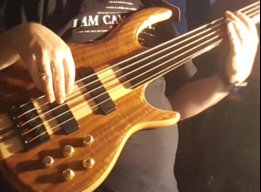
I played rounds on an untreated ibanez musician fretless wood board (it was some form of dense rosewood), for years, hours a day every day. It finally started wearing audibly in one small spot after many years, which is a repairable problem. I dislike flats on fretless, personally, as I have not have good experiences with them getting the tone I want on fretless. If others can do it, that's great. Obviously flats are not going to wear it down nearly as much, but rounds might make visible scuffs fast, but you shouldn't hear it affecting things for a long long time with a good hardwood board.What about potential damage to the fingerboard?
But yes, epoxy or similar is an even better solution to letting you use any strings you want without issues. My carvin fretless has their "tough as nails" finish and it truly is tough as nails.
I cannot say which non rounds are best but others here seem to have good suggestions. But for me, the only time I've ever used flats and liked them a lot are on hollow body electric basses - old gretch style basses, that kinda thing. Just what I like. Fretless for me loves the rounds. But if you can get that mwaaah from flats, that's awesome too.
D
Deleted member 165050
Guest
I believe, and I'm fairly sure that I'm correct, that Tony Franklin uses rounds on bare ebony, and has done so since the 80s (or longer)

This issue has been complicated for me. I have a Pau Ferro neck on my fretless that I like in general, but I've sanded it down multiple times with a radius block and there are still a couple of spots on the fingerboard that aren't quite flat and with SOME strings (but not all) produce angry-cat-meow instead of mwah.
Also, I'm a flats/tapes guy (don't like the feel and string noise of rounds), so I've tried LOTS of those kinds of strings on this bass and determined that TIJF's are the best for it, except for one issue I address below. Interestingly, I've tried multiple TIJF sets, and only one of them doesn't complain about those not-quite-flat spots on the fingerboard, so I use that set. It provides lots of nice but not overbearing mwah and provides a great overall tone and feel ...
... Except that the TIJF A string just doesn't sound right. It has what I call a honky growl quality that is not consistent with the other strings. There is a little bit of that with the A string on fretted basses, but not enough to be concerned about. But on this fretless, it just doesn't work (and every TI A I've tried is like this). So I tried mixing in A strings from other sets (several of them, just to be thorough) and only one worked, and worked REALLY well: the Sadowsky Blue Label .080 flat (newer version) from the 40-100 set. The Sadowskys have an overall tonal profile and midrange emphasis that is similar to the TIs anyway (though a bit harsher), but on this bass, the A string sounds like it was made to work with the other TI strings. This hybrid set sounds really good! The downside is that the Sadowsky string is significantly stiffer than the TIs, but I can deal with that.
Also, I'm a flats/tapes guy (don't like the feel and string noise of rounds), so I've tried LOTS of those kinds of strings on this bass and determined that TIJF's are the best for it, except for one issue I address below. Interestingly, I've tried multiple TIJF sets, and only one of them doesn't complain about those not-quite-flat spots on the fingerboard, so I use that set. It provides lots of nice but not overbearing mwah and provides a great overall tone and feel ...
... Except that the TIJF A string just doesn't sound right. It has what I call a honky growl quality that is not consistent with the other strings. There is a little bit of that with the A string on fretted basses, but not enough to be concerned about. But on this fretless, it just doesn't work (and every TI A I've tried is like this). So I tried mixing in A strings from other sets (several of them, just to be thorough) and only one worked, and worked REALLY well: the Sadowsky Blue Label .080 flat (newer version) from the 40-100 set. The Sadowskys have an overall tonal profile and midrange emphasis that is similar to the TIs anyway (though a bit harsher), but on this bass, the A string sounds like it was made to work with the other TI strings. This hybrid set sounds really good! The downside is that the Sadowsky string is significantly stiffer than the TIs, but I can deal with that.
D
Deleted member 165050
Guest
The potential for fingerboard damage is grossly exaggerated by some to the point where I wonder if they have an agenda.
Or, some of us have actually witnessed damaged fingerboards, especially bare rosewood fingerboards.
I'm just wondering what the agenda could be... if I stop all other fretless players using rounds then I will be known for my distinctive and unique fretless-with-rounds sound? Reverse psychology and I want people to damage their fingerboards so I can unload the huge stash of rosewood fingerboards I acquired in the 90s? Maybe I have a warehouse full of flatwound strings that are approaching their sell-by date and I need to discredit roundwound strings to shift them?
Or, some of us have actually witnessed damaged fingerboards, especially bare rosewood fingerboards.
...
Some of us posted hard audio evidence of it, seemingly to no avail. Go figure!


