• TalkBass has been independent since 1998. Add your voice.
    Create a free account to reply to discussions, view embedded media, and browse with fewer display ads.
    Join freeLog in
    Want zero display ads or expanded classifieds tools? Compare plans.

Stripping poly question

Hey y’all

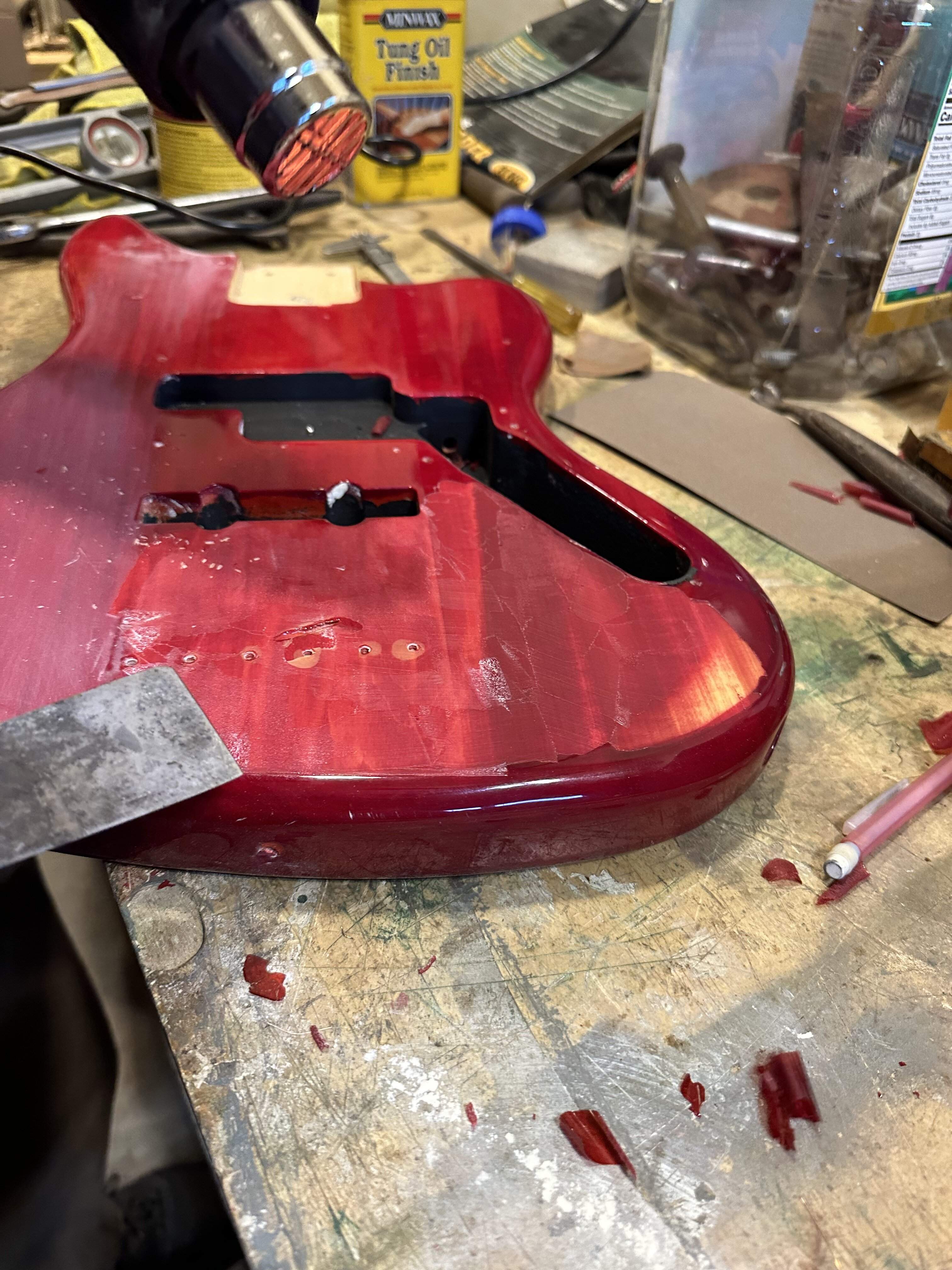
I bought an old Squier vm Jaguar bass as a project to refinish and fix up. I’m starting to remove the finish and having a tough time. We’ve tried a few methods without much success… chemical stripping, sanding, and a heat gun. From the videos I’ve watched, they all make it seem so easy, and the old poly pops off in big, thick flakes exposing the wood. The best I’m getting is the top of the poly peels off in curls, kind of like when scooping ice cream, but there is still a lot of finish left. After several attempts I’ve finally gotten down to wood, but the poly or whatever kind of flaked off, and using an old hand planer blade seemed to work better.

so… what am I doing wrong? This is the translucent red finish of the vm squier jaguar special V. Is there a thicker sealer over the wood stain or something that doesn’t loosen well under heat? Am I not letting it get hot enough? Something else to fix with my technique?

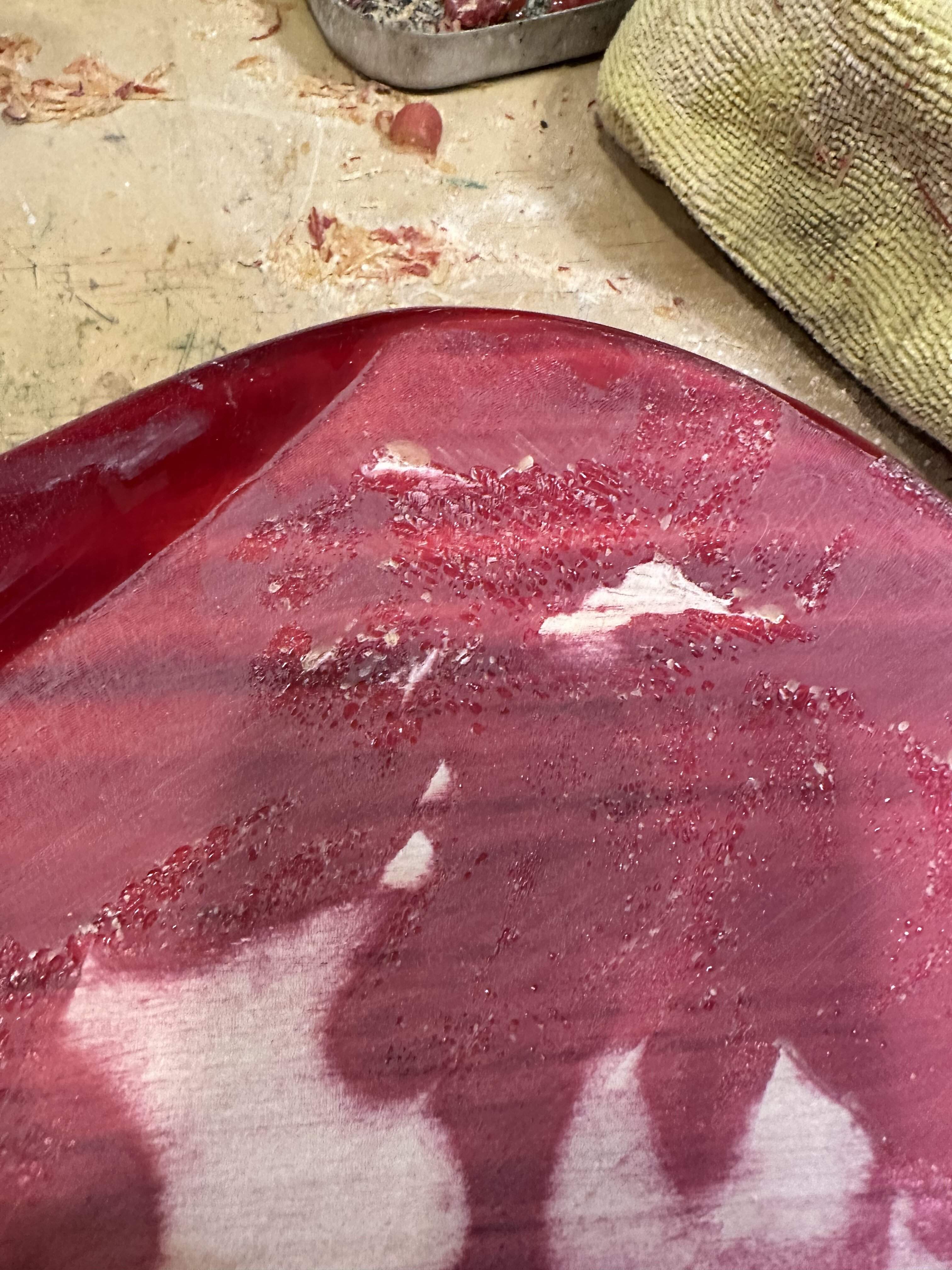
Pictures showing what’s left after peeling off the top finish
E337DBF5-ECE3-429E-B60E-05E4868F84E3.jpeg
D2E5E41E-DCDE-416D-B639-E3C2470C2043.jpeg
 
There are different ways of finishing wood. Often we see instruments where the raw wood is sealed then a finish (opaque, translucent or clear) is sprayed on. Another method is to stain the wood then apply a finish. In the first case stripping will get down to bare wood. But it looks as though in your case the wood was stained. The stain soaks into the wood to a degree, so to get rid of it you have to sand off a layer of wood. Carry on with the heat gun, then sand.
 
Tal-Strip II Aircraft coating remover. Spray it on. Let it sit. Scrape off. I used this to strip the paint of an old motorcycle gas tank. It's amazing how well it worked. The paint scrapes off like wet paper. Also, use in a well ventilated area. Like, preferably outside, or at a friend's garage with the door open.
Invalid Link Removed
From what i'm to understand, it works on wood. But, i've never used it on wood to know what the wood will look like once the paint is off. Worth doing more research into if you consider using it. It will get all the layers of poly and paint and primer off.
 
Paint stripper these days is virtually useless. I've used Easy-Off oven cleaner to strip old finish on old rifle stocks; you might try it on your guitar body. Just make sure any non-wood parts are removed. It looks like you've already done that. Remove residue with cold water. The other suggestion above is also a great paint remover, however I found it impossible to find where I live. But looking at your last photo you're probably at the stage where you just need to start sanding. I suggest a hand-held rotary sander to speed the process, just be really careful and go lightly on the curved surfaces (or do those by hand). It looks like there's some nice wood under that finish. Good luck and have fun!!
 
Last edited:
  • Like
Reactions: bigthemat
But looking at your last photo you're probably at the stage where you just need to start sanding. I suggest a hand-held rotary sander to speed the process, just be really careful and go lightly on the curved surfaces (or do those by hand).
Agreed. That's about how my J bass looked before I started stripping the finish. My friend took the finish off with a 5" orbital sander in about...an hour, maybe, and a couple of coarse grit (don't remember the actual number) sand paper discs. He got it down to the sealer coat, and I took the rest off by hand with sandpaper. Worked out pretty well.
 
My experience stripping poly is limited to solid colors on MIM J basses but it’s always been easy with a good heat gun and a couple homemade scrapers, one was a cheap phillips head screwdriver i ground down to a flat tip and an old metal back from a small project box. I rounded the edges on both pieces to avoid gouging, then heated and popped off the poly in chunks. It took about an hour to get it down to the sealer, then a bit of sanding to smooth and level that, and it was ready to paint.
 
  • Like
Reactions: bigthemat