

Enjoy the benefits of a premium membership!
Upgrade Account
-
TalkBass has been independent since 1998. Add your voice.
Create a free account to reply to discussions, view embedded media, and browse with fewer display ads.
Join free Log in
Want zero display ads or expanded classifieds tools? Compare plans.
You are using an out of date browser. It may not display this or other websites correctly.
You should upgrade or use an alternative browser.
You should upgrade or use an alternative browser.
SVT810E Refinish
- Thread starter mapleglo
- Start date
More options
Who Replied?
I did a little more today. In between sanding, I put together a plug for the speaker connector panel. I've decided that it is a huge leakage area, so I disconnected the guts from the panel, and made a plug out of wood.
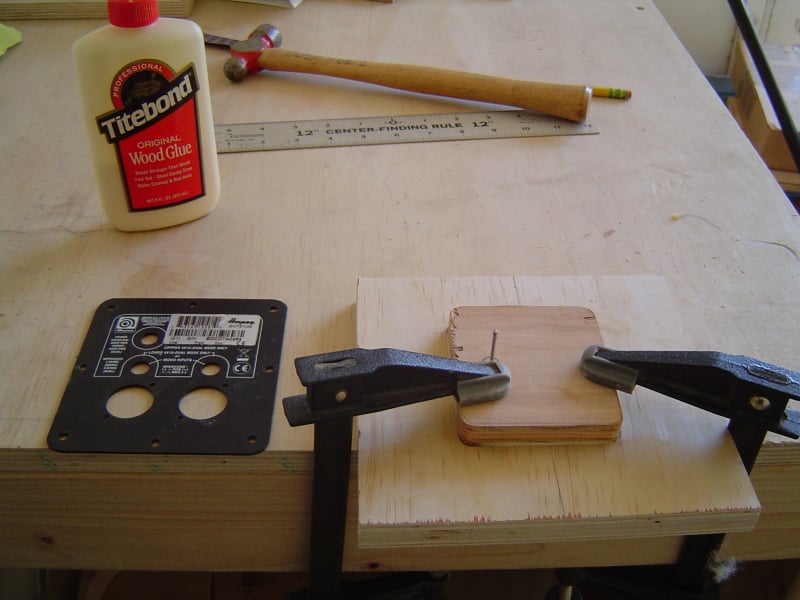
I'll just use the left "mono" 1/4" jack (and maybe at some point, upgrade to the speakon connector), drill one 7/8" hole in the wooden plug for the jack, with a small exit hole for the wire, and seal it up with silicon. Then I'll glue the plug in, and put a bead of silicon around the entire thing, and slap the plate back on.
I think the belt sander takes off too much, so I started sanding one side with 60 grit by hand.
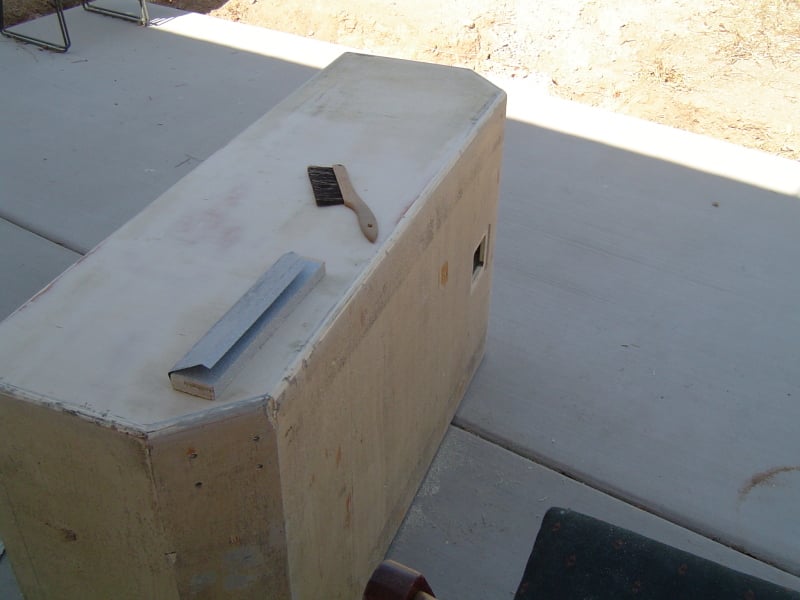
OK, that side is done. That took a couple of hours.
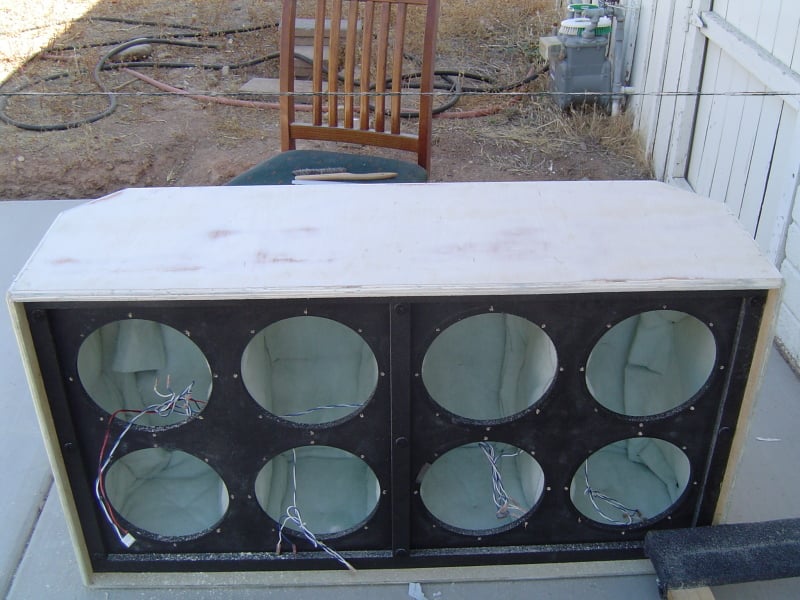
I can't decide if I'm sanding through the top layer of laminate, or if they laid down some kind of white colored sealer that I'm sanding through.
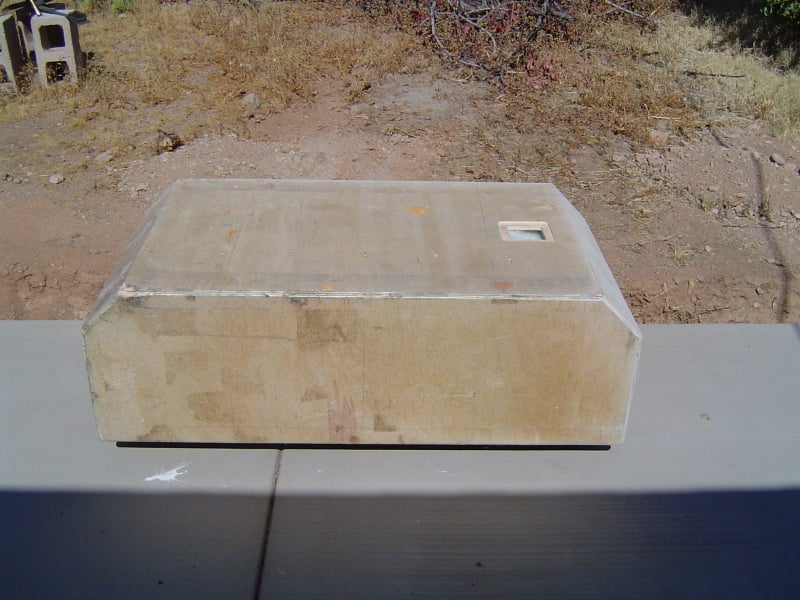
The sun is getting pretty high in the sky, so I left the cabinet in direct sunlight to see if it'll dry out any of the glue on the remaining sides. My arms feel like rubber at this point, so it's time for a break.
I'll just use the left "mono" 1/4" jack (and maybe at some point, upgrade to the speakon connector), drill one 7/8" hole in the wooden plug for the jack, with a small exit hole for the wire, and seal it up with silicon. Then I'll glue the plug in, and put a bead of silicon around the entire thing, and slap the plate back on.
I think the belt sander takes off too much, so I started sanding one side with 60 grit by hand.
OK, that side is done. That took a couple of hours.
I can't decide if I'm sanding through the top layer of laminate, or if they laid down some kind of white colored sealer that I'm sanding through.
The sun is getting pretty high in the sky, so I left the cabinet in direct sunlight to see if it'll dry out any of the glue on the remaining sides. My arms feel like rubber at this point, so it's time for a break.


I did my 1975 810 a number of years ago. Applied the Duratex a bit roughly, which left the surface quite abrasive in places and prone to taking skin off. If I had it to do over again, I'd roll Duratex on with less texturing. Nonetheless, new surface and new speaker grillcloth were a massive improvement over the old tolex.





The Duratex can be very rough if applied with their supplied rollers. You can use different types, and I've also used a very fine grit sandpaper on my orbital sander to smooth it down and make it really close looking to tolex etc. I just started my own business here in Austin doing cab/amp/PA refinishing and I've had a couple customers get the Duratex done and I also did an SWR Goliath II that turned out nice.


I did my 1975 810 a number of years ago. Applied the Duratex a bit roughly, which left the surface quite abrasive in places and prone to taking skin off. If I had it to do over again, I'd roll Duratex on with less texturing. Nonetheless, new surface and new speaker grillcloth were a massive improvement over the old tolex.



Wow! That looks great! Did you find that your cabinet leaks air as well, or are you just not as prone to OCD as I?
And speaking of OCD, I put the plug in place, position the jack panel, and marked the hole for the single jack.
Then I drilled the hole for the jack, and glued on another layer of 1/2" on the back side.
I'll let that set up, and see if the sun dries out any more of that glue. If not, it's likely going to take a few weekends of sanding to prep this cabinet.
Wow! That looks great! Did you find that your cabinet leaks air as well, or are you just not as prone to OCD as I? .
Happily for me and *my* OCD, the cabinet was indeed airtight, with no leakage issues. And I must say, I admire your superior woodworking skills.
Happily for me and *my* OCD, the cabinet was indeed airtight, with no leakage issues. And I must say, I admire your superior woodworking skills.
Thank you!
I stopped by the hardware store and picked up some of this:
I thought I'd try some on the bottom of the cabinet to help loosen up some of that glue. But before I do that, I thought to ask if anyone has any experience with this stuff. It's pretty non-toxic, but I'm a little concerned about it messing up the wood. After sanding for a few hours this morning, I figure there must be a better way. But maybe not - I don't want to mess up the wood.
Too hot now to do anything outside, so I guess this will wait until next weekend.

Some glues are difficult to remove. Mechanical abrasion seems to be the one of the better ways to remove them. In some cases, I use acetone. Nasty stuff to breath and it can get absorbed into your system through your hands if you aren't wearing proper gloves. But it can do a good job.
A belt sander can be quite aggressive. I use a random orbital sander. I start with 50 or 60 grit, then finish with 320. You want to leave some roughness for the coating or glue to bite into.
I've used Goo Gone for cleaning and degreasing but not on wood. My concern is that these type of products use oils as a solvent and there is the possibility that the oil can penetrate into the wood and interfere with the adhesion of the Duratex. If you use it, I would try to not let it soak into the wood more than you need to. Work on a small area at a time, the glue will act as a barrier. Then finish with a solvent such as acetone would help leach out any of the oils.
The white coat on your cab looks like something that they applied to the wood to even out and seal the surface as you said. Some of these products are water based. They are rock hard when dry but will soften with water and sand more easily when wet. It depends on what they used.
A belt sander can be quite aggressive. I use a random orbital sander. I start with 50 or 60 grit, then finish with 320. You want to leave some roughness for the coating or glue to bite into.
I've used Goo Gone for cleaning and degreasing but not on wood. My concern is that these type of products use oils as a solvent and there is the possibility that the oil can penetrate into the wood and interfere with the adhesion of the Duratex. If you use it, I would try to not let it soak into the wood more than you need to. Work on a small area at a time, the glue will act as a barrier. Then finish with a solvent such as acetone would help leach out any of the oils.
The white coat on your cab looks like something that they applied to the wood to even out and seal the surface as you said. Some of these products are water based. They are rock hard when dry but will soften with water and sand more easily when wet. It depends on what they used.

I'm going to throw in another vote for an orbital sander. You can get them pretty cheap (@ $30 I think). They are not nearly as aggressive as a belt sander but do a really nice job and save a LOT of physical effort. You can start off with something like 60 grit like Beans said. You don't have to push hard , just let the machine do the work. Less pressure on the sander takes off less material. I finish body work on cars with about 400 grit but I think that will be too fine for wood. Like Beans said , you want to leave a little texture for the duratex to stick too. That last one you did looks really good. Can't wait to see this one finished. I have 2 cabs in similar condition to yours. Guess sooner or later I'll have to follow suit. Good luck.
Yeah, reading the label it states it has petroleum distillates. The guy at the store said it was citrus based, which it is, but I think you're right about the oil interfering with the Duratex adherence. I guess I'll look into the orbital sander. I though I had a small handheld sander around here somewhere, though I think it is a finishing sander. I'll have to take a look around for it, see if it makes for easier work. I think $30 is not a lot to save a few hours of sanding.
By the way, the cabinet has been sitting in the hot Arizona sun since this morning, and the glue residue is still sticky and soft. I better think about putting it away before some small animal or insect decides the stuffing makes for a comfy bed. Thanks for the help!
By the way, the cabinet has been sitting in the hot Arizona sun since this morning, and the glue residue is still sticky and soft. I better think about putting it away before some small animal or insect decides the stuffing makes for a comfy bed. Thanks for the help!
The plug fits in there pretty well. I'll wire up the jack and seal that up nice and tight with glue and silicon, and then fill the wire holes, once I get some of those push-on connectors for the speakers. That way I can put the original wiring harness back in if I ever want to put the cabinet back to stock.
Soft glue just tends to clog the sandpaper. I'm wondering if you can use a single edge razor to scrape the glue once it has been softened by the heat: [Invalid or Expired Link Removed].
The vintage cabinets had the vinyl affixed with hide glue. Same type of glue that many acoustic instruments are assembled with. It's water soluble so all it takes is a bit of water and heat to soften the glue. Then it is easily scraped off with these blades.
The vintage cabinets had the vinyl affixed with hide glue. Same type of glue that many acoustic instruments are assembled with. It's water soluble so all it takes is a bit of water and heat to soften the glue. Then it is easily scraped off with these blades.
Soft glue just tends to clog the sandpaper. I'm wondering if you can use a single edge razor to scrape the glue once it has been softened by the heat: [Invalid or Expired Link Removed].
The vintage cabinets had the vinyl affixed with hide glue. Same type of glue that many acoustic instruments are assembled with. It's water soluble so all it takes is a bit of water and heat to soften the glue. Then it is easily scraped off with these blades.
I tried a few different bladed instruments of destruction, including a razor, putty knife, and chisel (bad idea). This cab was made in 2007 (?), so the "modern" glue has mutated into a gelatinous mass that's too hard to scrape, yet soft and sticky enough to clog the sandpaper, and roll up into little cylinders that cause sandpaper to ride above the surface, until they are cleared off. Even after a day in the Arizona sun.
I think I'm locked into either buying an orbital sander, or just do the rest by hand. Either way, I'll meet my exorcise goals for this month

Yeah, I wouldn't use a chisel!! If you're going to use an orbital sander, let the glue harden back up. I usually use around 60 grit on mine to start and work my way up. You need to be careful that you don't stay in one spot too long or you can make the wood uneven pretty quick.I tried a few different bladed instruments of destruction, including a razor, putty knife, and chisel (bad idea). This cab was made in 2007 (?), so the "modern" glue has mutated into a gelatinous mass that's too hard to scrape, yet soft and sticky enough to clog the sandpaper, and roll up into little cylinders that cause sandpaper to ride above the surface, until they are cleared off. Even after a day in the Arizona sun.
I think I'm locked into either buying an orbital sander, or just do the rest by hand. Either way, I'll meet my exorcise goals for this month

I used goo gone on mine. It seemed to evaporate out of the wood and did not keep the Duratex from sticking but the glue on the cabinet laughed at it. I tried a DA sander with every grit paper from 80 to 220 but the glue gummed up and the sander wanted to round the corners. I really had the best luck holding the heat gun a few inches in front of a metal putty knife and scraping it off. You have to be careful and not get the wood too hot. As long as you can hold your hand on the wood it's not too hot. Mine's a 2007 also. Don't worry about getting it too perfect , the Duratex is pretty forgiving. Mine looks good but I gig with it , it's not a piece of furniture

Cool project! FWIW, I'm guessing that the unmarked Eminence is the only original speaker in the cabinet (but I've never disassembled a non-US SVT-810 (which I assume yours was made outside the US based on the corner protectors)).


