
Enjoy the benefits of a premium membership!
Upgrade Account
-
TalkBass has been independent since 1998. Add your voice.
Create a free account to reply to discussions, view embedded media, and browse with fewer display ads.
Join free Log in
Want zero display ads or expanded classifieds tools? Compare plans.
You are using an out of date browser. It may not display this or other websites correctly.
You should upgrade or use an alternative browser.
You should upgrade or use an alternative browser.
Swamp Ash vs. Regular Ash : Any tonal differences?
- Thread starter IAmTheAntipop
- Start date
More options
Who Replied?
I think the swamp ash sounds a bit more swampy.



I think the swamp ash sounds a bit more swampy.
You mean it's better for Cajun music? I think the other is better for regular music...
OK I felt like a jerk for the stupid joke so I found something for the OP from Carvin's custom shop. Hope it helps.
[Invalid or Expired Link Removed]
[Invalid or Expired Link Removed]
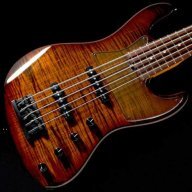
Seems the biggest diff is that swamp is lighter weight and has more pronounced grain. Tonally very similar.

Seems the biggest diff is that swamp is lighter weight and has more pronounced grain. Tonally very similar.
I can attest to the weight factor. My last parts-bass project used a Mighty Mite (swamp ash) body, and despite it being a Jazz body, which are typically more massive than P-bodies, the final assembly came to exactly 8lbs.
As far as the grain goes, check out it's thread. The blue burst finish really shows off the wood nicely.
But on the "tone wood" front, I'm still a bit of a skeptic. Certainly, something that lacks any resonance (e.g.: plywood) can seriously dull the sound, but personally, I put more faith in what the strings and pickups deliver. After all, it their interaction that creates the sound in the first place.

Swamp ash is lighter(as mentioned). I find the tone spongy and not as articulate. One of my least favorite woods.
Northern Ash is heavier and has a more punchy and snappier sound. Very pronounced lows and highs.
If you were to ask about alder I would its tone and weight right in between the two.
Northern Ash is heavier and has a more punchy and snappier sound. Very pronounced lows and highs.
If you were to ask about alder I would its tone and weight right in between the two.
Swamp ash is lighter(as mentioned). I find the tone spongy and not as articulate. One of my least favorite woods.
Northern Ash is heavier and has a more punchy and snappier sound. Very pronounced lows and highs.
If you were to ask about alder I would its tone and weight right in between the two.
I think the story about where Swamp Ash comes from the tree is important. I have lot of basses said to be "swamp ash" including G&L tribute, bunch of SX, two G&L USA and others. Oddly ALL of the basses weigh 11 or so pounds, None score the 8 pounds that many here on TB say their swamp ash basses tip the scales at.
And not surprisingly all the ash bodies have very pronounced lows and highs which I love. My alder body basses (Fender, SX, etc.) are much more mellow. Don't get me wrong they are a very NICE mellow! just don't have that ash "edge". They are not like my Squire agathis or a basswood bass (I don't own any) which are rather spongy and "foofy" sounding to me. I'm guessing all my "swamp ash" bodies were higher up the tree making them heavier and more like Northern Ash.
Probably my favorite tonewood is mahogany. It sort of does it all. The Carvin Wood descriptions are pretty my identical with my wood assessments.
But lets face it. The differences in tone from wood are VERY minor and you only can tell in owning a bass for a while and playing it. Nobody listening to you play would ever be able to ID the wood. As noted above, pickups, strings, electronics etc. make a much bigger difference.

Heavy, dense northern ash has a much more percussive and bright tone than swamp ash. I hear the difference particularly in the low mids which hit much harder with hard ash.
I had a custom bass in northern ash that I loved the sound of but struggled with the weight of it. I ordered the same bass (from the same builder) with the same specs including electronics, hardware etc with the only differences being the color of the finish and the body wood changed from hard ash to swamp ash. The two sounded very different. Not that the swamp ash was bad necessarily, but it lacked the percussive, bright, naturally aggressive sound of its heavier twin.
FWIW, I had an all maple bass (different brand - this one a Carvin LB76) and it had a lot of the same tonal characteristics even without the same electronics etc. I haven't played nearly enough of the same basses with just wood changes to confidently opine on what different woods specifically do to the tone but I'm convinced that dense bodies lead to a distinctly different tone than lighter weight ones.
I had a custom bass in northern ash that I loved the sound of but struggled with the weight of it. I ordered the same bass (from the same builder) with the same specs including electronics, hardware etc with the only differences being the color of the finish and the body wood changed from hard ash to swamp ash. The two sounded very different. Not that the swamp ash was bad necessarily, but it lacked the percussive, bright, naturally aggressive sound of its heavier twin.
FWIW, I had an all maple bass (different brand - this one a Carvin LB76) and it had a lot of the same tonal characteristics even without the same electronics etc. I haven't played nearly enough of the same basses with just wood changes to confidently opine on what different woods specifically do to the tone but I'm convinced that dense bodies lead to a distinctly different tone than lighter weight ones.

Cool thread, thanks for the Warmoth link.
Maybe I'll find a ply made of swamp ash and regular ash, and have the best of both worlds
Maybe I'll find a ply made of swamp ash and regular ash, and have the best of both worlds
IMO Swamp Ash is better used for a 5 string instrument, due to the weight but I prefer European Ash for 4 strings. Unless you plan to make an acoustic instrument, the tonal differencies aren't AS relavant, I'm not saying not at all but certainly not worth losing you mind over.

It's my understanding that "Swamp Ash" was used in Fender's early days because it was cheap. Furniture and cabinet manufacturers wouldn't touch it because it was the portion of the Ash tree that was underwater. Hence, the "swamp" prefix...
I had a '63 swamp ash Tele that was the lightest weight, nicest sounding solid body guitar I'd ever had! Great pluck and snap, nice sustain... That guitar was capable of covering any style, and any sound you could ever desire from a solid body electric! Someone else thought so too, and made me an offer I couldn't refuse! Haven't had another guitar that sounded as good!
I had a '63 swamp ash Tele that was the lightest weight, nicest sounding solid body guitar I'd ever had! Great pluck and snap, nice sustain... That guitar was capable of covering any style, and any sound you could ever desire from a solid body electric! Someone else thought so too, and made me an offer I couldn't refuse! Haven't had another guitar that sounded as good!

Scott: Much respectIt's my understanding that "Swamp Ash" was used in Fender's early days because it was cheap. Furniture and cabinet manufacturers wouldn't touch it because it was the portion of the Ash tree that was underwater. Hence, the "swamp" prefix...
I had a '63 swamp ash Tele that was the lightest weight, nicest sounding solid body guitar I'd ever had! Great pluck and snap, nice sustain... That guitar was capable of covering any style, and any sound you could ever desire from a solid body electric! Someone else thought so too, and made me an offer I couldn't refuse! Haven't had another guitar that sounded as good!

Heavy, dense northern ash has a much more percussive and bright tone than swamp ash. I hear the difference particularly in the low mids which hit much harder with hard ash.
I had a custom bass in northern ash that I loved the sound of but struggled with the weight of it. I ordered the same bass (from the same builder) with the same specs including electronics, hardware etc with the only differences being the color of the finish and the body wood changed from hard ash to swamp ash. The two sounded very different. Not that the swamp ash was bad necessarily, but it lacked the percussive, bright, naturally aggressive sound of its heavier twin.
FWIW, I had an all maple bass (different brand - this one a Carvin LB76) and it had a lot of the same tonal characteristics even without the same electronics etc. I haven't played nearly enough of the same basses with just wood changes to confidently opine on what different woods specifically do to the tone but I'm convinced that dense bodies lead to a distinctly different tone than lighter weight ones.
Using the tone controls on the bass (not amp) , could you get the swamp to sound like the northern and the northern to sound like the swamp?

When I was putting together my custom Stingray I went with Swamp Ash because it was slightly lighter.As far as tone it gives a more snappy,percussive sound which is what I was looking for.So with that body paired with a maple neck I get a slapping snap and pop machine.

Hopkins
Commercial User
There are a few different species of ash, but swamp ash and northern ash are generic terms. Swamp ash and Northern ash can be, and often are the same species of tree. The difference is that "swamp ash" trees grow in a very wet, nutrient rich environment which promotes faster growth, and a lighter, more open grained wood. Northern ash trees grow slower making for a heavy tighter grained wood. Personally I can't stand working with either of them, because they have a hard/soft grain pattern that makes getting them level for finishing a pain, and the grain requires a ton of finishing. I also don't find them to be all that attractive, they resemble pine IMHO.
As for tonal differences, body wood plays a minimal roll. Any minor difference that may possibly exist can be mitigated with a minor EQ tweak.
As for tonal differences, body wood plays a minimal roll. Any minor difference that may possibly exist can be mitigated with a minor EQ tweak.

My experience, for what it's worth, has been that the heavy ash basses I've played were very slightly compressed compared to the light ash. They have a bit more sustain though. Both had quite a bit of punch! The light ash, by contrast, had a very wide dynamic range (wider than the harder ash).
Hard ash: My Rbass weighs about 10.5 lbs and an 80s L1000 I had was around 9lbs.
Light Ash: my GWB1005 weighs around 7.5lbs (maybe less)
CAVEAT--these basses had widely differing electronics which also could have greatly affected my experiences with each of them. The Rbass J has Nordy pre and 70s wind pups; the G&L had the usual passive setup for a Wunkay; and the GWB has the custom spec Bartolini single aperture pup and TCT pre.
Hard ash: My Rbass weighs about 10.5 lbs and an 80s L1000 I had was around 9lbs.
Light Ash: my GWB1005 weighs around 7.5lbs (maybe less)
CAVEAT--these basses had widely differing electronics which also could have greatly affected my experiences with each of them. The Rbass J has Nordy pre and 70s wind pups; the G&L had the usual passive setup for a Wunkay; and the GWB has the custom spec Bartolini single aperture pup and TCT pre.
Last edited:


