• TalkBass has been independent since 1998. Add your voice.
    Create a free account to reply to discussions, view embedded media, and browse with fewer display ads.
    Join freeLog in
    Want zero display ads or expanded classifieds tools? Compare plans.

Switching basses and getting used to different basses

After playing four, five, and six strings with different scales and string spacings, I've got hard fast rules.

Light weight, four strings, 19m string spacing. Scale doesn't matter that much to me, I've got a 35" Peavey Cirrus, multi scale fanned frets at 36-34 and fanned frets from 34-32. Bonus points if it says Dingwall on the headstock.

I found if I wanted to play the six string, it had to be six string and nothing else. Going between fours, fives and sixes did not work.

I can totally see the point of having just one bass, and that's it. That's how it was for me for decades, before I found Talkbass and the classifieds. It's been fun experimenting, but I've come back around to four strings.
 
  • Like
Reactions: dzcandemir
Do you have challenges switching from bass to bass?
No, not really. One exception (see below).

Any tips on getting used to a 5 stringer from experienced folk out there?

Just jump into it and get used to it. Not much I can think of besides that. Of course, this is where I get into my one exception - going from 5 to 4 and back. I need the B string so much more than the G string. So I tune all my 4 stringers BEAD. Which can throw me for a moment if I'm switching to a 4 stringer on a song where I might use some higher notes. If I haven't thought it out ahead of time (and just make a sudden switch in a set), remembering the string and fret change for that note might escape me for a second.
 
  • Like
Reactions: dzcandemir
I really like playing my #1"P bass but have no trouble with switching to the any of my other basses, including the 5 string.
I exclusively played 5 stringers for about 10 years.
Switching back to primary 4 strings was super easy.
One of the 5 strings had a wider string spacing than I liked so I traded it.
You will get used to it.
 
  • Like
Reactions: dzcandemir
2004 Carvin fretted 4 string (LB model) J/P/Piezos, active/passive
2014 Carvin fretless version of 2004 (avatar pic) J/J/Piezos, active passive
2016 Clement 4 string fretless passive P style split solo

The leap to fretless was on a fretted version of my 2004 #1. It was still a tough leap.
I finally played nothing but the Clement from fall 2018 to about 2 months ago to force myself to get super competent on fretless. That consistency made me bond with it too. The neck carve is quite different from the two Carvins.

After break in, simple regular rotation is the suggestion I would give.
 
  • Like
Reactions: MynameisMe
Never had a problem with different basses other than the action being too high or strings being too unyielding. Usually this is on borrowed basses for sit ins or basses I've bought and intend to remedy. As far as neck profiles and scale lengths, I can adjust between them easily. Could the discomfort you're experiencing be because of the larger (wider) neck or the playing angle? If you hold the neck at an angle pointing towards the ceiling rather than parallel to the floor it reduces the stress on your wrist. That may help. If the problem is the wider neck, wait for your hands to stretch out a bit and get used to the added girth. I love different styles of instruments and play anything from a short scale viola bass, various 34" Fenders, Rics and even a 34.5" Ripper. I don't like fat necks. The most comfortable is the Fender B neck.
 
Hey fellow TBers. This question goes out to people who play multiple basses regularly. I recently acquired a precision bass. It took me about a couple of months to fully adjust. I still get hand pains sometimes if I play for too long. On the other hand I’ve played a jazz bass for almost a decade and needless to say I’m the most comfortable on the jazz. But at this point I’ve played my P exclusively since I got it and I’m pretty much used to it I would say. Do you have challenges switching from bass to bass? I assume it’s pretty normal but can be unnecessarily annoying. Additionally I’m looking to add a 5 stringer to my arsenal. I’m eyeing Ibanez ehb fanned frets. Any tips on getting used to a 5 stringer from experienced folk out there? Thank you.

I regularly play all of my basses . Often on the same gig I may have a 5 string 35" scale and a short scale (30") 4 string.
I have 30, 32, 34, 35, and 42" scale mix of 4 and 5 strings
String spacing is anywhere from 15.5mm to 19mm.
The key , for me is to just play them all regularly.
Hand pain could just be from the mental stress you put on yourself trying to " get used to" a slightly wider nut .
I have always played a mix, and therefore have little issue with the differences.

Issues I encounter is when I have to play a bass owned by someone else, with bridge cable heavy gauge strings, and action high enough to drive a truck under (studio , vintage 70s P bass the engineer insisted I play instead of my Warwick) I only conceded when I was allowed to set it up with new strings and detuned it to drop D and C to get the low notes needed for the material.
 
Last edited:
  • Like
Reactions: dzcandemir
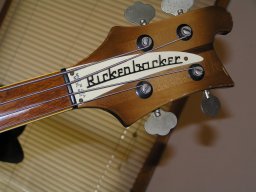
I only use Fender, Warwick and a Rick. The Warwick is my #1 because of the D shape neck but I do like the thin Jazz neck. I recently replaced a road worn Jazz neck with a player jazz neck because didn't care for the pau ferro fretboard. Rick is a rick lol.
 
Last edited:
Hey fellow TBers. This question goes out to people who play multiple basses regularly. I recently acquired a precision bass. It took me about a couple of months to fully adjust. I still get hand pains sometimes if I play for too long. On the other hand I’ve played a jazz bass for almost a decade and needless to say I’m the most comfortable on the jazz. But at this point I’ve played my P exclusively since I got it and I’m pretty much used to it I would say. Do you have challenges switching from bass to bass? I assume it’s pretty normal but can be unnecessarily annoying. Additionally I’m looking to add a 5 stringer to my arsenal. I’m eyeing Ibanez ehb fanned frets. Any tips on getting used to a 5 stringer from experienced folk out there? Thank you.

Try this,
upload_2021-3-15_1-41-1.jpeg


Aside from the overall great build/component quality, it’s a similar shape and string spacing to your P-Bass and the thinner (front to back) neck makes it much more comfortable coming from the four string.

It took me a dedicated couple of weeks to get it feeling normal from the four.
 
  • Like
Reactions: dzcandemir
I only read one response that mentioned tendonitis. You should do some reading on it to see if what you are experiencing seems more like muscle sourness (not a big deal) or tendonitis (a bigger deal). If you keep doing something that inflames tendonitis, it just gets worse and requires a significant amount of time away from the activity to recover. You won't "get used to it" and you can't just "work through it." That's an important difference. I have tendonitis in my left hand. It's likely due to the combination of my day job, which requires lots of computer hours, and my bass hobby. As my job gets more demanding, it can really act up. I've found that J necks are MUCH better for me than P necks as the P necks are more likely to aggravate my tendonitis. On the other hand (ha, punny!) I don't have any problems with my 5 strings, most likely because the top four strings are easy access and I'm not doing lots of reaching across the B string. I can switch between my 4 and 5 strings and find it really good practice to do so regularly such that switching is totally natural now. However, I have a P bass up for sale now that I absolutely love except it has the 1 5/8" nut and stretching across the E string for something like a minor third repeatedly for a tune will aggravate my left hand. This isn't the case on my fivers. So, the P bass is for sale. My PJ, has a jazz neck and that is the one I'm keeping. Do some reading to make sure you aren't dealing with some tendonitis.
 
Hey fellow TBers. This question goes out to people who play multiple basses regularly. I recently acquired a precision bass. It took me about a couple of months to fully adjust. I still get hand pains sometimes if I play for too long. On the other hand I’ve played a jazz bass for almost a decade and needless to say I’m the most comfortable on the jazz. But at this point I’ve played my P exclusively since I got it and I’m pretty much used to it I would say. Do you have challenges switching from bass to bass? I assume it’s pretty normal but can be unnecessarily annoying. Additionally I’m looking to add a 5 stringer to my arsenal. I’m eyeing Ibanez ehb fanned frets. Any tips on getting used to a 5 stringer from experienced folk out there? Thank you.

The short answer for me is no. I’ve been playing PBs for almost 45 years now. In that time, I have played and owned a Rick 4001, Warwick Corvette 5 string, several cheaper 5 strings, Jazz Bass and others. For the most part, Assuming they are properly set up, it takes me about 10-15 minutes to be able to finger with a good deal of proficiency to switch. Finding a useable voice takes additional time, and can be longer process is some cases.

As for your PB, instead of selling it for a loss, and spending additional funds for a different bass, just swap the PB for a JB neck and save a lot of money. JMO
 
  • Like
Reactions: dzcandemir
I always have difficulties but you should never get hand pains. More or less normal person on a more or less normal bass - there's a way to play it pain free, you just have to find it and be persistent lest you want that to come back haunting you years down the road.
 
I had played a Fender Precision for a couple of years then switched to a Gibson Grabber. Switching back to the Fender it seemed heavier, duller sounding, and rather bland, although it had been a favorite for quite a while before that. After I got used to it again it was fine. I'd rather use the same bass all the time to stay comfortable--
I used one bass for twenty years and never had to worry about how it would play or sound.