Hambone, I replied to some of your points in bold below. I typed this kinda fast so I apologize for the typos. I am looking at this issue from Musicman's point of view, not as a fanboy. Although I realized after rereading your post that some of your contention is with the MM fanboys as well as MM.
Hey, this is all just thinking out loud and playing a little Clarence Darrow as to possible arguments on different sides. You've got to understand, where the law may be absolutely clear to you, that isn't always the case when judges interpret and juries convict. That's a "committee" and you know how well they run.
1. If a 3+1 headstock is what MM has a gripe with, what is that saying about their commitment to the rest of the design? Go ahead a clone the hell out of the rest of our innovation just leave that incredibly original headstock alone? And, if a 3+1 headstock is a the center of MM owners gripes, what does that say about their commitment to the quality of MM?
Thats nonsensical. The only reason the headstock is the center of the gripes is because that is the only "legal" point of contention
Yes, you're right (nonsensical?) but it goes to state of mind your honor! It was only an observation and not intended to be germain to the topic at hand.
2. What if SX's intent is to compete with the OLP line of instruments? MusicMan licensed the OLP for production because they didn't see them as a threat to the top MM line (just one reason). So, if SX's were designed to compete with the "inferior" design of the OLP, one might make the case that MusicMan isn't the subject of the cloning but rather it's the OLP.
Musicman is a business, they makes money on the OLPs. They licensed their trademark to OLP specifically in order to gain money from that part of the market where they do not have a presence. Whether SX clones take away directly from MM sales or OLP sales, the onus is still on MM to defend what they have a legal right to defend.
Again, I agree totally. But as, Pilot has explained it to me, any claim by MM must be made on the shape and arrangement issue as a graphic design hence this observation isn't relevant.
3. If OLP was licensed to produce MM style products, and they were never intended to compete directly with the Stingray, how can a less expensive instrument design intended to compete with the OLP be seen as any threat to MusicMan? If the intent here was to injure the sales of Singrays, the case could be that OLP and SUB do the same thing - only they are "sanctioned" by MM. Of course they pay license fees to MM but the argument that Stingray sales are hurt by SX and not by the licensed products would be significantly weakened.
Possible injury of sales isn't the only reason for trademarks/copyright. Just because you may believe it won't hurt the sales (I personally don't think they really do), doesn't mean its anymore legal. Also I am sure the intent of SX wasn't to injure the sales of Stingrays, I don't think anybody feels they are that sinister, their intent was probably to sell basses where they thought they could.
I'm just reinforcing the point that any infringement must come from headstock issues and no other similarites. And since damages is certainly a component that has to be proved for compensation, sales is the primary motivation and easiest to prove.
4. I believe that one of the driving factors in Fender's active pursuit of clone makers in the late 70's and early 80's, was the fact that the clones were at or near the same quality as the Fenders while copying Fenders designs. Cloners were also applying graphics that were intended to mimic the Fender registered logo and were intentionally designed to deceive buyers - there's no doubt. So, Fender took action in the only way they had available and sued over the trademarked shape of the headstock. The result was clone headstocks that were differently shaped even while some of the logo reproduction continued for use on these headstocks. That seemed sufficient to Fender (and the courts) to insure that their superior product was protected from the rabble as to not hurt sales.
Makes sense for the most part, but I am not all that familiar with Fender around that time period.
5. As usual, mheintz injects much needed knowledge into the fray. My question would be, Wouldn't EB need to have a patent on the function of the 3+1 and wouldn't that patent application have to describe how a 3+1 differed in function significantly enough from other tuners arrangements so that it could be claimed to significantly improve (or otherwise) the basic function of tuners on a headstock?
and
6. With the assumption that EB has all of the 3+1® trademark stuff all tightly sewn up, what prevents a clone maker from using the same tuner arrangement and calling it a "1+3" or "offset split 4" description?
IP law is very complicated, with weird loopholes abound. Trying to understand it on common sense alone is not always the most accurate way to examine these types of issues. I am not sure all the legalities involved, but Musicman has defended this before, and while I am sure there is some legal leg room, apparently nobody has really successfully found a way around it yet.
One thing is for certain AFAIK, anyone that alters the elements of the protected design into such a way so it's different enough as to not be confusing with the original, would have a good leg to stand on. Sure it's complicated but these are just little detailed questions that eventually a large, and very expensive team of lawyers will ask themselves.
Hey, this is all just thinking out loud and playing a little Clarence Darrow as to possible arguments on different sides. You've got to understand, where the law may be absolutely clear to you, that isn't always the case when judges interpret and juries convict. That's a "committee" and you know how well they run.
1. If a 3+1 headstock is what MM has a gripe with, what is that saying about their commitment to the rest of the design? Go ahead a clone the hell out of the rest of our innovation just leave that incredibly original headstock alone? And, if a 3+1 headstock is a the center of MM owners gripes, what does that say about their commitment to the quality of MM?
Thats nonsensical. The only reason the headstock is the center of the gripes is because that is the only "legal" point of contention
Yes, you're right (nonsensical?) but it goes to state of mind your honor! It was only an observation and not intended to be germain to the topic at hand.
2. What if SX's intent is to compete with the OLP line of instruments? MusicMan licensed the OLP for production because they didn't see them as a threat to the top MM line (just one reason). So, if SX's were designed to compete with the "inferior" design of the OLP, one might make the case that MusicMan isn't the subject of the cloning but rather it's the OLP.
Musicman is a business, they makes money on the OLPs. They licensed their trademark to OLP specifically in order to gain money from that part of the market where they do not have a presence. Whether SX clones take away directly from MM sales or OLP sales, the onus is still on MM to defend what they have a legal right to defend.
Again, I agree totally. But as, Pilot has explained it to me, any claim by MM must be made on the shape and arrangement issue as a graphic design hence this observation isn't relevant.
3. If OLP was licensed to produce MM style products, and they were never intended to compete directly with the Stingray, how can a less expensive instrument design intended to compete with the OLP be seen as any threat to MusicMan? If the intent here was to injure the sales of Singrays, the case could be that OLP and SUB do the same thing - only they are "sanctioned" by MM. Of course they pay license fees to MM but the argument that Stingray sales are hurt by SX and not by the licensed products would be significantly weakened.
Possible injury of sales isn't the only reason for trademarks/copyright. Just because you may believe it won't hurt the sales (I personally don't think they really do), doesn't mean its anymore legal. Also I am sure the intent of SX wasn't to injure the sales of Stingrays, I don't think anybody feels they are that sinister, their intent was probably to sell basses where they thought they could.
I'm just reinforcing the point that any infringement must come from headstock issues and no other similarites. And since damages is certainly a component that has to be proved for compensation, sales is the primary motivation and easiest to prove.
4. I believe that one of the driving factors in Fender's active pursuit of clone makers in the late 70's and early 80's, was the fact that the clones were at or near the same quality as the Fenders while copying Fenders designs. Cloners were also applying graphics that were intended to mimic the Fender registered logo and were intentionally designed to deceive buyers - there's no doubt. So, Fender took action in the only way they had available and sued over the trademarked shape of the headstock. The result was clone headstocks that were differently shaped even while some of the logo reproduction continued for use on these headstocks. That seemed sufficient to Fender (and the courts) to insure that their superior product was protected from the rabble as to not hurt sales.
Makes sense for the most part, but I am not all that familiar with Fender around that time period.
5. As usual, mheintz injects much needed knowledge into the fray. My question would be, Wouldn't EB need to have a patent on the function of the 3+1 and wouldn't that patent application have to describe how a 3+1 differed in function significantly enough from other tuners arrangements so that it could be claimed to significantly improve (or otherwise) the basic function of tuners on a headstock?
and
6. With the assumption that EB has all of the 3+1® trademark stuff all tightly sewn up, what prevents a clone maker from using the same tuner arrangement and calling it a "1+3" or "offset split 4" description?
IP law is very complicated, with weird loopholes abound. Trying to understand it on common sense alone is not always the most accurate way to examine these types of issues. I am not sure all the legalities involved, but Musicman has defended this before, and while I am sure there is some legal leg room, apparently nobody has really successfully found a way around it yet.
One thing is for certain AFAIK, anyone that alters the elements of the protected design into such a way so it's different enough as to not be confusing with the original, would have a good leg to stand on. Sure it's complicated but these are just little detailed questions that eventually a large, and very expensive team of lawyers will ask themselves.
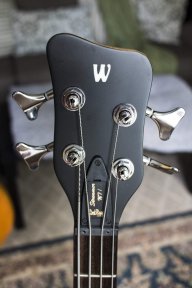


 They're supposed to look like ****, it makes them more valuable. In fact you can buy them new, already looking like ****, but it'll cost you an extra $3000.
  On non-Fenders, looking like **** just means they look like ****.