There is a lot of talk about tariffs, so I thought it would be worth providing some explanation. I have taken a few economics classes, but not my primary major.
Subsidies keep prices down, but tax a lot of citizens who don't purchase the product. Overall sales go up.
Tariffs raise prices and put the burden of the tax on those purchasing the product. Overall sales go down. Intent is to raise sales of local product and decrease sales of imported product.
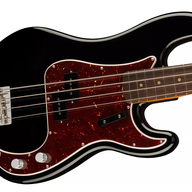
What is unusual is how quickly and how much tariffs are being adjusted in the US. I would recommend against panic buying bass gear. If you were already set on buying a particular instrument within the next couple months, it might save you some buying it now. Tariff is on the wholesale value. The retailer markup and shipping shouldn't adjust. I don't think instrument makers are a loud enough lobbying voice to get an exclusion anytime soon. Expect the Chinese imports and to a lesser extent Indonesian will have price increases. Component prices will go up, which could cause a small bump on US built price. US and Mexico will probably have tariffs settled within a few months. Businesses commonly adjust prices when new stock arrives.
Further Explanation:
Tariffs are nothing new, and go back hundreds of years. A big reason for the US declaring independence from the UK was imposed tariffs, with the money going back to England. That is where the "no taxation without representation" slogan comes from. The American colonies had no representative in parliament to vote against the taxes.
There are two primary ways a government may encourage domestic production over imports. They are subsidies and tariffs. Both are used by every developed country.
Subsidies pay money out from the government to local industry to make it profitable. The most common subsidy is a "tax break". That is the government decreasing taxes on a marginally profitable product. Tax breaks are used to encourage solar power construction heavily. A subsidy puts the burden on a large number of tax payers. Even if you don't buy the product produced, you are paying taxes for it. Subsidies are best used for basic necessities you want to keep the price down on. The US pays out subsidies for a number of farm crops to keep food prices down for poor people. Unprofitable products may have a direct payout subsidy, which pays even if the producer owed no taxes. International trade laws limit the usage of subsidies. In the US, new subsidies requires Congress to pass a law.
Tariffs put a tax on imported product. This raises average selling price to increase the gross margin for local producers. The tax burden is on the citizens that purchase the product. Tariffs are good for luxury goods, where only a select percentage of the population purchases it. I don't want my tax dollars to help someone buy a designer Italian handbag. So, there should be a tariff on the product rather than a subsidy to local garment companies. Tariffs are easier for governments to implement, and are an easy revenue stream for government. They just have to charge taxes at the ports where product comes in. In the US, the president has authority to adjust tariffs to react quickly to economic conditions.
Subsidies keep prices down, but tax a lot of citizens who don't purchase the product. Overall sales go up.
Tariffs raise prices and put the burden of the tax on those purchasing the product. Overall sales go down. Intent is to raise sales of local product and decrease sales of imported product.
What is unusual is how quickly and how much tariffs are being adjusted in the US. I would recommend against panic buying bass gear. If you were already set on buying a particular instrument within the next couple months, it might save you some buying it now. Tariff is on the wholesale value. The retailer markup and shipping shouldn't adjust. I don't think instrument makers are a loud enough lobbying voice to get an exclusion anytime soon. Expect the Chinese imports and to a lesser extent Indonesian will have price increases. Component prices will go up, which could cause a small bump on US built price. US and Mexico will probably have tariffs settled within a few months. Businesses commonly adjust prices when new stock arrives.
Further Explanation:
Tariffs are nothing new, and go back hundreds of years. A big reason for the US declaring independence from the UK was imposed tariffs, with the money going back to England. That is where the "no taxation without representation" slogan comes from. The American colonies had no representative in parliament to vote against the taxes.
There are two primary ways a government may encourage domestic production over imports. They are subsidies and tariffs. Both are used by every developed country.
Subsidies pay money out from the government to local industry to make it profitable. The most common subsidy is a "tax break". That is the government decreasing taxes on a marginally profitable product. Tax breaks are used to encourage solar power construction heavily. A subsidy puts the burden on a large number of tax payers. Even if you don't buy the product produced, you are paying taxes for it. Subsidies are best used for basic necessities you want to keep the price down on. The US pays out subsidies for a number of farm crops to keep food prices down for poor people. Unprofitable products may have a direct payout subsidy, which pays even if the producer owed no taxes. International trade laws limit the usage of subsidies. In the US, new subsidies requires Congress to pass a law.
Tariffs put a tax on imported product. This raises average selling price to increase the gross margin for local producers. The tax burden is on the citizens that purchase the product. Tariffs are good for luxury goods, where only a select percentage of the population purchases it. I don't want my tax dollars to help someone buy a designer Italian handbag. So, there should be a tariff on the product rather than a subsidy to local garment companies. Tariffs are easier for governments to implement, and are an easy revenue stream for government. They just have to charge taxes at the ports where product comes in. In the US, the president has authority to adjust tariffs to react quickly to economic conditions.