
Someone PM'ed me about these two amps since I had owned them both and have played them fairly extensively. I started typing up a response, but ran over the 5000 character limit via PM  I guess I ramble on too much. So I thought I would start a thread about it so I could put all of my thoughts down and in case others were also interested in the two amps, it might be interesting to them as well. Here it is:
You really can't go wrong with either setup, both are great and sound great with the Carvin SB5000 basses, imo. I had both amps in my house at the same time and A/B'ed them quite a bit. The BX500 ended up being my back up amp that I carried to gigs and left in my truck, then finally I sold it and just carry the RH750.
There are many differences between the two amps, here are some examples:
TC "Watts": First, the RH750 is not 750 watts
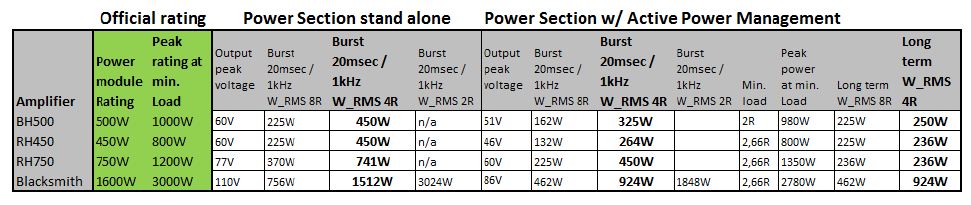
That chart is even misleading. It sort of suggests that you can use the amp without the active power management, but you can't. You can't get that 741 watts the chart talks about at all. You really get somewhere between 236 and 450 watts when you use it based on the baked in/non defeatable "Active Power Management" This was a big thing for many TC customers. They straight up lied about their specs and only released this info after much pressure from customers. The marketing still says its 750 watts, but its not really. That said, it does sound "louder" than the BX500. TC's APM technology works as advertised. That is actually impressive because the BX500 is one of the louder 500 watt micros I've played. For example, both amps are noticeably louder than the Genz Benz Shuttle 9.0 (supposedly 900 watt) amp.
EQ: BX500 has two EQ sections. One shelving/parametric type and one bypassable 9-band graphic. This gives it a lot of shaping options and the ability to engage the graphic on the fly if needed. TC has 4-band shelving/parametric type EQ plus "Tweetertone" which works on the high highs.
Presets: As previously mentioned, TC has 4-band shelving/parametric type EQ, but you can store three different presets giving you optional tones on the fly. I personally only use one setting on the RH750, so this feature is not that big a deal to me. But if you like multiple tones, this feature can be cool because you can dial a nice bass tone on one preset, a scooped slap preset on another and then have this screaming, distorted bass tone on the other preset on a third preset. I actually have those sounds stored in my RH750, but have never switched to the other presets before when playing out. The BX500 has no presets, but does have a bypassable graphic EQ.
Compression: Both amps have a built in compressor. The Spectracomp on the RH750 works completely different than one on the BX500. Everyone says TC's Spectracomp is better because it's multiband compression but I actually preferred the more traditional compressor on the BX500. Granted, I didn't/don't use much of either.
Additional Features: The RH750 has a built in tuner and tube emulation/overdrive capability. The built in tuner is a BIG deal for me personally. I don't dig pedal boards and I'm not a fan of the clip on tuners. When I had the BX500, I had it in a rack so I could have a tuner which made the 6lb BX500 much bulkier for me.
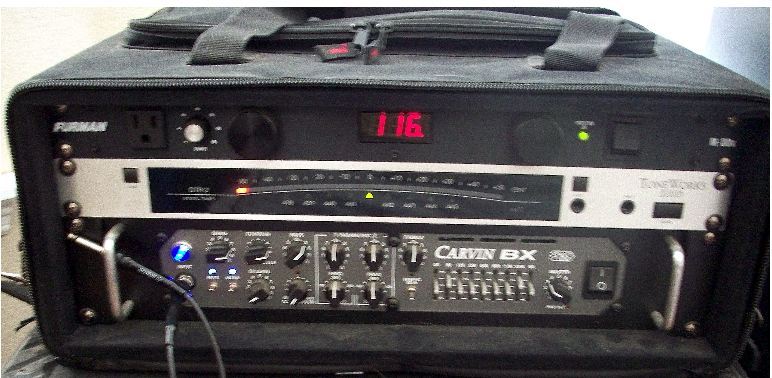
With the RH750, I reduced my footprint quite a bit down from 20+ pound rack to 9 pounds RH750. Also, that handle in the RH750 is nice. I don't use a gig bag with it, I just carry it around by the handle. The RH750 also has a digital out and aux input that the BX500 doesn't have. The BX500 has a 12AX7 preamp tube, it's mostly for show, imo. It's hard to perceive a difference when its on of off. Even though the RH750 doesn't have a real tube in it, it's tube emulation makes it considerably more tubey sounding than the RH750, imo.
DI: BX500 only has pre DI out. TC has pre AND post DI out. This is a breaker for some, but I prefer pre out in all situations, so it was a non issue for me. Both amps can be used without a load as a DI. I never used the BX500 rack without a cab as a DI because of the bulk of the rack setup. I had a separate DI that I carried in my gig bag for that. The RH750 is so small and has a built in tuner, I use it for my DI and it works great as that. I believe the RH750 technically has a better spec'ed DI than the BX500, but in the recordings I've done with each, I couldn't tell a difference in them functionally.
Ohms and speaker outs: The RH750 can go down to 4 ohms and has one speaker out where the the BX500 can go down to 2 ohms and has two speaker outs. This isn't a huge thing, but can be helpful in some cases. For example, if you have to two cabs that don't have in/out input panels on them, you can only use one of those cabs with the RH750 where you could use both with the BX500. Or if you had one 8 ohm cab and one 4 ohm cab (with in/out input panels), you could only use one cab with the RH750, but both with the BX500. I personally use two 8ohm SWR Golight Jr. 2x10s that have in/out input panels on them with the RH750 and they work/sound great.
Sound of the amps: One big thing between the two is how flat/open the BX500 can be compared to the TC. The APM technology of the TC helps it sound louder than it is by doing some pretty cool compression of typically unwanted frequencies. For 95% of the bass playing population (me included) this is a good thing as you don't have any really unusable frequencies rumbling around that you have to dial out with EQ. The downside is if you don't like the frequencies the APM compresses out, too bad there is no way to defeat the built in compression. As a result the amp always sounds slightly compressed even if you dial the Spectracomp to off. This is a byproduct of making it sound louder than it is. To some people that inability to decompress the sound so to speak and reclaim those lost low end frequencies is enough to dislike the amp.
The BX500 is not like that. It can go from a very flat reference like sound to heavily EQ'ed and compressed sound depending on how you dial it. Basically, what you dial is what you get. So if you dial a bad sound, you get a bad sound. If you dial a sound that could damage your speakers, you can theoretically damage your speakers. On the flip side, if you know your way around an EQ section, you can do some cool things with it and sculpt your sound accordingly. It does have a built in limiter, but very different than the APM compression technology in the RH750.
I prefer the baked in sound of the RH750 to the fully tweakable sound of the BX500. The BX500 is pretty flat non tube sound with a hint of Ampegish flavor to it. The RH750 attempts to emulate a tube amp, so it makes it slightly harder to dial a bright, modern hi fi sound from the RH750. That's the sound I prefer, so I struggled a bit with the RH750 to get that sound at first, but found some settings that get me close enough that I kept it.
In the mix: This is one of those nebulous, intangible sort of things, but an important one to me. For what ever reason, the RH750 sits in the stage mix better for me. With the BX500 on big gigs I'd use a 4ohm 4x10 and an 8 ohm 2x10 cab and still have to crank up the master high to hear myself on stage even when the soundman was asking me to turn down. With the RH750 I find that I rarely need more than a single 2x10 for any gig and can't remember a time that I've gotten over half way on the master. For big gigs, I stack the two 2x10 cabs vertically and still never get above noon on the master and can always hear myself well. People in the audience also seem to be able to hear me well and routinely compliment my tone when using the RH750.
Price: Obviously the cost is quite a bit diff between the two. $379 versus $999. It's funny that the US made Carvin is so much cheaper than the Thailand produced TC. I guess for your $620 extra with the TC you get a built in handle, built in tuner, built in tube emulation (Tubetone), a digital out and aux in (I've never used either), ability to store and use multiple presets, and post EQ DI out.
Why I chose the RH750:The most important factors were convenience, usability and portability of the RH750. Having one little box (with a handle) that acts as your amp, tuner and DI is really nice. The RH750 goes with me to every gig, session, rehearsal, etc. Basically If I'm playing bass, I'm plugged into it because of its portability and feature set. It replaced multiple items for me in a single portable footprint. The second reason is it sounds slightly better than the BX500 to me.
I guess I ramble on too much. So I thought I would start a thread about it so I could put all of my thoughts down and in case others were also interested in the two amps, it might be interesting to them as well. Here it is:You really can't go wrong with either setup, both are great and sound great with the Carvin SB5000 basses, imo. I had both amps in my house at the same time and A/B'ed them quite a bit. The BX500 ended up being my back up amp that I carried to gigs and left in my truck, then finally I sold it and just carry the RH750.
There are many differences between the two amps, here are some examples:
TC "Watts": First, the RH750 is not 750 watts
That chart is even misleading. It sort of suggests that you can use the amp without the active power management, but you can't. You can't get that 741 watts the chart talks about at all. You really get somewhere between 236 and 450 watts when you use it based on the baked in/non defeatable "Active Power Management" This was a big thing for many TC customers. They straight up lied about their specs and only released this info after much pressure from customers. The marketing still says its 750 watts, but its not really. That said, it does sound "louder" than the BX500. TC's APM technology works as advertised. That is actually impressive because the BX500 is one of the louder 500 watt micros I've played. For example, both amps are noticeably louder than the Genz Benz Shuttle 9.0 (supposedly 900 watt) amp.
EQ: BX500 has two EQ sections. One shelving/parametric type and one bypassable 9-band graphic. This gives it a lot of shaping options and the ability to engage the graphic on the fly if needed. TC has 4-band shelving/parametric type EQ plus "Tweetertone" which works on the high highs.
Presets: As previously mentioned, TC has 4-band shelving/parametric type EQ, but you can store three different presets giving you optional tones on the fly. I personally only use one setting on the RH750, so this feature is not that big a deal to me. But if you like multiple tones, this feature can be cool because you can dial a nice bass tone on one preset, a scooped slap preset on another and then have this screaming, distorted bass tone on the other preset on a third preset. I actually have those sounds stored in my RH750, but have never switched to the other presets before when playing out. The BX500 has no presets, but does have a bypassable graphic EQ.
Compression: Both amps have a built in compressor. The Spectracomp on the RH750 works completely different than one on the BX500. Everyone says TC's Spectracomp is better because it's multiband compression but I actually preferred the more traditional compressor on the BX500. Granted, I didn't/don't use much of either.
Additional Features: The RH750 has a built in tuner and tube emulation/overdrive capability. The built in tuner is a BIG deal for me personally. I don't dig pedal boards and I'm not a fan of the clip on tuners. When I had the BX500, I had it in a rack so I could have a tuner which made the 6lb BX500 much bulkier for me.
With the RH750, I reduced my footprint quite a bit down from 20+ pound rack to 9 pounds RH750. Also, that handle in the RH750 is nice. I don't use a gig bag with it, I just carry it around by the handle. The RH750 also has a digital out and aux input that the BX500 doesn't have. The BX500 has a 12AX7 preamp tube, it's mostly for show, imo. It's hard to perceive a difference when its on of off. Even though the RH750 doesn't have a real tube in it, it's tube emulation makes it considerably more tubey sounding than the RH750, imo.
DI: BX500 only has pre DI out. TC has pre AND post DI out. This is a breaker for some, but I prefer pre out in all situations, so it was a non issue for me. Both amps can be used without a load as a DI. I never used the BX500 rack without a cab as a DI because of the bulk of the rack setup. I had a separate DI that I carried in my gig bag for that. The RH750 is so small and has a built in tuner, I use it for my DI and it works great as that. I believe the RH750 technically has a better spec'ed DI than the BX500, but in the recordings I've done with each, I couldn't tell a difference in them functionally.
Ohms and speaker outs: The RH750 can go down to 4 ohms and has one speaker out where the the BX500 can go down to 2 ohms and has two speaker outs. This isn't a huge thing, but can be helpful in some cases. For example, if you have to two cabs that don't have in/out input panels on them, you can only use one of those cabs with the RH750 where you could use both with the BX500. Or if you had one 8 ohm cab and one 4 ohm cab (with in/out input panels), you could only use one cab with the RH750, but both with the BX500. I personally use two 8ohm SWR Golight Jr. 2x10s that have in/out input panels on them with the RH750 and they work/sound great.
Sound of the amps: One big thing between the two is how flat/open the BX500 can be compared to the TC. The APM technology of the TC helps it sound louder than it is by doing some pretty cool compression of typically unwanted frequencies. For 95% of the bass playing population (me included) this is a good thing as you don't have any really unusable frequencies rumbling around that you have to dial out with EQ. The downside is if you don't like the frequencies the APM compresses out, too bad there is no way to defeat the built in compression. As a result the amp always sounds slightly compressed even if you dial the Spectracomp to off. This is a byproduct of making it sound louder than it is. To some people that inability to decompress the sound so to speak and reclaim those lost low end frequencies is enough to dislike the amp.
The BX500 is not like that. It can go from a very flat reference like sound to heavily EQ'ed and compressed sound depending on how you dial it. Basically, what you dial is what you get. So if you dial a bad sound, you get a bad sound. If you dial a sound that could damage your speakers, you can theoretically damage your speakers. On the flip side, if you know your way around an EQ section, you can do some cool things with it and sculpt your sound accordingly. It does have a built in limiter, but very different than the APM compression technology in the RH750.
I prefer the baked in sound of the RH750 to the fully tweakable sound of the BX500. The BX500 is pretty flat non tube sound with a hint of Ampegish flavor to it. The RH750 attempts to emulate a tube amp, so it makes it slightly harder to dial a bright, modern hi fi sound from the RH750. That's the sound I prefer, so I struggled a bit with the RH750 to get that sound at first, but found some settings that get me close enough that I kept it.
In the mix: This is one of those nebulous, intangible sort of things, but an important one to me. For what ever reason, the RH750 sits in the stage mix better for me. With the BX500 on big gigs I'd use a 4ohm 4x10 and an 8 ohm 2x10 cab and still have to crank up the master high to hear myself on stage even when the soundman was asking me to turn down. With the RH750 I find that I rarely need more than a single 2x10 for any gig and can't remember a time that I've gotten over half way on the master. For big gigs, I stack the two 2x10 cabs vertically and still never get above noon on the master and can always hear myself well. People in the audience also seem to be able to hear me well and routinely compliment my tone when using the RH750.
Price: Obviously the cost is quite a bit diff between the two. $379 versus $999. It's funny that the US made Carvin is so much cheaper than the Thailand produced TC. I guess for your $620 extra with the TC you get a built in handle, built in tuner, built in tube emulation (Tubetone), a digital out and aux in (I've never used either), ability to store and use multiple presets, and post EQ DI out.
Why I chose the RH750:The most important factors were convenience, usability and portability of the RH750. Having one little box (with a handle) that acts as your amp, tuner and DI is really nice. The RH750 goes with me to every gig, session, rehearsal, etc. Basically If I'm playing bass, I'm plugged into it because of its portability and feature set. It replaced multiple items for me in a single portable footprint. The second reason is it sounds slightly better than the BX500 to me.