
I have heard some inspectors specify ground pin up in case something falls down on the pins it will hit the ground conductor first.

TalkBass has been independent since 1998. Add your voice.
Create a free account to reply to discussions, view embedded media, and browse with fewer display ads.
Join free Log in
Want zero display ads or expanded classifieds tools? Compare plans.
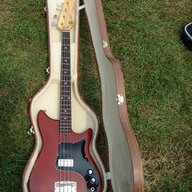
I have heard some inspectors specify ground pin up in case something falls down on the pins it will hit the ground conductor first.

I have seen the AHJ require the grounding of the steel reinforcement on swimming pools tied into electrical ground for a house. Made for a shocking swim.
Make sure the light circuit is on a gfi.As a "fully unlicensed, and ameture electrician", I repaired a fault in the in-ground swimming pool wet niche lighting system at a house my daughter bought a few years ago. We did not know there was a problem because the pool was empty when she bought the place, and I had never heard the term "wet niche" until we discovered the pool lights were improperly installed, and I had to research how it was supposed to be done. That was before LED lighting was readily available. Now, I plan to convert the 115 VAC underwater fixtures to low voltage LED lamps before next summer even though I did make the original lighting system safe, and code compliant. Too bad whoever did the original (permitted, and inspected) installation did not take the time that I did to carefully read, and interpret the code to do it properly back in the early 1980s.
Make sure the light circuit is on a gfi.

I have seen the AHJ require the grounding of the steel reinforcement on swimming pools tied into electrical ground for a house. Made for a shocking swim.
This is in fact mandatory under every code that I am aware of. The AHJ is absolutely correct in requiring this bonding to the grounding system.
The reason is to insure that every practical surface, including the deck, metalwork, pumps, filters, etc. be at a guaranteed potential relative to the earth (equipotential plane). This also includes metalwork of the house (if within a certain distance), and EVERY receptacle must be GFCI protected. It used to be that hard wired pumps did not require GFCI's, but this changed ~8 years ago.

This is crazy. What guitar uses a 1/4 TRS jack? Not only that, the AC power is unbalanced because the low side is ground referenced. This cable really should have a S/C 280 installed.View attachment 2838492 View attachment 2838493 You could just cut to the chase and use one of the fine products


One's with active electronics.This is crazy. What guitar uses a 1/4 TRS jack?


The 115 VAC incandescent submerged wet niche lighting is going to be replaced by safer, and better looking low voltage LED pool lighting.
the equalipotentail grounding ties all metal into one grid. It's all metal within 5 ft of the pool surface. The galventic action between dissimilar metals is addressed. There is a specific section in the electric code for the bonding.This is in fact mandatory under every code that I am aware of. The AHJ is absolutely correct in requiring this bonding to the grounding system.
The reason is to insure that every practical surface, including the deck, metalwork, pumps, filters, etc. be at a guaranteed potential relative to the earth (equipotential plane). This also includes metalwork of the house (if within a certain distance), and EVERY receptacle must be GFCI protected. It used to be that hard wired pumps did not require GFCI's, but this changed ~8 years ago.
I guess that's sort of like phantom powering the active preamp in the bass. If 9v is good, 18 volts is better, 120 volts should be stellar. Maybe even super-nova for the barefoot bassist on the concrete floor.One's with active electronics.
Plugging in might get exciting though.


It's been quite a few years since I have done any residential work other than some minor repair, but maybe ten years ago or so, when I was doing electrical work as a side job, and after AFCIs were first referenced in the code, (I think required for bedrooms in certain occupancies) the AHJs in my area did not enforce it in the remodel work I was doing, and I don't think they even required it in new construction. In fact, I have yet to see an AFCI installed anywhere. I bet that it is likely to be required in larger metropolitan locations like Chicago perhaps. I'm in the "lake country" west of Milwaukee, but difinately not the boonies. Lots of very fancy high dollar houses here. I was surprised after seeing the first AFCI reference that it never eventually was, (as far as I know) adopted around here.


The radio station involved told me they will pay for the repairs but sometimes things don't happen like they should. Their offices are close to me so I can make a personal visit if required.
given a choice I prefer the twist to contact plugs. I would consider speakeron with the "twist to contact" pig tails. I would use SO cable. 1/4 inch plugs come out too easily, Imo, nema 5-15, come apart too easily.I hear stories about a guy that converted all his PA speakers cables to U ground (nema 5-15) enabling him to handily use a common AC extension cord when he needed to extend his speaker line runs...0
Maybe this is one of those urban legends, but I'm sure someone has tried it.


