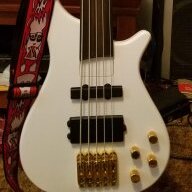
In a recent Joe Dart interview, he explained that everything else you can lack some, but the one thing a bass player MUST have is timing.

TalkBass has been independent since 1998. Add your voice.
Create a free account to reply to discussions, view embedded media, and browse with fewer display ads.
Join free Log in
Want zero display ads or expanded classifieds tools? Compare plans.

Reading, chord theory, and keeping good time without needing a click.I am a keen martial artist, and one thing that is drilled into us is that "basics win fights". By this, we mean that, yes "flashy" techniques are all good, but, for the most part, that is not what wins fights.
I got to thinking about how to apply this to the bass.
What are the things on the bass that one should spend time on every time one picks up the bass? What are the "basics" that you should never stop practicing, never stop refining? What wins fights?
This is a really good exercise - I would suggest adding triplets to the progression.
2 bars of 1/4 notes
2 bars of 1/4 note triplets
2 bars of 1/8 notes
2 bars of 1/8 note triplets
2 bars of 1/16 notes
2 bars of 1/16 note triplets
This really helps you feel the transition of timing from duple to triple meter.

In a recent Joe Dart interview, he explained that everything else you can lack some, but the one thing a bass player MUST have is timing.


PlayingI am a keen martial artist, and one thing that is drilled into us is that "basics win fights". By this, we mean that, yes "flashy" techniques are all good, but, for the most part, that is not what wins fights.
I got to thinking about how to apply this to the bass.
What are the things on the bass that one should spend time on every time one picks up the bass? What are the "basics" that you should never stop practicing, never stop refining? What wins fights?
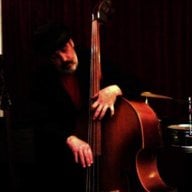

Crap. I only have two small knobs, not one huge one. Am I doing it wrong?And a huge knob on your bass
I am a keen martial artist, and one thing that is drilled into us is that "basics win fights". By this, we mean that, yes "flashy" techniques are all good, but, for the most part, that is not what wins fights.
I got to thinking about how to apply this to the bass.
What are the things on the bass that one should spend time on every time one picks up the bass? What are the "basics" that you should never stop practicing, never stop refining? What wins fights?

I retired from martial arts study (BJJ and Shaolin Kempo) in 2014 at age 50 because my knees were shot. One of the main reasons I took it was to learn how to be a better musician, and how to apply the lessons from the martial arts to the musical ones. It went both ways, too: I used to practice subdividing my kicks with a metronome to make sure I wasn't BSing any of the balance points, and my instructor loved that.
The OP's question is a great one. I have been doing the exercises in this thread 6 days a week for the past 4 years. I find it really helpful. That's a DB forum thread, but the principles are the same.
Its taken me a long time to get to the point where I realize play less, and playing more simple bass lines makes things sound and feel much better.

Agree, but you have to know how to convert all that insight into a reality when you do pick up the instrument, which is where the OP question starts...
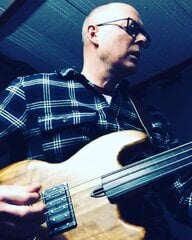

Don't give up the one.
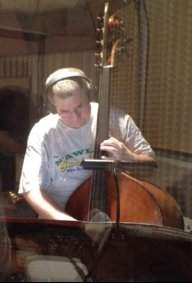
1A) Having bullet-proof time (i.e. not rushing or dragging) at any tempo.What are the "basics" that you should never stop practicing, never stop refining? What wins fights?