
The Roadster is certainly marketed as one.Well, it's really not meant to be a high performance car, per se.

Enjoy the benefits of a premium membership!
Upgrade Account
-
TalkBass has been independent since 1998. Add your voice.
Create a free account to reply to discussions, view embedded media, and browse with fewer display ads.
Join free Log in
Want zero display ads or expanded classifieds tools? Compare plans.
You are using an out of date browser. It may not display this or other websites correctly.
You should upgrade or use an alternative browser.
You should upgrade or use an alternative browser.
The bass for now!
- Thread starter BazzaBass
- Start date
-
- Tags
- bass guitar future modern
More options
Who Replied?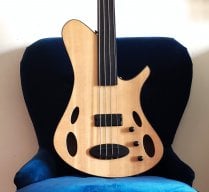
- Sep 4, 2010
- 3,304
- 2,730
- Disclosures
- Endorsing: Martin Keith Guitars

I could point to inprovements in necks (2-way truss rods, stiffening rods, lighter/better keys) and pickups and electronics (everything from true lo-z systems like OG EMG to the dizzying available combinations from new builders, even piezo rigs), and brave attempts at real modernization like Ned Steinberger's work.
Since the 70's, the differences 'on the ground' would be two, vs. when I started out in the late Pleistocene . . . .
The wholesale adoption of CAD/CAM design and CNC production.
I came in at the end of the old way of building guitars and basses. Like most manufacturing, the production (and the quality control) were based around a relative minimum of production line help via engineering, and down to the skill of the individual workers, slugging along with a stack of templates and rules and various woodworking machinery run by them: The results were based on skill at using those production methods. The changeover to computer drafting and milling has made a huge difference in consistency. Back then it was common for a good player to try as many basses of one kind in as many stores as he could find that had one to find a 'good' one, they could (and often did) vary that much. To say every 60's Fender was great and every 70's Fender was a step or two down from that standard is just ignoring reality. You found good or great ones . . . . or a lot that were just OK or worse, and this was true for every brand I can think of.
These days, you can scan a fabulous old axe into digital memory, EMail it to a factory in Indonesia, and once those guys are up to speed, this is how you find Squiers that are just remarkable for the money. Which leads to . . . .
The amazing array of CHEAP basses that are WAY better than axes ever were in those price ranges.
You can say what you want about 'they oughta make them in 'murica', the fact is that it's all a price-driven thing, whether it's WalMart or Guitar Center. The inexpensive basses and amps are an absolute jump from the Teiscos and Alamos and bogus beginner amps that were around when I started. There's utterly no comparison.
When I started out, you either bought complete crap or you had to step up and pay real money for a Jazz, a Ric, an EB, etc., THEN more for a real amp.
Today, you could start out with a Squier or Soundgear, just to name two, and get a real amp, and be out the door for around a grand or less, is just a great leap.
Of course, a lot of Christmas buying and most of the gear for Winter NAMM is floating off Long Beach for who knows how long, so I look for prices to go up.
Since the 70's, the differences 'on the ground' would be two, vs. when I started out in the late Pleistocene . . . .
The wholesale adoption of CAD/CAM design and CNC production.
I came in at the end of the old way of building guitars and basses. Like most manufacturing, the production (and the quality control) were based around a relative minimum of production line help via engineering, and down to the skill of the individual workers, slugging along with a stack of templates and rules and various woodworking machinery run by them: The results were based on skill at using those production methods. The changeover to computer drafting and milling has made a huge difference in consistency. Back then it was common for a good player to try as many basses of one kind in as many stores as he could find that had one to find a 'good' one, they could (and often did) vary that much. To say every 60's Fender was great and every 70's Fender was a step or two down from that standard is just ignoring reality. You found good or great ones . . . . or a lot that were just OK or worse, and this was true for every brand I can think of.
These days, you can scan a fabulous old axe into digital memory, EMail it to a factory in Indonesia, and once those guys are up to speed, this is how you find Squiers that are just remarkable for the money. Which leads to . . . .
The amazing array of CHEAP basses that are WAY better than axes ever were in those price ranges.
You can say what you want about 'they oughta make them in 'murica', the fact is that it's all a price-driven thing, whether it's WalMart or Guitar Center. The inexpensive basses and amps are an absolute jump from the Teiscos and Alamos and bogus beginner amps that were around when I started. There's utterly no comparison.
When I started out, you either bought complete crap or you had to step up and pay real money for a Jazz, a Ric, an EB, etc., THEN more for a real amp.
Today, you could start out with a Squier or Soundgear, just to name two, and get a real amp, and be out the door for around a grand or less, is just a great leap.
Of course, a lot of Christmas buying and most of the gear for Winter NAMM is floating off Long Beach for who knows how long, so I look for prices to go up.

I'm gonna quickly jump on my soapbox, and just as quickly jump back off.What is the future for the bass guitar?
I can only hope the future includes making the truss rod adjustment at the heel of the neck instead of the headstock (where it should be), an illegal design specification. I have often said that design engineers, regardless of what they design, should be forced to use their design about 1000 times. Would the neck heel truss rod adjustment still exist if the designers (and actually current manufacturers) had to take the neck off to adjust it, 1000 times? I doubt it. Would a poorly designed (purely an example) wine bottle opener exist for long if the engineer had to open 1000 bottles with that poor design? I doubt it.
Now I'm stepping down.

I'll give you that, but the majority of their line is supposed to be standard grocery-getters, not the specific roadster model.The Roadster is certainly marketed as one.
Obviously a rant by a non-engineer who's never had to design something within manufacturing parameters set by others whether cost or slavishly following Leo's original designs.I'm gonna quickly jump on my soapbox, and just as quickly jump back off.
I can only hope the future includes making the truss rod adjustment at the heel of the neck instead of the headstock (where it should be), an illegal design specification. I have often said that design engineers, regardless of what they design, should be forced to use their design about 1000 times. Would the neck heel truss rod adjustment still exist if the designers (and actually current manufacturers) had to take the neck off to adjust it, 1000 times? I doubt it. Would a poorly designed (purely an example) wine bottle opener exist for long if the engineer had to open 1000 bottles with that poor design? I doubt it.
Now I'm stepping down.
Just because 7ender made a crap heel adjustment doesn't mean it has to be that way. My Alembics were not an issue, nor are those basses that use a wheel to adjust.
Last edited:

Imagine 1700 double bass. How things have changed?
Before it is like it is now it took many changes ...
3, 4 and 5 strings, string extension, flat back and round back, different curvature of the fingerboard, one is better for playing pizzicato like jazz player and one is better for arco playing, the super big DB played by two people or with mechanical device etc.
Fanned fret and headless is the thing right now. Also 5 and 6 strings is more common than ever.
I think Ibanez, Kiesel and Dingwall are the three leading the modern bass world.
I think Ibanez, Kiesel and Dingwall are the three leading the modern bass world.
No offense intended. Products sometimes end up being thoroughly tested by customers instead of in a pre-production lab. Or the pre-production testing is done a small number of times instead of many - when the many might reveal issues that the small number otherwise would not.Obviously a rant by a non-engineer who's never had to design something within manufacturing parameters set by others whether cost or slavishly following Leo's original designs.
Just because 7ender made a crap heel adjustment doesn't mean it has to be that way. My Alembics were not an issue, nor are those basses that use a wheel to adjust.
I'm sure there are potentially many cases where the design can be improved and still remain within manufacturing and cost requirements. In fact, this is often the case - improvements come from customer feedback, with the customers being the ones who have to use the design 1000 times, hence my comment.
If AI does take hold, pretty much all jobs will be eliminated. So not just us musicians.
Yikes.. A scary thought. Under those circumstances, not much need for humans either. Wasn’t there a movie about this??
None taken.No offense intended.
Products sometimes end up being thoroughly tested by customers instead of in a pre-production lab. Or the pre-production testing is done a small number of times instead of many - when the many might reveal issues that the small number otherwise would not.
I've had so many really good designs taken and modified by the sales and marketing types who see it from a different perspective and want it morphed into something that the original spec never meant it to be. Engineers generally aren't fools and will (often, but not always) design it in a very practical and useful way. Doesn't mean that's what's going to market.I'm sure there are potentially many cases where the design can be improved and still remain within manufacturing and cost requirements. In fact, this is often the case - improvements come from customer feedback, with the customers being the ones who have to use the design 1000 times, hence my comment.
I design gear now so it's the way I want it because I'm tired of this.



Turnaround
Commercial User
Electric, I guess.The future for cars is electric. What is the future for the bass guitar?
Yes. And it's going to be coming sooner than later.Yikes.. A scary thought. Under those circumstances, not much need for humans either. Wasn’t there a movie about this??

As much as everyone keeps tooting the "machines are replacing us" horn, I can't imagine electric bass being replaced entirely. Imagine how fearful DB purists were when the EB showed up. And yet DB is still very much alive and kicking. We have specific communities dedicated to historically informed performance of renaissance and baroque music, for crying out loud. EB, and guitars in general, are going to be fine. Whether guitars and guitar-centric music will still be mainstream relevant is a different matter, and something that doesn't really bother me one way or another.
-Cal.
-Cal.

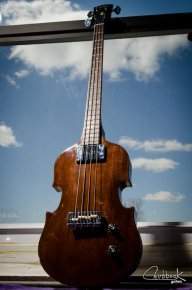
Depends what kinda future we're looking at. After the EMP attack, I'd say Jugs will have a good shot at a come back.

Muscle cars will actually be powered by Hydrogen fuel cells powered by water with their emission being Oxygen (O2). No need to massively increase power generation and power grid to support everybody trying to charge up their cars at once like you need to support electric cars once they reach critical mass.Actually, the future for cars is self-driving, so....


