.....i read 100t overdrive into this by reading your words carefully Tim, yip ill let you know my thoughts on sb+610 asap, im thinking the sb will have headroom enough to find the breakup point of the 610, which is hopefully way louder than i will need !

Enjoy the benefits of a premium membership!
Upgrade Account
-
TalkBass has been independent since 1998. Add your voice.
Create a free account to reply to discussions, view embedded media, and browse with fewer display ads.
Join free Log in
Want zero display ads or expanded classifieds tools? Compare plans.
You are using an out of date browser. It may not display this or other websites correctly.
You should upgrade or use an alternative browser.
You should upgrade or use an alternative browser.
The Fender Bassman 100T thread
- Thread starter Tim1
- Start date
- Status
- Not open for further replies.
More options
Who Replied?I am confident that the 610 will make you smile, Chris, it goes plenty loud and I think it will be a great match for your SB300. I just seem to have developed a real hankering for that SB300 now, probably based on having owned and played several high powered tube heads in the past decade. I know I sound like a stuck record but I just can't believe how good the 100T is........ I just got a hankering to find out for myself if the SB300 into the neo 610 is "better". Not necessarily just louder. I want to justify owning both 

I have always been a tube whore
I have always been a tube whore

I too find it impossible that a 100 watt amp can fart out a 610. My Superbass/Plexi clone (Bugera 1960) into a cheap 212MBE cab can go fully overdriven all day (the channels can be put in series) and not be anywhere near farting out even with the bass on "10" (I normally run it on "2" with the mid on "10" and treble on "0"). I leave that setup at a shared rehearsal space (the drummer's house, he's in a couple other bands) and let the other bass players use it without fear of it ever being damagedHi Tim ,just to shoot some shizzle, how do you tell if your hearing speaker distortion or amp overdrive?
 . One guy runs the bass up to "3", everybody seems to be OK with the volume at "3" and the other tone controls where they are.
After gigging with the 100T/410neo for 5 months now, matching levels with a loud drummer and only twice with FOH support for bass, I have never even come close to farting out the 410neo. And as I've said before I am not a shy bassist. We're three-piece and the sound is bass & drums driven. Of course I haven't TRIED to fart it out, but just saying in a gigging situation it never has. I'm sure in a pissing contest with a guitarist with a 100 watt Marshall stack the rig couldn't keep up, but that has no real-world validity to me. The important thing in my book is the 100T/410neo rig can easily keep up with a loud drummer with no FOH support other than vocals and maybe kick drum. If the guitarist is playing in ensemble and properly matching levels, I don't see how it matters whether he has a Marshall stack or a Twin Reverb. If he is cranking the Marshall stack wide open, he is going to be too loud for drums as well as bass. I thought we'd moved past that Marshall stack ******** anyway. Is that just in Dallas? If so, I feel lucky to be here.
Disclaimers:
#1 - Almost all of our gigs have been medium to small sized clubs with vocals only and maybe a little kick through p.a. Only one outdoor event with big FOH, and the 100T/410neo generated plenty of stage volume in that situation.
#2 - I am not going for a super clean tone, which is precisely why I went with the 100T. It gives me the exact amount of power tube distortion I was hoping for - it does that classic tube thing where the rig can sound round and full in ensemble with that extra volume push that the tube distortion gives. But if you play the bass alone at those volumes you can hear the obvious power tube distortion, which is not apparent in ensemble unless you dig in, in which case it'll get as grindy as you please. I don't play solo, except when I practice, and at those volumes it doesn't distort at all, and I really don't care what it sounds like when I'm playing alone anyway.
So my point is, I feel like the 100T is the perfect tube head for this kind of medium/small club gigging. Yes you can take it out of its element and put it on a large stage attempting to match a wall Marshalls and it will undoubtedly fail, but that's not what it was designed to do.
Disclaimers:
#1 - Almost all of our gigs have been medium to small sized clubs with vocals only and maybe a little kick through p.a. Only one outdoor event with big FOH, and the 100T/410neo generated plenty of stage volume in that situation.
#2 - I am not going for a super clean tone, which is precisely why I went with the 100T. It gives me the exact amount of power tube distortion I was hoping for - it does that classic tube thing where the rig can sound round and full in ensemble with that extra volume push that the tube distortion gives. But if you play the bass alone at those volumes you can hear the obvious power tube distortion, which is not apparent in ensemble unless you dig in, in which case it'll get as grindy as you please. I don't play solo, except when I practice, and at those volumes it doesn't distort at all, and I really don't care what it sounds like when I'm playing alone anyway.
So my point is, I feel like the 100T is the perfect tube head for this kind of medium/small club gigging. Yes you can take it out of its element and put it on a large stage attempting to match a wall Marshalls and it will undoubtedly fail, but that's not what it was designed to do.
I too find it impossible that a 100 watt amp can fart out a 610.
I absolutely agree with you, yet this is the inference that I took (rightly or wrongly) from FenderLove's very detailed post. My personal conclusion, based on yesterday's obsessive behavior
 , is that what I was hearing was the power tubes going into overdrive - exactly as Freight Train suggests. And don't get me wrong, this is loud, amazingly loud for 100 watts! Also, as Freight Train states, you wouldn't necessarily notice it in a gigging situation (as I have discovered playing with the overdrive channel - at a gig I need much more overdrive than I have set playing alone).
 Since I am really only interested in a clean vintage tone I have simply been trying to reassure myself that I will get more of this with the SB300 than with the 100T, and that the 610 neo will handle the SB300 at a good volume. I don't want to buy a 300 only to find there is no advantage to it with th e610 neo. I remain reasonably confident that this will be the case when the SB300 arrives for me to trial. With the tone goals I have, it is my experience that more power = more control and dynamics, the speaker should handle it better because the bass excursions are better controlled ( I am not an engineer, just my rationalising of it). It is a little like the 300 watt power amp that I have just put into my hifi, the speakers are only rated at 100 watts yet they are quite happy and have more bass with this than the previous 100 watt amp since it is more controlled - although I am careful not to dime it.
Again, I won't be diming the SB300 into the 610 but I am optimistic that the extra headroom it provides will give me more clean volume into the 610.
Some folks may want to re-read my post regarding operating and getting the max performance from the 300SB.
You can use any cab you like with it. If you like what you hear, then that's what counts in the end.
I know what my ears tell me. Take my observations however you like.
You can use any cab you like with it. If you like what you hear, then that's what counts in the end.
I know what my ears tell me. Take my observations however you like.
Hi FenderLove, yes I know what you mean and read your posts very closely. They are extremely useful and I certainly am not doubting you. My question is simply whether or not the 610 neo cab will go louder cleaner with the SB300 over the 100T, and if this will bring about an overall improvement.
I totally agree with you that more than one cab is necessary to get the max performance from the 300SB, as it was indeed the same with my SVT VR. In the end as you say your ears are the judge - I just wish the cab would arrive so I can draw my own conclusions. I think we are both hearing the same thing, it just boils down to personal tone goals and music style as to which options are preferable.
I totally agree with you that more than one cab is necessary to get the max performance from the 300SB, as it was indeed the same with my SVT VR. In the end as you say your ears are the judge - I just wish the cab would arrive so I can draw my own conclusions. I think we are both hearing the same thing, it just boils down to personal tone goals and music style as to which options are preferable.

How do you guys use the Volume on the passive side? It seems a lot of guys put it on 5 or 6, but what is thinking on this?
Also revisited some of the old settings threads where we were trying to get close to flat. Went back to 2 10 2 and realized I didn't need nearly as much bass.
Are the Bass and Treble in fact boost and Mid cut?
Also revisited some of the old settings threads where we were trying to get close to flat. Went back to 2 10 2 and realized I didn't need nearly as much bass.
Are the Bass and Treble in fact boost and Mid cut?
adivin said:How do you guys use the Volume on the passive side? It seems a lot of guys put it on 5 or 6, but what is thinking on this?
Also revisited some of the old settings threads where we were trying to get close to flat. Went back to 2 10 2 and realized I didn't need nearly as much bass.
Are the Bass and Treble in fact boost and Mid cut?
I'm interested in the answer to this question as well. Still not sure I understand the passive tone stack. But I have been closer to the 2-10-2 setting as well on my 100t recently.

I think that's right.
I've been using my Studio Bass' passive tone controls 2-10-2 & it seems about right. all at 5 seems quite mid scooped to me.
I just replaced the orig speaker in my Ampeg PF115HE with an Eminence 3015 to use with the amp.
I'll post the results soon.
I've been using my Studio Bass' passive tone controls 2-10-2 & it seems about right. all at 5 seems quite mid scooped to me.
I just replaced the orig speaker in my Ampeg PF115HE with an Eminence 3015 to use with the amp.
I'll post the results soon.
I think that's right.
I've been using my Studio Bass' passive tone controls 2-10-2 & it seems about right. all at 5 seems quite mid scooped to me.
I just replaced the orig speaker in my Ampeg PF115HE with an Eminence 3015 to use with the amp.
I'll post the results soon.
The manual says it's cut only, which would imply all three dimed would be flat, which makes sense for a passive eq. In my test I was strictly working by ear trying to match the passive channel to the active channel with it's eq all at the center detent flat position. The only reason I arrived at the 6-6-6 setting (is that what it was?) on the passive stack was that the two channels had equal gain at that setting - meaning with both channels' volumes on 5 (or whatever), no blend on the active channel, active eq all centered flat, passive eq all on 6, that's where the volumes as well as the eq between the two matched. With the passive channel's eq all dimed it was a couple dB hotter than the active channel. That may not be a factor at all, since the block diagram doesn't go into detail of other possible differences between the channels that might make the passive channel hotter. But I certainly didn't notice more bottom end from the passive channel with its eq's all at 6, which if 2-10-2 or 0-10-0 is flat should have been more than obvious. I was only using a bass in trying to match the passive eq to the active channel's flat setting, not real accurate, but I was doing it carefully and am pretty sure I would have noticed a significant difference in bottom end. I wish I could get this into the mastering room where I could do some real sweeps on it, but I just don't want to hassle with dragging it downtown on the train.
Check out the Bass Player online article on the SB. http://www.bassplayer.com/article/fender-super-bassman--bassman-410-neo/148715
This and numerous sources say 0 10 2 is flat for the fender. The circuit is all cut, BUT the tone controls are INTERACTIVE. This is why some people want to say it's Boost Cut Boost although this may not be technically accurate.
This and numerous sources say 0 10 2 is flat for the fender. The circuit is all cut, BUT the tone controls are INTERACTIVE. This is why some people want to say it's Boost Cut Boost although this may not be technically accurate.
Check out the Bass Player online article on the SB. http://www.bassplayer.com/article/fender-super-bassman--bassman-410-neo/148715
This and numerous sources say 0 10 2 is flat for the fender. The circuit is all cut, BUT the tone controls are INTERACTIVE. This is why some people want to say it's Boost Cut Boost although this may not be technically accurate.
That's all well and good, but rather than reading what someone is saying about classic Fender tone stacks - which we don't even know if the 100T's is an exact copy or if it's different in some ways - I was actually plugging a bass in and listening to the amp, setting the active channel eq to flat (or as flat as it gets, assuming the center detent positions are flat) and then matching the passive channel to that so when I was switching between channels, the eq's matched. Maybe the active channel has some built in curve when it's nulled out, but even if so I wouldn't think it would be very extreme. I'm going to play with this some more tonight and see what I… uh… hear. See what I hear? Sounds like a Yogi-ism. Anyway, now I'm more determined than ever to get this to the studio somehow where I can run some real sweeps.
The BP review is specifically about the new Fender Super Bassman, not generalizing about the Fender passive controls. Yea, let's get to the bottom of this. Did Tom B review this amp yet?
IIRC Tom B previously stated that he had an SB300 and neo 610 in for review for the last issue, and hinted that he was impressed with the combination. When I asked him why the review had not appeared I got a reply along the lines that there was not enough space in the last issue. Hopefully it will appear in the next issue.
Re - what is flat: while it is an interesting academic argument and a lot of fun to discuss I, like most of us I am sure, set my tone according to the room and my ears. Whatever a sweep curve may say, the influence of the room on the sound is hugely siginificant and very different to test conditions. In our rehearsal space I am very happy on the vintage channel with bass 4, mids 5-6 and treble 7. This fits in nicely with our band mix and the sound I hear in my head for a jazz bass.
I remain very keen to hear FreightTrain's conclusions if he gets a chance to test it all empirically.
Re - what is flat: while it is an interesting academic argument and a lot of fun to discuss I, like most of us I am sure, set my tone according to the room and my ears. Whatever a sweep curve may say, the influence of the room on the sound is hugely siginificant and very different to test conditions. In our rehearsal space I am very happy on the vintage channel with bass 4, mids 5-6 and treble 7. This fits in nicely with our band mix and the sound I hear in my head for a jazz bass.
I remain very keen to hear FreightTrain's conclusions if he gets a chance to test it all empirically
.
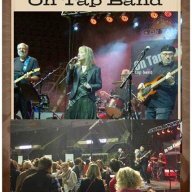
Hey man, sorry. I totally missed this post! Glad you liked the sound of the rig, and thanks for the compliment. At least for me the combination is exactly what I was wanting in tube tone.I had an early gig today.. And went to go see Freight Train at his gig tonight.. What a pleasure. George is a real cool guy.. Solid player too...
He had his 100T through his 410.. and I heard it as i was walking up to the building.. Bass sounded great.. A nice vintage G&L..
Thank you George for the full tour of the amp!!
His amp matched the drum kid perfectly..
I need allot of whooomp at times but I really think that the 100T could do many of my gigs... especially the larger gigs since there is FOH. Its the bar gigs that i do where i need to hit the whole room from stage and wind it up...
Could only imagine 2 410 cabs with this head... Nice!
Agree with setting the controls where it sounds right for a "flat" eq.
On my Studio Bass 200, I played around with the (trad) passive eq- 1st gig I had em set at 5,5,5 & it seemed quite mid scooped.
Just last Fri, we were in a showroom with great acoustic design-always get a great sound there- & I set it at bass 2, mid 10, treble 2 & it sounded pretty flat. I ended up at bass-3, mid-10, treble-2 for a nice mix sound.
On my Studio Bass 200, I played around with the (trad) passive eq- 1st gig I had em set at 5,5,5 & it seemed quite mid scooped.
Just last Fri, we were in a showroom with great acoustic design-always get a great sound there- & I set it at bass 2, mid 10, treble 2 & it sounded pretty flat. I ended up at bass-3, mid-10, treble-2 for a nice mix sound.
I just tried the tone test again, and it's pretty much the same as what I found in the old post, except now I'm finding the passive channel to have lower gain than the active, which is making me crazy. I really don't think I wrote down the wrong volume settings when I did the first test, but it's sure possible. It's either that or my passive channel has lost gain. (?!) But regardless, here's what I'm hearing. Try this with your bass and see if yours acts the same.
First, we're assuming that the center detent positions on the active channel's eq is flat. (It doesn't matter where the 'frequency' knob is set in this case.) So what you're doing is adjusting the passive channel's volume and tone so that when you switch back and forth between channels you're hearing the same volume and the same amount of lows, mids and highs - so there's almost no difference in sound at all when you switch back and forth. Just to get a basic start, the open strings work fine using open E to match the bottom end, A and D for mids and G for highs.
Here's what I found:
With the active channel set to 1-1-2.5-6-6-6-6
The passive channel sounds the same at 4-6-6-4
With the passive channel eq's all on 10, channel volume still at 4, the gain on the active channel has to be raised from 2.5 to 3 to match the volume, but now the passive channel is noticeably brighter, so what matches to me is:
Active channel 1-1-3-6-6-6-6
Passive channel 4-10-10-7
With the passive channel at 4-1-10-1 or 4-2-10-2, it has very noticeably less bottom and top end than the active channel set flat. So if 1-10-1 or 2-10-2 on the passive stack is flat, Then the active channel has a big built-in mid scoop, which it sure doesn't sound like it does to me. I'm prone to believe that the active eq's centered is flat(ish).
This is pretty much exactly what I found before, except I noted the passive channel volume to be at 5 and the active channel 6, meaning I was getting more gain out of the passive channel. I really feel like I must've reversed those two.
This is all VERY inexact as I'm just using my ears, but I'm interested to see if you guys get the same thing. We've got a couple week lag in gigs coming up so Im going to really try to drag the head down to the studio for some tests.
First, we're assuming that the center detent positions on the active channel's eq is flat. (It doesn't matter where the 'frequency' knob is set in this case.) So what you're doing is adjusting the passive channel's volume and tone so that when you switch back and forth between channels you're hearing the same volume and the same amount of lows, mids and highs - so there's almost no difference in sound at all when you switch back and forth. Just to get a basic start, the open strings work fine using open E to match the bottom end, A and D for mids and G for highs.
Here's what I found:
With the active channel set to 1-1-2.5-6-6-6-6
The passive channel sounds the same at 4-6-6-4
With the passive channel eq's all on 10, channel volume still at 4, the gain on the active channel has to be raised from 2.5 to 3 to match the volume, but now the passive channel is noticeably brighter, so what matches to me is:
Active channel 1-1-3-6-6-6-6
Passive channel 4-10-10-7
With the passive channel at 4-1-10-1 or 4-2-10-2, it has very noticeably less bottom and top end than the active channel set flat. So if 1-10-1 or 2-10-2 on the passive stack is flat, Then the active channel has a big built-in mid scoop, which it sure doesn't sound like it does to me. I'm prone to believe that the active eq's centered is flat(ish).
This is pretty much exactly what I found before, except I noted the passive channel volume to be at 5 and the active channel 6, meaning I was getting more gain out of the passive channel. I really feel like I must've reversed those two.
This is all VERY inexact as I'm just using my ears, but I'm interested to see if you guys get the same thing. We've got a couple week lag in gigs coming up so Im going to really try to drag the head down to the studio for some tests.
- Status
- Not open for further replies.
