I understand. The behemoths set expectations, though. Overall, I think that’s a bad thing, but it is what it is.I'm pretty sure it's a very small business, with at most a few people. It's a very niche product in a somewhat niche industry. It's also a very high quality, handmade product. They probably ship out all of the orders on the same day each week.
I had to wait for almost a month for a new batch of MMSRs to get made. Once I realized that I was paying for an artisanal product and that it wasn't mass produced it changed my perspective. You'll also find that John himself will post on these forums fairly regularly and will usually respond to email.
You're going to love it, so be patient.

Enjoy the benefits of a premium membership!
Upgrade Account
-
TalkBass has been independent since 1998. Add your voice.
Create a free account to reply to discussions, view embedded media, and browse with fewer display ads.
Join free Log in
Want zero display ads or expanded classifieds tools? Compare plans.
You are using an out of date browser. It may not display this or other websites correctly.
You should upgrade or use an alternative browser.
You should upgrade or use an alternative browser.
The John East preamp club
- Thread starter datsaxguy
- Start date
More options
Who Replied?
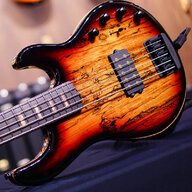
Perhaps, but if you were thinking that way why would you even mod your bass? Why wouldn't you just buy a more expensive bass with better electronics or go with a custom shop? I didn't mod my Ray4 because that made the most economic sense (in fact I had already bought a Ray34 because I wanted the better electronics). I modded my Ray4 because I wanted to experiment and tinker with high-end parts.I understand. The behemoths set expectations, though. Overall, I think that’s a bad thing, but it is what it is.
I frequently see "out of stock" or "backordered" notifications on a lot of the bass mods I've looked at. Either way it's kind of how it is in the weird world of bass mods and I hope you like your John East preamp as much as I love mine.
Have a good one.
Not sure what you mean? Was simply responding to another post about shipping delays. I don’t mind waiting, just think that the precedent is set for fast shipping on in-stock items whether the business is small or large. I went into this purchase knowing they’re a small operation and don’t mind waiting. Modulus basses aren’t cheap. Just wanted to try out another preamp and these looked good so I placed an order. You have a good one as well.Perhaps, but if you were thinking that way why would you even mod your bass? Why wouldn't you just buy a more expensive bass with better electronics or go with a custom shop? I didn't mod my Ray4 because that made the most economic sense (in fact I had already bought a Ray34 because I wanted the better electronics). I modded my Ray4 because I wanted to experiment and tinker with high-end parts.
I frequently see "out of stock" or "backordered" notifications on a lot of the bass mods I've looked at. Either way it's kind of how it is in the weird world of bass mods and I hope you like your John East preamp as much as I love mine.
Have a good one.

...
You have a good one as well.
...
Everyone in the 'club' has a good one - can't be avoided!!
Anyone tried putting 18v to the j retro?
I got the j retro 01 to replace a j bass deluxe which was running 18v, so am just thinking of connecting the wires of the 18v battery box to the battery wires of the j retro
I got the j retro 01 to replace a j bass deluxe which was running 18v, so am just thinking of connecting the wires of the 18v battery box to the battery wires of the j retro
Last edited:

- Apr 18, 2008
- 16,021
- 1
- 31,743
- Disclosures
- I'm highly opinionated and extremely self-assured
Always refer to the manufacturer’s documentation, but I’m pretty sure everything John East makes can take 18v.

@ctmullins is correct. Just connect the 18v battery box. That’s precisely what I did when I I installed the J Retro Deluxe into my Mike Lull. I’mAnyone tried putting 18v to the j retro?
I got the j retro 01 to replace a j bass deluxe which was running 18v, so am just thinking of connecting the wires of the 18v battery box to the battery wires of the j retro
@ctmullins is correct. Just connect the 18v battery box. That’s precisely what I did when I I installed the J Retro Deluxe into my Mike Lull. I’m
Always refer to the manufacturer’s documentation, but I’m pretty sure everything John East makes can take 18v.
Thanks everyone

Is somebody so kind to help me with the following?
On a East UK Uni-Pre 4 Onboard Preamp where are the factory settings for each knob? (at what time on the internal white knobs the arrow is pointing?)
According to the manual the factory default settings are as follows:
• Flat Response / Pre-Shaper - set to Flat Response.
• Bass Control: Boost & Cut / Boost Only - set to Boost & Cut.
• Bass Control: Lower Window Frequency - 20Hz.
• Bass Control: Higher Window Frequency - 60Hz.
• Treble Control: Shelf Frequency - 4kHz.
On a East UK Uni-Pre 4 Onboard Preamp where are the factory settings for each knob? (at what time on the internal white knobs the arrow is pointing?)
According to the manual the factory default settings are as follows:
• Flat Response / Pre-Shaper - set to Flat Response.
• Bass Control: Boost & Cut / Boost Only - set to Boost & Cut.
• Bass Control: Lower Window Frequency - 20Hz.
• Bass Control: Higher Window Frequency - 60Hz.
• Treble Control: Shelf Frequency - 4kHz.
Thank you this is super helpful!About the wheels on the UNI-pre I tried outlining the “possible” positions of some frequencies. I might be completely wrong about this. I tried e-mailing Mr. East about it with no luck of getting a reply. Hopefully if he sees this thread he can confirm what I did here. Some say just go by ear, but found myself spending way to many hours seeking for my sound, whereas with this “guide” at least to my knowledge I nailed it pretty quickly. View attachment 5013619View attachment 5013618 View attachment 5013617View attachment 5013616

Hey all, what’s the differences in the sound/features of the J-retro and the uni-pre? I think the uni-pre is a more advanced design, but is that true?
I want to put a preamp into a jazz bass. The features of the uni-pre seem great, so if it’s better than the j-retro, can I mount a 4 knob uni-pre in a jazz plate? Or is the j-retro deluxe equivalent to the uni-pre?
I want to put a preamp into a jazz bass. The features of the uni-pre seem great, so if it’s better than the j-retro, can I mount a 4 knob uni-pre in a jazz plate? Or is the j-retro deluxe equivalent to the uni-pre?
Hey all, what’s the differences in the sound/features of the J-retro and the uni-pre? I think the uni-pre is a more advanced design, but is that true?
I want to put a preamp into a jazz bass. The features of the uni-pre seem great, so if it’s better than the j-retro, can I mount a 4 knob uni-pre in a jazz plate? Or is the j-retro deluxe equivalent to the uni-pre?
what u wanna find out can all be found in their website except maybe if the unipre and be mounted on the jazz plate
The uni-pre has more features and flexibility. So is the uni-pre just plain better? Or are there some aspects of the j-retro that are better?what u wanna find out can all be found in their website except maybe if the unipre and be mounted on the jazz plate
Hey all, what’s the differences in the sound/features of the J-retro and the uni-pre? I think the uni-pre is a more advanced design, but is that true?
I want to put a preamp into a jazz bass. The features of the uni-pre seem great, so if it’s better than the j-retro, can I mount a 4 knob uni-pre in a jazz plate? Or is the j-retro deluxe equivalent to the uni-pre?
Pretty sure the Uni-Pre will not fit a standard Jazz cavity without modification. Main 'extras' on the Uni are tailorable ranges for the Bass and Treble controls and fully functional VBT passive path. The J-Retro passive mode is limited to both pickups equal or bridge only, volume and passive tone, i.e. no blend control. No doubt you could reverse the pickup connections and have passive as 'Both/Neck' but then the blend would work backwards in Active mode. Also worth remembering that the Uni has longer pot shafts to fit rear-mount through thicker wood tops rather than thin metal plates. Putting the Uni on a Jazz plate would either need more space behind (which is already at a premium in the Jazz Bass), or protruding knobs on the front. And you would need a separate battery compartment.
Last edited:
The uni-pre has more features and flexibility. So is the uni-pre just plain better? Or are there some aspects of the j-retro that are better?
Both will sound good - none of John's stuff sounds bad and the build quality of everything is second to none. So on that basis, 'better' is subjective according to your individual needs.
My thoughts would be, if you EQ a lot from the onboard preamp, the Uni-Pre with all its options might be worth considering for your application.Hey all, what’s the differences in the sound/features of the J-retro and the uni-pre? I think the uni-pre is a more advanced design, but is that true?
I want to put a preamp into a jazz bass. The features of the uni-pre seem great, so if it’s better than the j-retro, can I mount a 4 knob uni-pre in a jazz plate? Or is the j-retro deluxe equivalent to the uni-pre?
For me, about all of my EQ needs are done at the amp, or the console channel. I might roll off the highs in quiet moments of a song, but that’s the most of it. The J Retro Deluxe was and is perfect for my Jazz-style bass needs.
I have an ESP LTD fretless that I’m considering a Uni-Pre for. Hopefully in a few months.
- Apr 18, 2008
- 16,021
- 1
- 31,743
- Disclosures
- I'm highly opinionated and extremely self-assured
Hi, does the j retro needs to be connected to the bass ground wire?
Unfortunately my ground wire came off and I'm having a hard time putting it back into the channel from the bridge area into the cavity
Contrary to what many may tell you, the bridge ground is not mandatory. However, the bass may now be noisier under certain conditions.

Hey all, what’s the differences in the sound/features of the J-retro and the uni-pre? I think the uni-pre is a more advanced design, but is that true?
I want to put a preamp into a jazz bass. The features of the uni-pre seem great, so if it’s better than the j-retro, can I mount a 4 knob uni-pre in a jazz plate? Or is the j-retro deluxe equivalent to the uni-pre?
Where to start?! Sorry for this long winded post...
I just finished putting a uni-pre into a warmoth rear-routed Jazz Bass body. I can say with 100% confidence that it will not fit anything smaller than a rear routed body of considerable capacity. Plate mount? FORGET IT! It will never happen!
For a rear-route install (only) - The EQ board is a very large affair and it has to be connected daisy chain style with the volume board and the mid board. Additionally the passive tone has to cable to the volume board with heavy ribbon cable. There is ALOT going on with this setup. In addition to all the fit issues, I had to route the mounting surfaces to a thinner profile because the pots are too short and the board architecture makes it impossible to just put sink holes for the pots. I had to route thinner for the entire profile of all 4 pots / boards. It was quite an endeavor. I think there are some things that could have been done to make it easier. Consideration for the thickness of the mounting surface would be #1. Also - a really thorough explanation of how to set it up is a close second. Everything seems to be presented as -'here you go - turn wheels and replace caps till you like how it sounds'. ZERO insight is provided on how to shift the tone to achieve a specific goal. I signed up for a good preamp - not a career in figuring out how it works. The only video for this product is a talented player playing with no insight into what was done, settings, etc. Needless to say I'm not done with this install. I'll experiment a little bit then I'm going to seal it up and call it done. I'm not an audio electronics engineer.
At the end of the day I will say it was worth it. TRUE passive mode or one of the best active modes on the market in one product. IMO it is a bit more responsive than my J-Retro and J-Retro Deluxes but not markedly better at this point. Just a bit different and they all have the same J-East DNA. But make no mistake - the Retros are better than ANY other plate preamp I have ever used. And they DO fit pretty easily into a Jazz bass without modification. I had one Fender branded bass that the cavity was a tad shallow that required a buzz with a router to make a good fit. If the Retro had a better passive arrangement I would have never explored the Uni-Pre. But it doesn't and I don't pretend that the emergency mode is any kind of true passive mode on them. IMO it kind of sucks. So I endeavored the Uni-pre and I'm glad I did.
If you have a rear cavity, a router, and a bucket of patience IMO the Uni-pre is worth the effort. If you are missing any of those, the J-Retro is an excellent runner up.

Thanks for the reality check. Really the only thing I’m leery about with the J-Retros is the boost-only bass. Seems like a weird choice. Sometimes I like to thin out the bottom just a bit.Where to start?! Sorry for this long winded post...
I just finished putting a uni-pre into a warmoth rear-routed Jazz Bass body. I can say with 100% confidence that it will not fit anything smaller than a rear routed body of considerable capacity. Plate mount? FORGET IT! It will never happen!
For a rear-route install (only) - The EQ board is a very large affair and it has to be connected daisy chain style with the volume board and the mid board. Additionally the passive tone has to cable to the volume board with heavy ribbon cable. There is ALOT going on with this setup. In addition to all the fit issues, I had to route the mounting surfaces to a thinner profile because the pots are too short and the board architecture makes it impossible to just put sink holes for the pots. I had to route thinner for the entire profile of all 4 pots / boards. It was quite an endeavor. I think there are some things that could have been done to make it easier. Consideration for the thickness of the mounting surface would be #1. Also - a really thorough explanation of how to set it up is a close second. Everything seems to be presented as -'here you go - turn wheels and replace caps till you like how it sounds'. ZERO insight is provided on how to shift the tone to achieve a specific goal. I signed up for a good preamp - not a career in figuring out how it works. The only video for this product is a talented player playing with no insight into what was done, settings, etc. Needless to say I'm not done with this install. I'll experiment a little bit then I'm going to seal it up and call it done. I'm not an audio electronics engineer.
At the end of the day I will say it was worth it. TRUE passive mode or one of the best active modes on the market in one product. IMO it is a bit more responsive than my J-Retro and J-Retro Deluxes but not markedly better at this point. Just a bit different and they all have the same J-East DNA. But make no mistake - the Retros are better than ANY other plate preamp I have ever used. And they DO fit pretty easily into a Jazz bass without modification. I had one Fender branded bass that the cavity was a tad shallow that required a buzz with a router to make a good fit. If the Retro had a better passive arrangement I would have never explored the Uni-Pre. But it doesn't and I don't pretend that the emergency mode is any kind of true passive mode on them. IMO it kind of sucks. So I endeavored the Uni-pre and I'm glad I did.
If you have a rear cavity, a router, and a bucket of patience IMO the Uni-pre is worth the effort. If you are missing any of those, the J-Retro is an excellent runner up.
View attachment 5115035


