A couple of months ago I had a thread up discussing my current fingerboard compound radius jig and looking to brainstorm a new, improved version. That thread generated a lot of discussion, but little in the way of new ideas. Here is my own design that is the product of my day-dreaming since then.
The idea is to have as few moving parts as necessary. The old jig always left me feeling insecure, like I was always on the verge of an accident. On this jig, the only thing moving on each pass of the router IS the router. Much more secure and much more repeatable.
Accurate and repeatable . . . that's paramount.
This jig will radius a fingerboard up to 36" long (for concept basses with full-length fingerboards).
There are still a couple of bugs to work out, and I have not tested it yet . . . probably tomorrow.
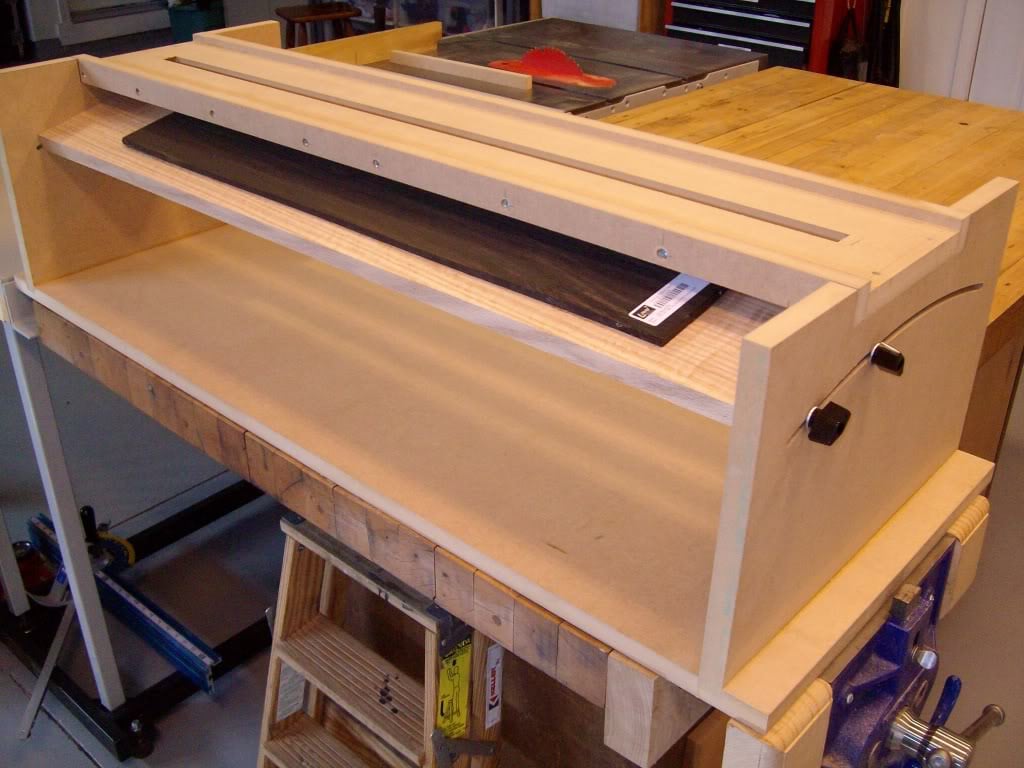

The fingerboard carriage is made from 3/4" quartersawn Oak. The "twist" of a compound radius is induced . . .


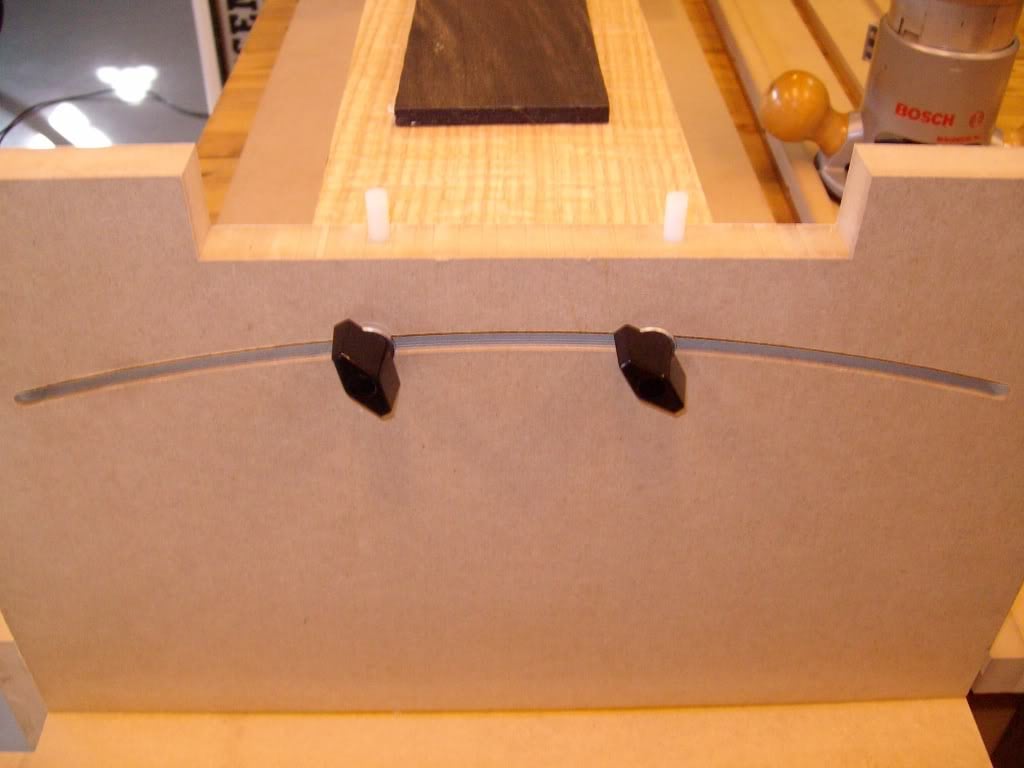
The sled is removable for access to the carriage. It sets on the guide pins pictured:
The idea is to have as few moving parts as necessary. The old jig always left me feeling insecure, like I was always on the verge of an accident. On this jig, the only thing moving on each pass of the router IS the router. Much more secure and much more repeatable.
Accurate and repeatable . . . that's paramount.
This jig will radius a fingerboard up to 36" long (for concept basses with full-length fingerboards).
There are still a couple of bugs to work out, and I have not tested it yet . . . probably tomorrow.
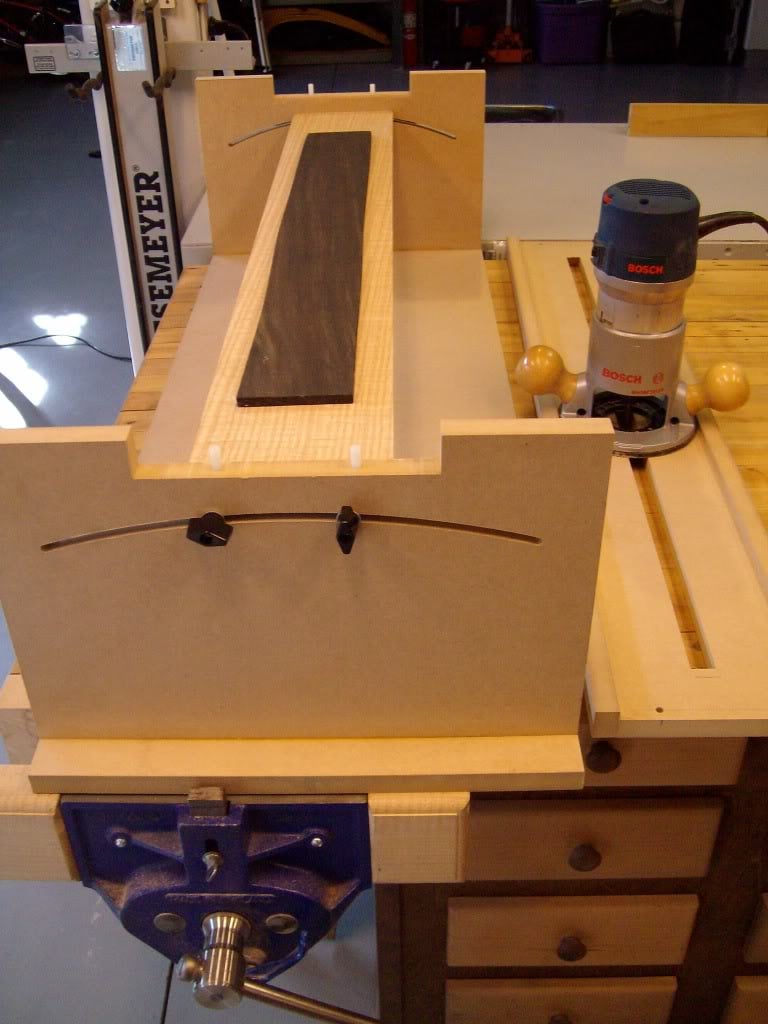
The fingerboard carriage is made from 3/4" quartersawn Oak. The "twist" of a compound radius is induced . . .
The sled is removable for access to the carriage. It sets on the guide pins pictured: