• TalkBass has been independent since 1998. Add your voice.
    Create a free account to reply to discussions, view embedded media, and browse with fewer display ads.
    Join freeLog in
    Want zero display ads or expanded classifieds tools? Compare plans.

The Official TB Photography Thread

Status
Not open for further replies.
Ívar Þórólfsson said:
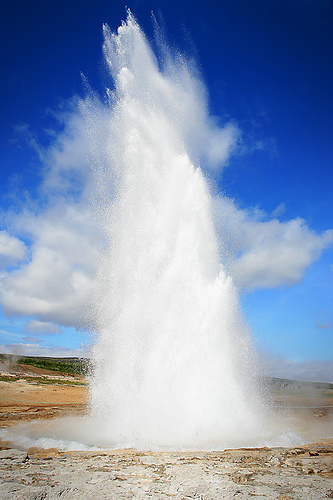
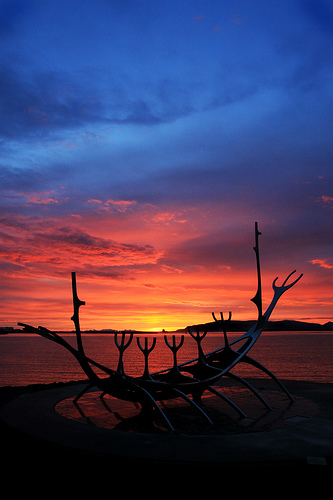
I´ve also been taking a couple of pictures:
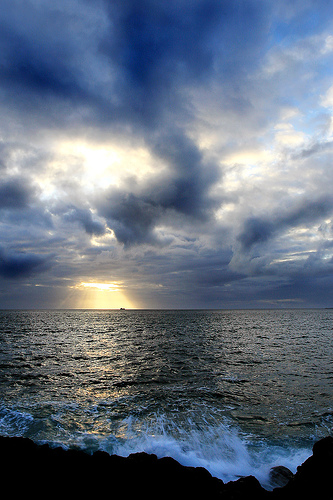
167993522_4df6c0eec7.jpg


175712309_3f4ec3136f.jpg


172956573_cec254b763.jpg


Those colors are brilliant!! Are you touching them up or doing something to them, or are those straight out of the camera?
 
crhoton said:
Those colors are brilliant!! Are you touching them up or doing something to them, or are those straight out of the camera?


Thanks!

This is pretty much straight out of the camera...
I do tweak them a bit though in Photoshop, I do some levels and curves but nothing drastic.

The sunset photo on the other hand, I did very little to that one, the colours that night were fantastic!
 
Vorago said:
A bit blurry

I can explain that, notice that a photo of all that is unknown is blurry, Bigfoot, Loch Ness monster, Bush, and others. So far we have had confusion on what qintar is actually looks like. The only description we have is from qintar himself, other wise known as BC or BQC.

This photo shoot is nothing but practice for photo hunt on TQ. Jive1 will get us photos of the great unknown that is TQ, but they must be blurry as it is unknown.
 
kserg said:
I can explain that, notice that a photo of all that is unknown is blurry, Bigfoot, Loch Ness monster, Bush, and others. So far we have had confusion on what qintar is actually looks like. The only description we have is from qintar himself, other wise known as BC or BQC.

This photo shoot is nothing but practice for photo hunt on TQ. Jive1 will get us photos of the great unknown that is TQ, but they must be blurry as it is unknown.

incredible theory!
But it is probably a true one!


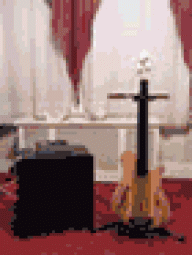
Jive: As Vorago said, the pics are a bit blurry and the model isn´t in focus on any of them and a bit shiny also. Were you the main photographer or were you snapping pics along with the main photog? The reason I ask is that there is no eye contact between the model and the camera.
 
Ívar Þórólfsson said:
incredible theory!
But it is probably a true one!


Jive: As Vorago said, the pics are a bit blurry and the model isn´t in focus on any of them and a bit shiny also. Were you the main photographer or were you snapping pics along with the main photog? The reason I ask is that there is no eye contact between the model and the camera.

I agree they aren't the best pics, but they were the best of a batch. The pics were part of a seminar, so I wasn't the main photographer. Which explains the lack of eye contact. It was hard to get the angles I wanted, since I had to work around other people. The model seemed inexperienced as well, and moved around a lot. But, she was real cute. ;)

The light in the room was relatively low, and I was playing around with aperture. I should have played around with ISO settings a little more to mitigate the lighting issues. If I could have zoomed, or gotten in closer, I might have been better able to use the available lighting. Oh, well that's why I took the seminar - to experiment, make mistakes, and learn from them.

Thanks for the feedback folks
 
Invalid Link Removed

How about a little critique on this one.

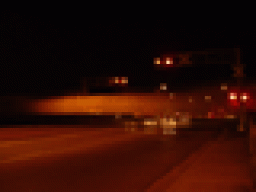
I went to Water Fire downtown Providence, RI last night. This was the best shot I could get due to lack of experience and too many people making a tripod a nuisance. Heck, walking was a nuisance.

I was doing my best with the manual settings to get a quicker shutter speed and this was the results. It was also the only shot I could rest the camera on a railing so It would not come out blurry. I also Photoshopped the exposure to bring out more highlights.

So, what do ya think? I like the composition but not sure it it's too dark. I was not my intention to get the people in the shot, I just wanted to get the detail of the banks of the river leading to the building in the background.
 
Chunk-O-Funk said:
How about a little critique on this one.

I went to Water Fire downtown Providence, RI last night. This was the best shot I could get due to lack of experience and too many people making a tripod a nuisance. Heck, walking was a nuisance.

I was doing my best with the manual settings to get a quicker shutter speed and this was the results. It was also the only shot I could rest the camera on a railing so It would not come out blurry. I also Photoshopped the exposure to bring out more highlights.

So, what do ya think? I like the composition but not sure it it's too dark. I was not my intention to get the people in the shot, I just wanted to get the detail of the banks of the river leading to the building in the background.


I'm quite the amateur on this, but in the spirit of the internet, I'm willing to share some potentially erroneous information.;)

Low light photography is an amazing challenge, and that scene is a difficult one to do and capture it accurately. Dark scenes like that always seem to cause pixelation.

What I'd do is put the camera on the most stable base you can find. Set the shutter speed to the slowest you can to get in the most light. The side effect is that anything moving will look blurred, but it could make for an interesting effect. I'd take a series of shots at different ISO settings, and take the one with the least pixelation. If one of them is brighter than I need them to be, I can always adjust that in Photoshop. Pixelation on the other hand is very difficult to fix for a hack like me.

Another thing to try is to change the light metering setting. Instead of using evaluative, which measuresthe overall light of the scene, try center weighted. That will allow you to select an object and let the light meter adjust based on that. The building or one of the flames could be used.
 
Thanks jive1,

I'm actually looking at it with a different monitor at work, it's an LCD which apparently is a lot brighter than my CRT at home. There is tons of noise due to the high ISO setting I used.

Yhea, it pretty much sucks! :D

I might go down there again later this summer when the crowd slims down so I can use a tripod, or maybe I'll pick up a mono-pod.

This was my first attempt at a night shot, oh well, maybe next time.
 
jive1 said:
Dark scenes like that always seem to cause pixelation.
There's a couple other considerations specific to digital photography you didn't really touch on... at least directly...

First, "pixelation" is caused by compression. "grainy-ness" is caused by higher "ISO" settings where the camera is attempting to emulate faster film. Finally, amplification of the image also causes anomalies that look almost like white bubbles in the shot in the worst cases.

A few points to make here...

First, low light pictures tend to have a lot of mild gradients in them and very typically suffer from compression problems (pixelation). To solve this problem, turn your "quality" up as high as it will go, or your compression down as far as it will go. If that still isn't good enough (totally camera dependent), choose "raw" mode (usually TIFF) which will use a LOT of memory in the camera per picture, but is about the only way to avoid compression problems if the compression can't be "tamed" enough.

Forcing the "ISO" setting to 100 or 150 will also help (instead of "AUTO", which will often end up at "ISO" 400 and fairly grainy). This will force you to use the slower shutter speeds (like Jive was talking about), but is the only way to avoid "ISO" setting anomalies like the grainy look. The only "unsolvable problem" here is, your subject(s) MUST be static. Pretty much ANY movement will blur.

Jive makes good points about evaluative vs center weighting, but the problem you MIGHT run into there is if you want ANY of the environment to be visible, you may have to stick with evaluative, and just force the shutter speeds to be slower. This will make the picture darker overall, but will help avoid the amplification issues caused by digital cameras trying too hard to bring up the brightness of the image to where they think the minimum should be. Otherwise, if you do this, your subject will be properly lit, but if you try to process the image later to bring up the background, it's fairly hard to do without having your subject(s) seeming too "burned" or "hot".

The bottom line is, quality low light photography is probably the trickiest there is, but with careful planning and composition, it can be done. It may take a lot of experimentation, but thanks to the digital age, it's "free" to learn. :)

YMMV, IMHO, FWIW... :)
 
Well, I went to an excellent Sigur Ros concert tonight in Reykjavik.

Sigur Ros held a series of free outdoor concerts around the country and they were also making a documentary.

Anyway, here are a couple of pics I took tonight:

[Invalid or Expired Link Removed]

[Invalid or Expired Link Removed]

[Invalid or Expired Link Removed]

More pictures on my flickr page. http://www.flickr.com/photos/ivarth
 
The model shots were decent, you just have to learn how to work with it. Taking the actual photo is only half the work. How you clean it up, crop, and tonal correct is also very important. I'm still not that good at it.

For example this photo.
[Invalid or Expired Link Removed]

Kind of flat, doesn't really catch your eye. Also way oversaturated.

For me personally I'd do something like this.
[Invalid or Expired Link Removed]

Simply changing the background to a black and white setting will bring out the model much better. Adds more depth in tone and gives a better focal point.

I just did this real fast so it's sloppy, but if I was doing this for a client I'd clean it up until it's perfect.
 
Status
Not open for further replies.