• TalkBass has been independent since 1998. Add your voice.
    Create a free account to reply to discussions, view embedded media, and browse with fewer display ads.
    Join freeLog in
    Want zero display ads or expanded classifieds tools? Compare plans.

The Old Ironing Board Trick

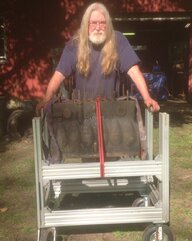
IMG_0770.JPG

I understand this is the best ironing board for Metal. Italian made, over $600. Steel and aluminum.
 
You should not set action while the bass is oriented face up. Gravity will pull down on your neck and you'll have more relief when playing than you expect. Adjustments need to be made in playing position.

How to tell if gravity affects your bass:

1. Tune it in its normal position
2. Lay it on its back, making sure it isn't resting on the headstock
3. Check the tuning, if it's still in tune then your bass has beaten gravity

Seriously, the headstock thing is important if it's angled
 
You must have some really strong gravity up there in Wisconsin, or really heavy headstocks :roflmao:

Setting the action and other adjustments are commonly recommended done in the playing position. It takes the stress off the neck from having it on a stand, and mimics the way the bass will be played for more accurate settings. All of the luthiers I've heard from recommend doing the setup in the playing position.

I do like the idea of stringing or doing other flat work using the ironing board. Actually I might pick one up just for that reason. This would have been really handy on the road. Not to mention there is one in every hotel room.

A padded, adjustable work station...

Very cool idea!

Thanks @Linnin !
 
Some of us don't have dedicated workshop & bench. Some of us live in very small places. When it comes time to restring your bass or work on your action, where do you do it? On the kitchen table? On your bed? On the floor?

Bass Laddies & Lassies, I give you the humble ironing board. Yes, sitting lonely in the corner waiting to be of fashionable use, it is far too neglected. Next time you change strings, break out your ironing board. Pop you bass on top and work away at a very comfortable mid-torso level. Makes setting your action at bridge as breeze. Just drop to one knee and be at eye level with your strings a fretboard. Easy to see your ruler or action gauge. Adjusting your pickups? Works a treat!

When you're done you are ready to tidy up your laundry.

I make it a point never to buy clothes needing ironing.

Suits go to dry cleaners.

The older and more wrinkled I get the less likely I'm going to wear unwrinkled clothes, don't want any comparisons.
 
How to tell if gravity affects your bass:

1. Tune it in its normal position
2. Lay it on its back, making sure it isn't resting on the headstock
3. Check the tuning, if it's still in tune then your bass has beaten gravity

Seriously, the headstock thing is important if it's angled

Quicker way to see if gravity affects your bass:

1. Hold it up above your head
2. Let go
3. :blackeye: :roflmao:
 
It's not so it's much gravity that's an issue when setting neck relief. If you have a heavy bass with a thin neck, the pressure on the back of the neck because of a too high neck rest can knock it off slightly.

As long as there's nothing pressing against the back of the neck when you're setting relief or action, you should be fine.

I just turn my basses on their side on the bench when I'm measuring action or relief.
 
I made a little holder out of some old 2x4s to keep my angled headstocks just off the ground/coffee table/working surface. There's a little soft cloth that I attached to the inside "cradle" part (two small pieces of 2x4 with a gap between them) that I put the neck in (usually at the 3rd fret or so). This keeps my headstock just off the surface, so my neck isn't getting any extra pressure while I work on the bass. As for the body, I just use an old towel laid out on the work surface to prevent any scratches. I use the same basic setup for all my maintenance. If I'm soldering, I just make sure the towel is contained under the instrument, without any showing off the edges to prevent any accidents.

I've used this exact setup on coffee tables, dinner tables, and my current workbench. Pretty much anything flat. It's plenty portable, and cost me nothing, since I just made it from scraps in my basement.