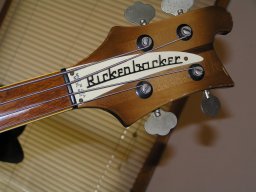
Having seen the body-separation issues some folks have had with 4003s that have the older 1/2" pickup location (especially with anything besides light gauge strings) I can understand the reasoning for the extra wood there especially on a 4004 with the pickup right up on the neck heel- the truss rods end right there, so the only support against bowing is the wood underneath the pickup cavity and a bit of support from the glued body wings. It seems the compromise of strengthening a stubbornly traditional design that wasn't particularly well engineered to begin with (or at least not engineered to take into account the kinds of high-tension strings common today). My old Carvin was an all-maple neck-through bass with a much more svelte neck-body joint like your second picture but the neck pickup was in the J neck position, which is closer to the bridge pickup on a Ric than the more extreme Ric neck pickup positioning. It still developed some minor stress cracks where the neck met the body once I started using heavier strings. Regardless, from a design-perspective, the total tension on a bass neck isn't fairly comparable to a 6-string guitar due to the longer scale (it is of course common to put a guitar neck pickup right up against the neck without structural issues).
I guess I'm lucky with big hands, but I play up in the high registers of my Ric often without issue! Its also still less wood (and more elegant) than a traditional bolt-on neck joint like a Fender