• TalkBass has been independent since 1998. Add your voice.
    Create a free account to reply to discussions, view embedded media, and browse with fewer display ads.
    Join freeLog in
    Want zero display ads or expanded classifieds tools? Compare plans.

The science of pulling back a speeding drummer

Play a really slow blues and get it to work.
Playing too fast can often be to mask inability to make a slow groove work.
(and this can apply to other instruments) if the unaccompanied instrument sounds awkward or down right horrible at a slow speed, that guy needs to work on it. Whether you can afford that time on them is your call.
 
Most of us have played with drummers who regularly get over excited and speed up, and I often hear people saying stuff like “it’s the bassist’s job to keep time” and “if the drummer has bad timing / keeps speeding up, it’s the bassist’s job to pull them back”. And I agree with both of those statements in theory, but nobody actually explains how to do that, when in practice, no matter what you do, the drummer is not really listening, or they’re just playing too loud, so the rest of the band end up speeding up with the drums rather than focusing on the bass, and trying to keep time as a bassist becomes a pointless task, so you just end up speeding up with everyone else.

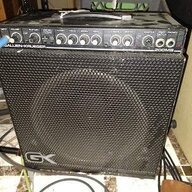
The difference tonight was that I decided to try a more stupid approach, and I gradually turned up my amp crazy loud until the drums were barely audible, and as if by magic, the drummer suddenly couldn’t speed ahead, and despite numerous attempts to rush, he couldn’t do it. So I basically bullied him into staying in time.

So that’s my technique, brute force. Not very clever but it worked. It’s far from ideal though so I’m curious if anyone has any better techniques.
If there are any adults in the room, then we know is the unavoidable thing is to TALK ABOUT IT WITH THE DRUMMER. "I need you to do X" is the "science". If that awareness doesn't create the consistent end result, the next step is working with a metronome in practice to make everyone more aware of time, in every moment of every measure. Awareness of time should get much better with every member of the band, particularly the drummer, and that is a huge step up in making a better band. And who doesn't want a better band?
 
  • Like
Reactions: Low End Scum
Everyone is responsible for keeping time, but I do find that when it becomes confused (as is occasionally the case with my covers band) the drummer wins out. I've tried to hang back to stop us from ending up in a self reinforcing loop of speeding up and speeding up but when it becomes untenable and I'm the only one that sounds wrong, it's better to all lock in than be trying to drag eachother one direction over another. In my situation they're all young musicians though and so this is something I haven't had happening in over 8 years.
 
I'm interested to hear if people get push back from anyone if they are 'asked' to work on stuff like timing which really is a fundimental, imv.
It's less pushback and more "how effective are they at actually correcting an issue". I had a buddy who's seen my old bands for years come out to my newest groups show. He came up to me after the show and was like "man, what're you doing? I see you compensating on timing mistakes so that you're all still on it together".

Well the honest to goodness truth is, try as we might, the drummer cannot manage to not go half a beat early on the bridge parts of Everlong where the drums are just fills on fills. We've practiced it. We've drilled it. At home I nail it to the recording. At rehearsal we all choke up because the drummer is always early. When we pointed it out in the past it'd get better for a few runs before the end of the night and next week it'd be the same thing all over again. Yeah it's irritating, but I'm also just there for the fun of it. I have an originals project that if it gets halfway to gigging I'm going to move fully over to anyways so I'm just trying not to take it too seriously. You can't make somebody get better or fix what they can't/won't hear.
 
I'm interested to hear if people get push back from anyone if they are 'asked' to work on stuff like timing which really is a fundimental, imv.
From my experience, when it comes to adults in bands with jobs / responsibilities / lives outside music, there are two kinds of people: on one side, you have the people who see their shortcomings as an opportunity for a deep dive into practice, even if that practice is not very interesting or fun (and for non-bassists, things like slow metronome practice can be tedious). On the other side, you have people who use playing and practice as fun / escapism, and will only practice stuff they find exciting and inspiring. These people can usually do flashy stuff but they often struggle with the fundamentals.

A good example is again a drummer I know who doesn’t like ballads and doesn’t find them ‘inspiring’, so he refuses to practice them. So if a slow tune is called, his playing falls apart. Despite that, he likes his practice time to be fun and interesting, so he flat out refuses to dedicate time to working on ballads.
 
  • Like
Reactions: Rev_Slinky
In my decades of experience I have become aware that there are drummers who simply do not have good time, and no amount of effort is going to change that. When I get called for a gig, I always ask who is on drums. If I know that the drummer in question does not have good time, I turn the gig down.
 
When my drummer is getting excited (in the jazz 4tet, generally during piano chorus. I don't understand why but.. ) , i play lower than him, plucking more hard and leaving a small space between notes, kind of breaking up lines. By that way, little space are making my notes more hearable. Generally, my drummer hears it instantly and focus on my timing and all getting back ok.
 
  • Like
Reactions: Akami
When my drummer is getting excited (in the jazz 4tet, generally during piano chorus. I don't understand why but.. ) , i play lower than him, plucking more hard and leaving a small space between notes, kind of breaking up lines. By that way, little space are making my notes more hearable. Generally, my drummer hears it instantly and focus on my timing and all getting back ok.

Note duration is a powerful force in a dynamic, listening rhythm section; What a waste to have to use it for this.
 
  • Like
Reactions: Polfuste
Boy, these stories really bring back memories. Here’s a few of my experiences.

I was in a wedding band with a drummer for 16 years who is a Berkeley graduate. His mantra is in my signature. It’s all about the groove son not the chops. If a band leader turned around and told him to play faster or slower he would immediately snap back at him Saying “this is the tempo.“ He was so certain of the meter that he dictated the groove. And he was always right. He rarely played fills. He would go for 64 measures and more as a straight groove. Never wavering, locked in like a drum machine. He really taught me a lot. He would say “anybody that plays a fill after four measures is an amateur” To this day, you can always tell the difference between a pro and a hobbyist. Pros maintain the groove.

Second situation. Same wedding band. Drummer was subbed for Jose Feliciano‘s drummer. Chops monster. Killer Latin grooves. Great sound. Great technique. We start playing the dance set. Within three minutes he is taking off like a rocket. Band leader looks over at me with a look of total confusion. We have a brief break between songs. Bandleader tells me “start this dance set slow.” as a countermeasure to the ultimate speed up we are anticipating.

Third scenario. I currently play in an 80s band. The band is unique in that they play in real time to the original music videos of the artist they are playing. Meaning, the music video lip syncs to us. The audience only hears the band, but they see the original video on multiple screens, it’s really quite unique and I’ve never seen anything like it. It’s definitely a differentiator from a visual perspective. We play with a click. We never speed up. We never slow down. We have to absolutely be in time with the original track, yet there is no part of the original audio coming out of the speakers. It’s all the five of us. The saving Grace is, we’ve learned to groove the click. And the band is great.

So, I truly get a kick out of the method of destroying the mix to quell a speeding Drummer. Hilarious.
 
Last edited:
  • Like
Reactions: BassGuyFL
One way of dealing with this issue is kind of blaming yourself by saying the drummer something like "I feel like I have a tendency to rush the song, can you help me stay on time and not rush?".

Some people don't get it no matter what, and it that case you should run away.
 
  • Like
Reactions: project_c
It's been said, but I'll say it again; everyone owns time in a band, not just the drummer and/or bass player.

that said, I do use a tool that a very solid drummer I know turned me on to, LiveBPM. It's a very helpful, non-click way to visually see where any given tempo is at. The tool basically shows a realtime graph line of the BPM of what your playing and it's pretty accurate (not perfect .. particularly when there are double time sections in a tune). I have introduced it to drummers I play with and most are cool with it. If we both keep an eye on it, the time/tempo of the stuff we're playing generally stays within a few BPM +/- of where we want it to be.

otherwise, there is always click, which I'm very comfortable with, but some folks are not.
 
  • Like
Reactions: project_c
Play a really slow blues and get it to work.
Playing too fast can often be to mask inability to make a slow groove work.
(and this can apply to other instruments) if the unaccompanied instrument sounds awkward or down right horrible at a slow speed, that guy needs to work on it. Whether you can afford that time on them is your call.
This is very true, and it applies to others in the band too, not just the drummer. Was talking with a trumpet player last night and he was implying that it was a lot easier to play fast because it means he doesn’t have to worry about feel and groove, he can just blast through his parts and his solo. That seems ridiculous to me, I don’t see the point of playing anything without groove or feel, regardless of what the bpm is. The differences in how people perceive what ‘playing music’ actually means never ceases to amaze me.
 
  • Like
Reactions: BassGuyFL
We find this lot.
I was given a Stapleton number..slow and groovy and you think just notes, right..?
Oh no... it was classic Nashville backbeat and you had to listen to get that, as opposed to thinking, got this, easy.
And the drummer definitely had to do same.
This little things are easy to butcher otherwise.
 

Latest posts