• TalkBass has been independent since 1998. Add your voice.
    Create a free account to reply to discussions, view embedded media, and browse with fewer display ads.
    Join freeLog in
    Want zero display ads or expanded classifieds tools? Compare plans.

The Short-Scale Six-String Club—for the original six-string basses!

Status
Not open for further replies.
Hi to all,

It's been a while since I posted here the last time... This is just a quick message... and actually I'm not sure If I'll get busted/banned for this post...

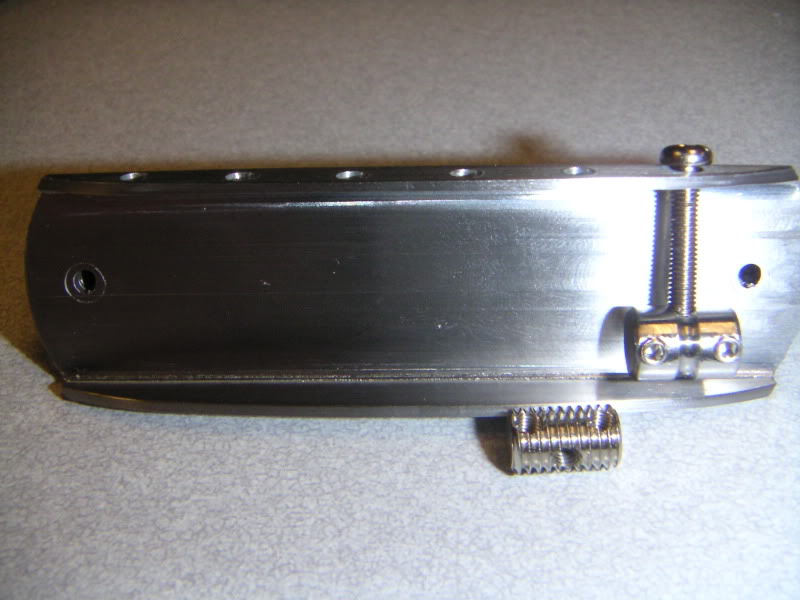
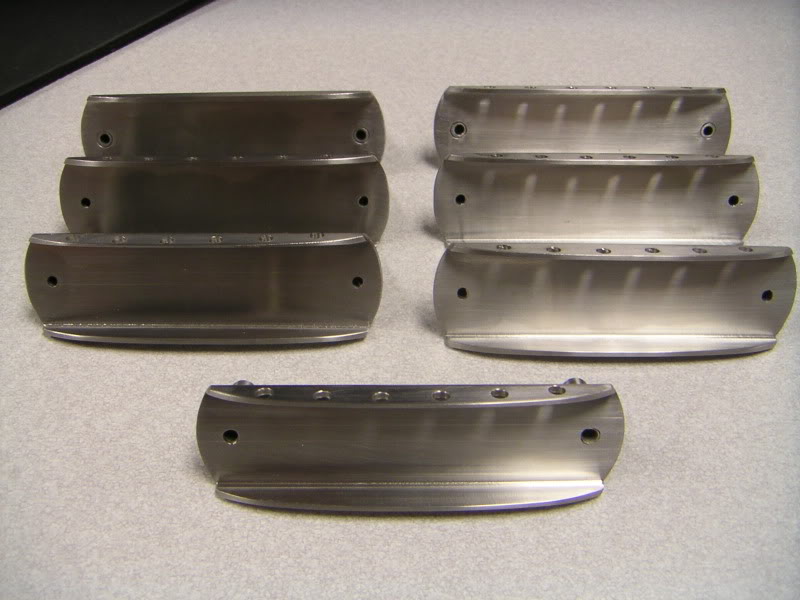
I have 1 inch wide BASS VI bridge bases... like these ones... I get those made every 3 months in small quantities... I'm about to get a batch done... so if you are interested because you want to complete a bass VI project or you want to replace the bridge that came with your Custome shop VI... you can count with me.

Send me an email: roberto _ retana (at) yahoo . fr
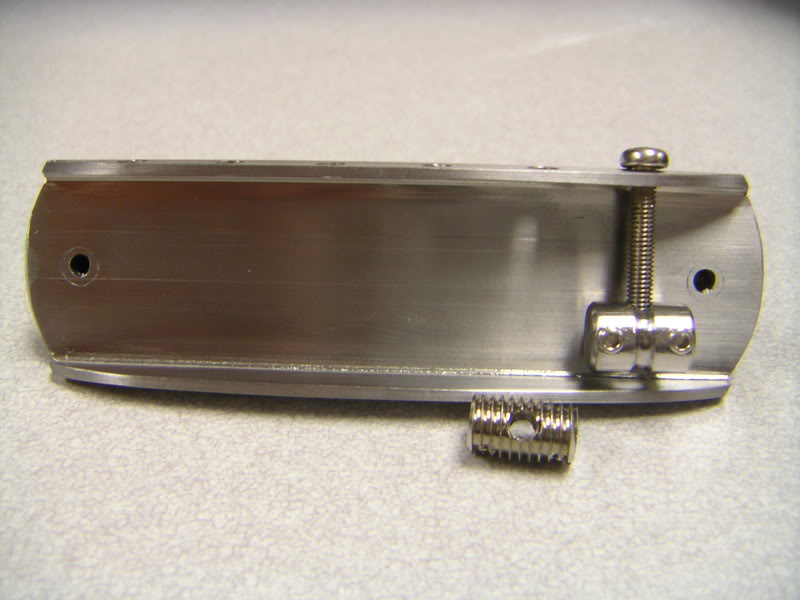
PICT0536.jpg


PICT0533.jpg


PICT0535.jpg


DainsBassVi.jpg


Ah and by the way... Stereordinary's Bass VI has one of my bridge bases...;)


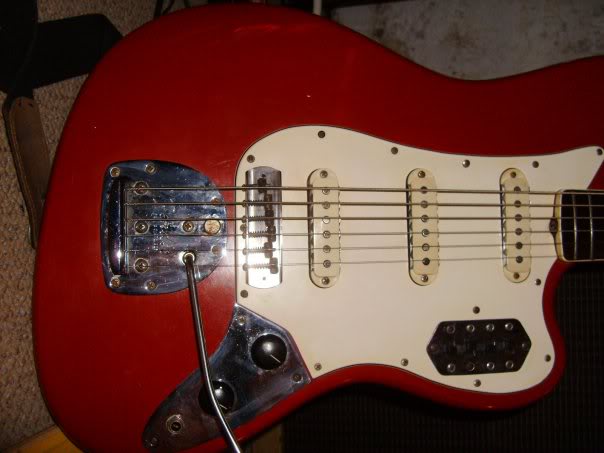
And now a picture of my 2006 CS Fender Bass VI!
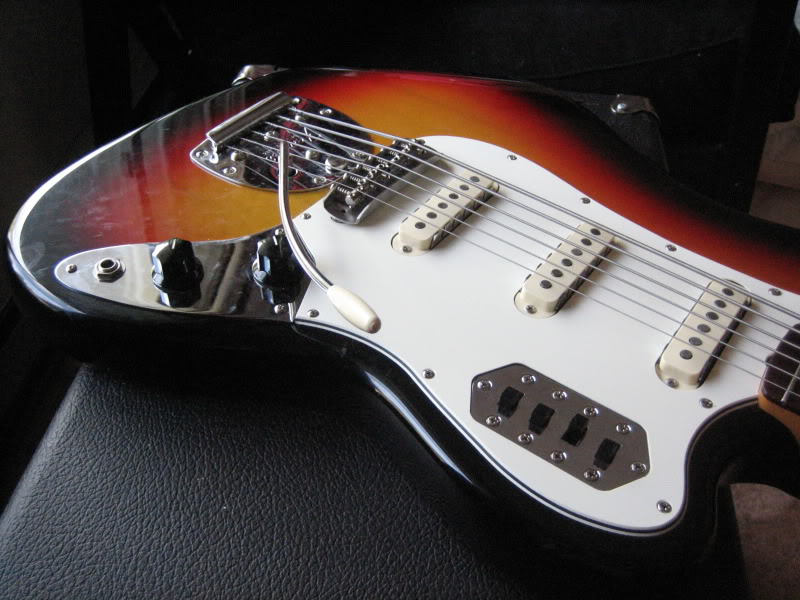
IMG_9203.jpg

Have a good one!

m.ASIMOV
 
A MAYBE on flat-wound strings which will fit a Schecter Hellcat VI:

http://www.long-mcquade.com/files/3860/lg_ecg23.jpg (.010, .014, .020w, .028, .038, .048 - D'Addario ECG23, guitar strings)

http://cgi.ebay.com/ws/eBayISAPI.dll?ViewItem&item=120325856957 (.045, .065, .080, .100 - D'Addario ECB81S, 30" scale)

Invalid Link Removed (.045, .065, .080, .100 - D'Addario ECB81M, 32" scale)

If the .020w and .038 strings from the guitar set are long enough to reach the Hellcat's E and B tuners, and if the low E from either the 30" or 32" bass set is the right length, then this MAY mean a light tops/heavy bottoms flat-wound set for said 'VI :)

Perhaps some intrepid Hellcat VI owner in search of flat-wounds will visit their local music store for a fitting?
 
As an eBay Associate, TalkBass may earn a commission from qualifying purchases.
A MAYBE on flat-wound strings which will fit a Schecter Hellcat VI:

http://www.long-mcquade.com/files/3860/lg_ecg23.jpg (.010, .014, .020w, .028, .038, .048 - D'Addario ECG23, guitar strings)

http://cgi.ebay.com/ws/eBayISAPI.dll...m=120325856957 (.045, .065, .080, .100 - D'Addario ECB81S, 30" scale)

Invalid Link Removed (.045, .065, .080, .100 - D'Addario ECB81M, 32" scale)

If the .020w and .038 strings from the guitar set are long enough to reach the Hellcat's E and B tuners, and if the low E from either the 30" or 32" bass set is the right length, then this MAY mean a light tops/heavy bottoms flat-wound set for said 'VI

Perhaps some intrepid Hellcat VI owner in search of flat-wounds will visit their local music store for a fitting?

I think it would be difficult/impossible to go heavier than a .95 for the Hellcat VI...you would have to enlarge the holes to make it work.
 
As an eBay Associate, TalkBass may earn a commission from qualifying purchases.
I think it would be difficult/impossible to go heavier than a .95 for the Hellcat VI...you would have to enlarge the holes to make it work.

The low E hole in the tail-piece?

A rat tail file should take care of the .005" difference--IF flat-wound strings of a suitable length and the same construction/resulting timbre could be found to make the effort worthwhile.
 
A good-sounding, easy-to-use, *durable, quiet, versatile, portable, and affordable stereo digital reverb which sports a bass-shy bright plate reverb that sounds gorgeous with a bass VI, and (if used subtly) doesn't muddy up the bottom end:

The Alesis NanoVerb (Invalid Link Removed)

One can even plug a bass guitar directly into the NanoVerb's Left input (Mono) and it'll output a stereo signal and sound darn good doing it too!

Unlike the other effects boxes I own, the Alesis NanoVerb doesn't steal lows! :)

And the fact that Alesis is still making this largely unchanged (my NanoVerb has gray knob caps) unit after all these years says something.

*(A tiny bit of pot scratch is the only problem that I've had with mine after about 12 years of use.)
 
I'm not adept at wiring, but this looks like the Schecter Hellcat VI's mini-humbucking pickups have their coils wired in parallel instead of the series-wired coil arrangement used in most humbuckers:

schecter_HELLCAT_VI.jpg

Can anyone here confirm or refute this?

Thank you.
 
Hi!!

I'm doing a list of Beatle songs where the Fender Bass VI was used, and I wonder if you could help me if anything is wrong and/or missing.

My list is the following:

Back In The USSR, player John

Rocky Raccoon, player John

Birthday, player George

Honey Pie, player George

Dig It, player John

Let It Be, player John

The Long And Winding Road, player John

Maxwell's Silver Hammer, player George

Hey Jude, player George

What do you think?? Is my list correct?? :confused:

I will wait for your answer...

Best wishes!!

cbaixo
 
Hi!!

I'm doing a list of Beatle songs where the Fender Bass VI was used, and I wonder if you could help me if anything is wrong and/or missing.

My list is the following:

Back In The USSR, player John

Rocky Raccoon, player John

Birthday, player George

Honey Pie, player George

Dig It, player John

Let It Be, player John

The Long And Winding Road, player John

Maxwell's Silver Hammer, player George

Hey Jude, player George

What do you think?? Is my list correct?? :confused:

I will wait for your answer...

Best wishes!!

cbaixo

You should check with Ronn (iamthebassman). He plays in a big time Beatles tribute band.
 
Engaging a Fender VI's 'strangle switch' (its high-pass filter) thins out the instrument's timbre--and substantially reduces its volume.

It's occured to me that wiring an appropriate resistor in series with the unfiltered output ('strangle switch' off) would equalise the volume difference between said switch's on & off setting.

I figure this would be useful when using a Fender VI -->direct box-->PA to eliminate the drastic change in volume/fader levels which result from turning a 'VI's 'strangle switch on & off.

The question is: what value of resistor?

One way to determine this would be to measure the resistance of the instrument's volume pot when it is turned down to where the unfiltered output level = that of the filtered output.

Has anyone here done this? If so, what is the resistor value you arrived at?

Thank you.
 
As I don't have a VI with a strangle switch, I don't know the exact characteristics of it...but my setup sort of employs something that creates this effect: I built an overdrive/boost pedal which I have tweaked for maximum bottom end (as its a guitar design...tube screamer based) on certain settings, but there is a three-way switch that allows me to cut bottom. Often I will just cut the bass on my amp a bit, but I thought maybe a relatively clean OD (which how I use this pedal...mostly clean) would thin out the bottom similarly and give you the ability to compensate for it.
 
Hi again!! :smug:

I will try another question but please: excuse my poor English...

A short scale six string bass was developed (=first by Danelecro, then by Fender) having guitar players in mind..., correct?? Then my question reads: how?? I mean..., what makes such basses 'guitarish' instruments?? String spacing perhaps?? If so..., why not then a four string instrument with narrow string spacing han a regular bass?? Maybe because the two higher strings are 'a must' for a guitarist playing bass??

I don't know if I have properly explained myself, but I would like to know your expert opinnions about my queries...

I will wait for your answer.

Best wishes from Spain!! :smug:

cbaixo
 
Hi cbaixo.

Si. Danelectro in 1956, and then Fender in 1961. Both companies wanted to make a bass for guitar players so they could get more work (and afford/need to buy more amps) by bagging bass gigs.

"...what makes such basses 'guitarish' instruments?? String spacing perhaps??..."

Much of what can be played on an electric guitar can also be played on 30" - 30.3" scale, six-string Bass VI's, which, for the most part, have the same string spacing as regular guitars.

It's helpful to understand that a Bass VI is a TRUE electric BASS + GUITAR (equal emphasis on both words) whose nearest acoustic cousin would perhaps be the guitarron, whereas long scale 4 string electric basses are instruments which are intended to mimic a double bass.

The 30" six string bass guitar is to the guitar family what the cello is to the violin family.

Just as violin and double bass parts can be played on a cello to a degree, so it is that many guitar, and electric bass parts can be played on a Bass VI.

As for "a four string instrument with narrow string spacing han a regular bass??" Mmm... Hofner? :)

--------

BTW. "expert opinnions" On TalkBass? Good one cbaixo! :D
 
Hi MIJ-VI!! :smug:

First of all..., thank you so much for your excellent comments!! :smug:

Only one more question:

...It's helpful to understand that a Bass VI is a TRUE electric BASS + GUITAR (equal emphasis on both words) whose nearest acoustic cousin would perhaps be the guitarron, whereas long scale 4 string electric basses are instruments which are intended to mimic a double bass.

The 30" six string bass guitar is to the guitar family what the cello is to the violin family.

Just as violin and double bass parts can be played on a cello to a degree, so it is that many guitar, and electric bass parts can be played on a Bass VI...

So, this means:

"...I [any guitar player in ca. 1962] can get a Fender VI [or a Danelectro] because not only can get bass gigs, but also I can play on this instrument like a guitarist, i.e., I can play melodies and chords as well as bass lines*. And this is perfect because I don't need to 'custom' my fingers to the string spacing and string length of a regular bass guitar, because my Fender VI [or Danelectro] has the -aproximately- same string length and spacing than my regular guitar..."

Is it correct?? Have I understood Fender VI [or Danelectro] function properly?? :confused:

...As for "a four string instrument with narrow string spacing han a regular bass??" Mmm... Hofner?...

Yes. That is a good example... :)

Thanks again for your excellent explanation!! :)

cbaixo

* Was this one Jack Bruce technique with the Fender VI?? I mean: did he play chords and melodies with it??
 
Status
Not open for further replies.