yep; Invalid Link Removed
hefty investment just for test
True but we all know that JimmyM is prepared to make the necessary investment here


TalkBass has been independent since 1998. Add your voice.
Create a free account to reply to discussions, view embedded media, and browse with fewer display ads.
Join free Log in
Want zero display ads or expanded classifieds tools? Compare plans.
yep; Invalid Link Removed
hefty investment just for test


yep; Invalid Link Removed
hefty investment just for test

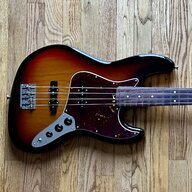
This is interesting. Almost a 50/50 split. I think that tells us someting about the good ol' LMII
most importantly, intersecting sets don't demonstrate uniformity between the sets.
A simple pot could be used in series with playback to to simulate the source impedance.
Good point. I can find an EQ/volume setting on my GK 1001RB-II that sounds like my SVT or vice versa but their overall performance is so completely different that there is no merit in saying one can cop the other at a certain setting.
well?
Not quite. There's a new Tube Challenge about to be posted, this one will be much better. The last one was more of an excuse to record my SVT cab and evolved into a test. This is a real test, or as real as I can do with the limited stuff I have.Bingo. End of story.
Not quite. There's a new Tube Challenge about to be posted, this one will be much better. The last one was more of an excuse to record my SVT cab and evolved into a test. This is a real test, or as real as I can do with the limited stuff I have.
Yeah, I think it's a good idea to cover your butt in case you pick the wrong oneAnother group of singular test points within overlapping sets that you will use to draw unfounded conclusions regarding the unity (or lack thereof) of the sets? Fun. [Billy Madison to the imaginary penguin]Proceed.[/Billy Madison to the imaginary penguin]

Not quite. There's a new Tube Challenge about to be posted, this one will be much better. The last one was more of an excuse to record my SVT cab and evolved into a test. This is a real test, or as real as I can do with the limited stuff I have.
Tru dat, but I did my best NOT to do that. All I did was set them flat, stick a mic in front of the cab, match the volumes, and played. I think that's a reasonable test because there's no tone knob shenanigans.I agree, it is fun. Jimmy, if you are interested, my position is I could make those three amps sound exceptionally similar for purposes of a single recording each such that statistically there would be no consensus as to which recording corresponds to which amp. I could also prepare a series of recordings from each amp that would enable informed/experienced listeners to correctly identify each amp with statistically meaningful accuracy. My take is that sitting on this side of the computer, you should be able to fool me and my guess may be an educated one, but it would be a guess. I'd have no shame in getting it wrong.
I don't think it's a disservice at all. I think when you set them flat, the similarities are vast. I think the next test may surprise you. It is so obvious to me which one's the SWR, but again, I really think telling the Markbass from the B15 will be difficult.I have no skin in the game, I use several tube amps on stage, I use a few solid state amps on stage, I build and repair each as well. I don't believe in "tube vs. solid state." I don't believe in "bests." I believe in helping people find the right tool for their intended purpose and I believe in helping people understand how each tool functions. I find a lot of the nonsense on this forum to be counterproductive, but I found your experiment here to be exceptionally helpful in bringing light to the similarities between certain amps that might otherwise be dismissed as opposites. However, just as it is important to note that these amps can sound the same in a given context, it would be a disservice to draw the conclusion that they overlap more than they do. That's it.

Not quite. There's a new Tube Challenge about to be posted, this one will be much better. The last one was more of an excuse to record my SVT cab and evolved into a test. This is a real test, or as real as I can do with the limited stuff I have.


