
- Nov 27, 2003
- 2,017
- 5,418
- 50
- Disclosures
- Rogue luthier employed at Knooren Handcrafted bass guitars
Well seeing how everybody is really into talking about motor vehicles, planes and the likes and the powerplants that (No pun intended) powered them and how everybody has an opinion about what is the best engine ever thread, I figured it to be interesting to talk about the opposite.
Let's talk about the engines that were turds from the outset or made by people who should have known better.
I'll start with the Triumph V-8 engine.

Now this is an engine that came from a manufacturer that should have known better.
Triumph came up with the Stag as a competitor to the Ford Mustang and it sure looked the lot.
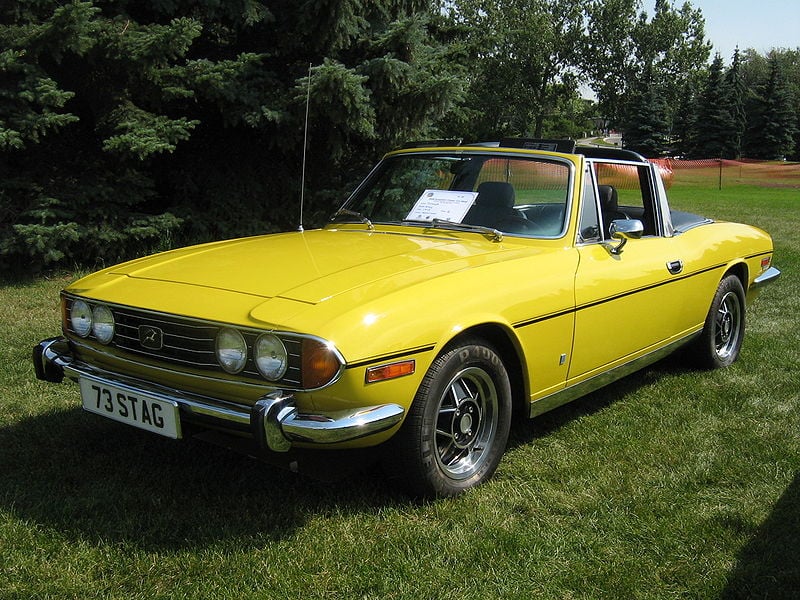
Now Triumph's parent company British Leyland had the licensing rights to the Buick 215 V-8 engine, which was built and continues to be produced by Rover. The Triumph Stag was designed with that engine in mind but shared parent company or not, the people at Triumph did have some stubborn pride and decided they did NOT want to incorporate Rover parts. It was a real "No we're not having that lot, it's from THEM!" kind of deal.
So instead they developed an engine which basically was two Dolomite straight four cylinder engines put together. But to make this work it required the development of a new fuel injection system but extra funds for that development was denied by the high command of BL. So instead they fitted carburetors, to maintain the required power output the capacity was increased to 3-litres, which then entailed modification to the Stags other drivetrain systems included the gearbox, back axle and brakes. This relatively 'last-minute' capacity increase was achieved by expanding the bore of the engine instead of the stroke, which explains the Triumph V8's unusual 'oversquare' internal dimensions. This widening of the bore also meant that the water galleries surrounding the cylinders were narrower than originally planned, thus creating the engine's major weakness.
-Overly long single link chains with poor automatic tensioning that only last about 25,000 miles (40,200 km). The damage is extensive if they fail;
-Inadequately sized main bearings - these have short lives as a result;
-The aluminium heads warp due to poor castings which restrict coolant flow, leading to overheating;
-Water pump failures relating to the drive gear shearing.
-As a legacy of the V8's beginnings as a straight-4 design the sender unit for the temperature gauge is located in one cylinder head (rather than a point of the cooling system common to both heads as on other multi-bank engines). This means that problems can go undetected in one head until enough damage and/or overheating has occurred to affect the one fitted with the sender unit.
Okay then, my second contender is actually a kind of engine, not really a brand or type. and that kind of engine is the Rotary engine.
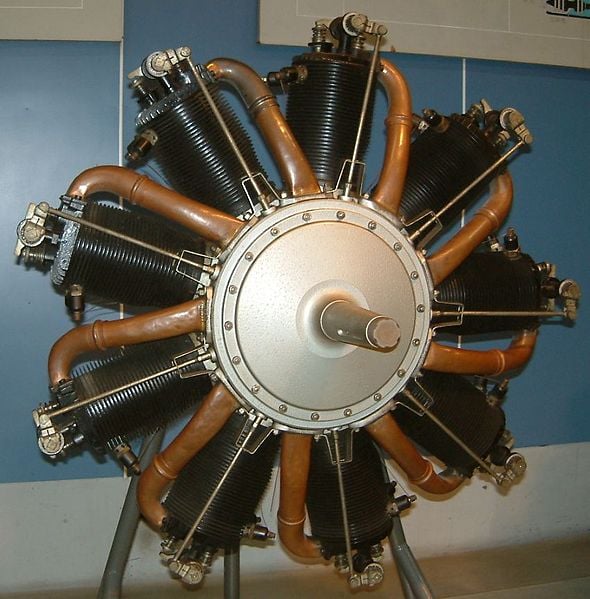
First of all, do not confuse the Rotary engine with the contemporary wankel engine and although it looks similar it's not a radial engine although it uses the same configuration.
Now the Rotary is designed with an odd number of cylinders per row in a radial configuration, in which the crankshaft remained stationary and the entire cylinder block rotated around it. Rotarys were maily used in aircraft but were originally designed for motorcycles.

A 1897 Felix Millet motorcycle fitted with a very early rotary.
Now, as an aircraft power plant, the things that spoke to the Rotary's advantage was that it offered power in a limited package, it kept the nose of the plane short as opposed to an in-line engine, and it was light in weight.

A Fokker Dr-1 Triplane with its rotary clearly visible.
In world war one both sides used Rotary engines in their frontline fighters because of the power-to-weight ratio they offered but it quickly became apparent that as an aircraft engine the rotary was a disaster, the fact that it spun around made that it flung leaking oil all over the place, usually ending up in the face of the pilot flying. Also the fuel consumption of the rotary was around 20% higher than that of a contemporary in-line engine.
But a much more serious flaw became more apparent as higher performance was demanded from rotarys and such engines were developed. The egines became so powerful that the torque of the spinning actually began to pull the plane around and many pilot crashed when a fast maneuver unwillingly upset the balance of his plane. Also the torquing effect was making take offs and landings a hassle. Flying a plane powered by a rotary engine is a constant fight.
It is telling that the most advance fighter of the day, the Fokker D-VII had an in-line engine, Manfred "The Red Baron" Von Richthofen was consulted by the development of that plane and the first thing he told Anthony Fokker and his R&D team was to get rid of the rotary engines.
There you have my contenders for the worst engine, one contender that suffered from ego at the workshop, high command that didn't want to shelve out cash to develop the engine properly and was made by a company that should have known better.
And the other because it made it a dangerous engine to work with from the outset and was built in the millions because of the simple reason that they were needed.
Let's talk about the engines that were turds from the outset or made by people who should have known better.
I'll start with the Triumph V-8 engine.
Now this is an engine that came from a manufacturer that should have known better.
Triumph came up with the Stag as a competitor to the Ford Mustang and it sure looked the lot.
Now Triumph's parent company British Leyland had the licensing rights to the Buick 215 V-8 engine, which was built and continues to be produced by Rover. The Triumph Stag was designed with that engine in mind but shared parent company or not, the people at Triumph did have some stubborn pride and decided they did NOT want to incorporate Rover parts. It was a real "No we're not having that lot, it's from THEM!" kind of deal.
So instead they developed an engine which basically was two Dolomite straight four cylinder engines put together. But to make this work it required the development of a new fuel injection system but extra funds for that development was denied by the high command of BL. So instead they fitted carburetors, to maintain the required power output the capacity was increased to 3-litres, which then entailed modification to the Stags other drivetrain systems included the gearbox, back axle and brakes. This relatively 'last-minute' capacity increase was achieved by expanding the bore of the engine instead of the stroke, which explains the Triumph V8's unusual 'oversquare' internal dimensions. This widening of the bore also meant that the water galleries surrounding the cylinders were narrower than originally planned, thus creating the engine's major weakness.
-Overly long single link chains with poor automatic tensioning that only last about 25,000 miles (40,200 km). The damage is extensive if they fail;
-Inadequately sized main bearings - these have short lives as a result;
-The aluminium heads warp due to poor castings which restrict coolant flow, leading to overheating;
-Water pump failures relating to the drive gear shearing.
-As a legacy of the V8's beginnings as a straight-4 design the sender unit for the temperature gauge is located in one cylinder head (rather than a point of the cooling system common to both heads as on other multi-bank engines). This means that problems can go undetected in one head until enough damage and/or overheating has occurred to affect the one fitted with the sender unit.
Okay then, my second contender is actually a kind of engine, not really a brand or type. and that kind of engine is the Rotary engine.
First of all, do not confuse the Rotary engine with the contemporary wankel engine and although it looks similar it's not a radial engine although it uses the same configuration.
Now the Rotary is designed with an odd number of cylinders per row in a radial configuration, in which the crankshaft remained stationary and the entire cylinder block rotated around it. Rotarys were maily used in aircraft but were originally designed for motorcycles.
A 1897 Felix Millet motorcycle fitted with a very early rotary.
Now, as an aircraft power plant, the things that spoke to the Rotary's advantage was that it offered power in a limited package, it kept the nose of the plane short as opposed to an in-line engine, and it was light in weight.
A Fokker Dr-1 Triplane with its rotary clearly visible.
In world war one both sides used Rotary engines in their frontline fighters because of the power-to-weight ratio they offered but it quickly became apparent that as an aircraft engine the rotary was a disaster, the fact that it spun around made that it flung leaking oil all over the place, usually ending up in the face of the pilot flying. Also the fuel consumption of the rotary was around 20% higher than that of a contemporary in-line engine.
But a much more serious flaw became more apparent as higher performance was demanded from rotarys and such engines were developed. The egines became so powerful that the torque of the spinning actually began to pull the plane around and many pilot crashed when a fast maneuver unwillingly upset the balance of his plane. Also the torquing effect was making take offs and landings a hassle. Flying a plane powered by a rotary engine is a constant fight.
It is telling that the most advance fighter of the day, the Fokker D-VII had an in-line engine, Manfred "The Red Baron" Von Richthofen was consulted by the development of that plane and the first thing he told Anthony Fokker and his R&D team was to get rid of the rotary engines.
There you have my contenders for the worst engine, one contender that suffered from ego at the workshop, high command that didn't want to shelve out cash to develop the engine properly and was made by a company that should have known better.
And the other because it made it a dangerous engine to work with from the outset and was built in the millions because of the simple reason that they were needed.