So what was she trying to axe you?As in, "Mom's trying to get aholt of me, she sent me like, 5 texes in the last 10 minutes."
(Is the "e" silent or not? Is it even necessary? I be so confused.)

TalkBass has been independent since 1998. Add your voice.
Create a free account to reply to discussions, view embedded media, and browse with fewer display ads.
Join free Log in
Want zero display ads or expanded classifieds tools? Compare plans.
So what was she trying to axe you?As in, "Mom's trying to get aholt of me, she sent me like, 5 texes in the last 10 minutes."

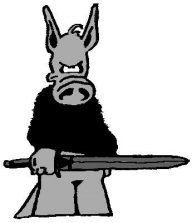
 Personally? I try to do my best, grammatically. Also, I'm one of those people who, when I come across something written so badly it's hard to understand, have to wonder if the person who wrote it has anything to say that's worth reading. However, I usually just remind myself that I'm old; the education system in this country isn't what it used to be; and recite what's in the picture to myself - over, and over, and over...
When I went for job training/orientation, on one job, the instructor insisted on saying "axe" instead of "ask".
I questioned him every time, until he finally started pronouncing it correctly.

She axed me to pick her up an expresso cuz she seen it in a billboard.So what was she trying to axe you?
(Is the "e" silent or not? Is it even necessary? I be so confused.)

My employee just said "supposably" instead of the correct "supposedly".

Same with brake and break.

... especially if your brakes break, right?Don't get me started! Every spring I have to review numerous ride reports for the group cycling skills class that I lead, and it seems like no one gets the break/brake thing correct! It should be simple, right? If you're braking during your bike ride, all's good; if anything's breaking however...
... especially if your brakes break, right?

I always chuckle, but it's prolly (My employee just said "supposably" instead of the correct "supposedly".
 ) just a typing/spelling mistake, at some statements described as "defiantly" true.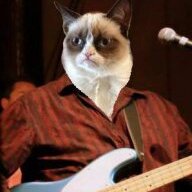
 ), and a dozen other copywriting 101 mistakes are all well represented. I am a recovering ad copywriter/editor (there is no 12 step program, writers don't like to count that high), and I have offered to be his filter free-of-charge as he attempts to get his writing career back on track. He has declined every time, even brushing me off about it. I wasn't talking about being his editor, just his proof reader to help him catch the pure typo issues he was missing, but he wanted none of it. So, to make a long story only a little bit longer, to teach him a lesson I started posting his typos in the comments section of his blog without any other explanation. I would just c/p the offending sentence, and leave it dangling there in space on his comment board, like the world's most passive aggressive English professor.


Rather than stomp on other people's posts with grammar correction I thought I would post something helpful for TBers to refer to.
There, They're, Their - The Easiest Way To Learn How To Use These Words
Any others?
Ain't nobody got time for that.I finally got tired of trying to clue folks in to their improper use of double negatives.
"I ain't got no time for that!"
Hmm, so you do have time for it?