• TalkBass has been independent since 1998. Add your voice.
    Create a free account to reply to discussions, view embedded media, and browse with fewer display ads.
    Join freeLog in
    Want zero display ads or expanded classifieds tools? Compare plans.

Things You Wish Leo Had Done Differently...

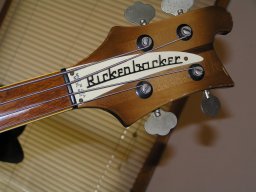
I've never understood why he put the tuners on the hard to reach side of the headstock. This has bugged me since long before cranking my left wrist to reach around to the top caused my carpal tunnel syndrome to flare. I'm always looking for reverse / leftie style inline necks for this reason.

Perhaps the assumption was that the left hand was needed for fretting during tuning, and the right has to reach across to turn the tuners - works kinda ok for guitar, not so much for bass (or I just have short arms). But I tune by harmonics anyway, and prefer the tuners where I can reach them easily with my left hand.

 
I've never understood why he put the tuners on the hard to reach side of the headstock. This has bugged me since long before cranking my left wrist to reach around to the top caused my carpal tunnel syndrome to flare. I'm always looking for reverse / leftie style inline necks for this reason.

Perhaps the assumption was that the left hand was needed for fretting during tuning, and the right has to reach across to turn the tuners - works kinda ok for guitar, not so much for bass (or I just have short arms). But I tune by harmonics anyway, and prefer the tuners where I can reach them easily with my left hand.
hmm, would be worse if the tuners were on the bottom side wouldnt it? I just reach over with my left hand, I palm mute the string if I need to.
 
hmm, would be worse if the tuners were on the bottom side wouldnt it? I just reach over with my left hand, I palm mute the string if I need to.

Not at all, working the tuners on the bottom side of the headstock with my left hand is perfectly natural and doesn't require my left wrist to be cranked to the point of pinching nerves like reaching over the top and bending back down to the tuners does. That is, with the tuners on the bottom, the hand / wrist position for tuning is almost identical to that of actually playing.
 
Not at all, working the tuners on the bottom side of the headstock with my left hand is perfectly natural and doesn't require my left wrist to be cranked to the point of pinching nerves like reaching over the top and bending back down to the tuners does. That is, with the tuners on the bottom, the hand / wrist position for tuning is almost identical to that of actually playing.
cool, Just seems to me like Id be reaching way across the neck. I just extend my arm straight out, but then again I have really long arms. I hate trying to reach under or over to get at the tuning pegs on my basses that have em on the bottom.
 
cool, Just seems to me like Id be reaching way across the neck. I just extend my arm straight out, but then again I have really long arms. I hate trying to reach under or over to get at the tuning pegs on my basses that have em on the bottom.
I don't get that, just take your left hand from normal playing position, slide it up the headstock past the nut, and the tuners fall right into my fingers (when they're on the bottom). I only experience "reaching" when they're on the top where I can't get at them. But that's the thing about ergonomics - kinda works differently for everyone, hence personal preferences.
 
I don't get that, just take your left hand from normal playing position, slide it up the headstock past the nut, and the tuners fall right into my fingers (when they're on the bottom). I only experience "reaching" when they're on the top where I can't get at them. But that's the thing about ergonomics - kinda works differently for everyone, hence personal preferences.
lol, indeed. might be, I wear my bass really low, like novoselic (not quite that low but you get the idea) and it seems to lever the bass back or to the side for the bottom side pegs.
 
lol, indeed. might be, I wear my bass really low, like novoselic (not quite that low but you get the idea) and it seems to lever the bass back or to the side for the bottom side pegs.
Ah, ok. I tend to wear my straps long, but I hold the bass in a more "uprightish" position, my left elbow is always bent and on the "underneath" side of the neck. Guess it depends on playing position.

And as overs have pointed out, Leo and his buds were really only guessing, they did pretty good, considering.
 
  • Like
Reactions: davy4575
They did. indeed. Funny thing, Ive just spent the last week re-recording tracks with my Fender P/J that I had originally laid with my Dean. Not that I dont love the Dean, The Fender just sounded better, especially downtuned as it was.
 
Truss rod adjustment at the heel is a nuisance but certainly not a deal breaker for me.
Yeah, truss rod adjustments are a mega pain in the butt with Fender Basses and guitars. The Jazz Bass is not too bad because the pickguard can come off without removing the strings and usually allows access to the truss rod bolt.

I agree with the hassle of the mounting sponges which loose their elasticity or dry out and don't work anymore.

I always thought that the P Bass pickup is wrongly position. The E&A coil should be one back toward the bridge and the D&G coil should be one up toward the neck because the brighter strings go forward where there is more bass and the bassier strings go back to where it brighter.

The pickguard on the P Bass is very flimsy where the jack is. When pulling the cable out, the pickguard bends and pulls up. Sometimes the guard breaks at the jack hole. Needs to be stronger there.

Umm, the necks really are too wide at the heel and could probably be at least 1/8" narrower. The Jazz Bass neck starts out at 1/2" narrower at the nut than the P Bass but by the 8th fret or so, it's just as wide as the P neck.

Overall, the Fender Basses are near perfect. Only lacking some tweaks.
 
Not at all, working the tuners on the bottom side of the headstock with my left hand is perfectly natural and doesn't require my left wrist to be cranked to the point of pinching nerves like reaching over the top and bending back down to the tuners does. That is, with the tuners on the bottom, the hand / wrist position for tuning is almost identical to that of actually playing.
Yeah! Maybe this is why Dusty Hill of ZZ Top has the lefty neck on his '51 P.
 
  • Like
Reactions: bholder
Yeah! Maybe this is why Dusty Hill of ZZ Top has the lefty neck on his '51 P.
Yup, exactly. Maybe the other way hurts his wrist, too. Anyway, all of my "early P" parts project basses have / will have reverse tele headstock necks, even the 5 string.
 
Blend pot would be great but they don't work well with passive electronics. Something's lost at the detent where both pickups are on equally.
You can get special taper blend pots that don't do that (that have both pus full on at the center detent), but that's still a lot less flexibility than two separate volume controls. The sound of each pickup volume being 1/2 on isn't easily matched by having blend in the middle and the main volume at 1/2. Whether that flexibility is really very useful or just too complex to be usable, I bet folks could argue for weeks over. :)
 
You can get special taper blend pots that don't do that (that have both pus full on at the center detent), but that's still a lot less flexibility than two separate volume controls. The sound of each pickup volume being 1/2 on isn't easily matched by having blend in the middle and the main volume at 1/2. Whether that flexibility is really very useful or just too complex to be usable, I bet folks could argue for weeks over. :)
You have to keep in mind that Fender had to work with the electronic components that were available to them in the '50s and '60s. Leo himself said this when interviewed by Tom Wheeler in '77 and asked why Fender didn't use 5-way switches for Strats.
 
  • Like
Reactions: alaskaleftybass
You have to keep in mind that Fender had to work with the electronic components that were available to them in the '50s and '60s. Leo himself said this when interviewed by Tom Wheeler in '77 and asked why Fender didn't use 5-way switches for Strats.
Yeah, true, but even with what was available then, you can easily get into "personal preference" religious crusade arguments over different approaches to ergonomics / usability of different control configurations (I bet there are still "strat style" vs. "les paul style" control knob preference arguments going on in some guitar forum). :D

Now that concentric stacked pots are more readily available, I like both volumes stacked on a single pot way better than separate volumes or blend / master. More options available now for sure.
 
Yeah, truss rod adjustments are a mega pain in the butt with Fender Basses and guitars. The Jazz Bass is not too bad because the pickguard can come off without removing the strings and usually allows access to the truss rod bolt.

I agree with the hassle of the mounting sponges which loose their elasticity or dry out and don't work anymore.

I always thought that the P Bass pickup is wrongly position. The E&A coil should be one back toward the bridge and the D&G coil should be one up toward the neck because the brighter strings go forward where there is more bass and the bassier strings go back to where it brighter.

The pickguard on the P Bass is very flimsy where the jack is. When pulling the cable out, the pickguard bends and pulls up. Sometimes the guard breaks at the jack hole. Needs to be stronger there.

Umm, the necks really are too wide at the heel and could probably be at least 1/8" narrower. The Jazz Bass neck starts out at 1/2" narrower at the nut than the P Bass but by the 8th fret or so, it's just as wide as the P neck.

Overall, the Fender Basses are near perfect. Only lacking some tweaks.
A matter of taste, I guess. I like the pickguards aesthetics. Re the P-Bass guard's flimsiness at the jack, yes, that's true, but remember that those guards were originally intended to be anodized aluminum, as they were from '57-mid '59 so breakage wouldn't be a problem. Also, most vintage Precisions still have intact pickguards, so if you're careful it's usually not a problem. Using an cable with an angled 1/4" plug helps a lot.
 
  • Like
Reactions: bassdude51
Truss rod at the heel is fine but having to take the neck off to adjust the truss rod is a poor design.
But you have to admit he got a LOT more right than wrong.
The ones with the truss rod adjustment at the heel with the little "wheel" knob on it work just fine.
 
  • Like
Reactions: acebase62
Truss rod at the heel is fine but having to take the neck off to adjust the truss rod is a poor design.
But you have to admit he got a LOT more right than wrong.
Fender no doubt thought that the TR would rarely need adjusting, so the adjustment at the heel would not be a big deal. And I gotta tell you, I've owned a few dozen Pre-CBS Jazz and Precision basses over the last 36 or 37 years (just sold my last 2 vintage Jazz Basses, a slab board '62 and a '64, both sunburst) and I just about never had to touch the truss rods on any of them. Better seasoned old growth wood I guess. Just about every later Fender bass I've had needed at least seasonal tweaking.
 

Latest posts