• TalkBass has been independent since 1998. Add your voice.
    Create a free account to reply to discussions, view embedded media, and browse with fewer display ads.
    Join freeLog in
    Want zero display ads or expanded classifieds tools? Compare plans.

Time to complete some old projects

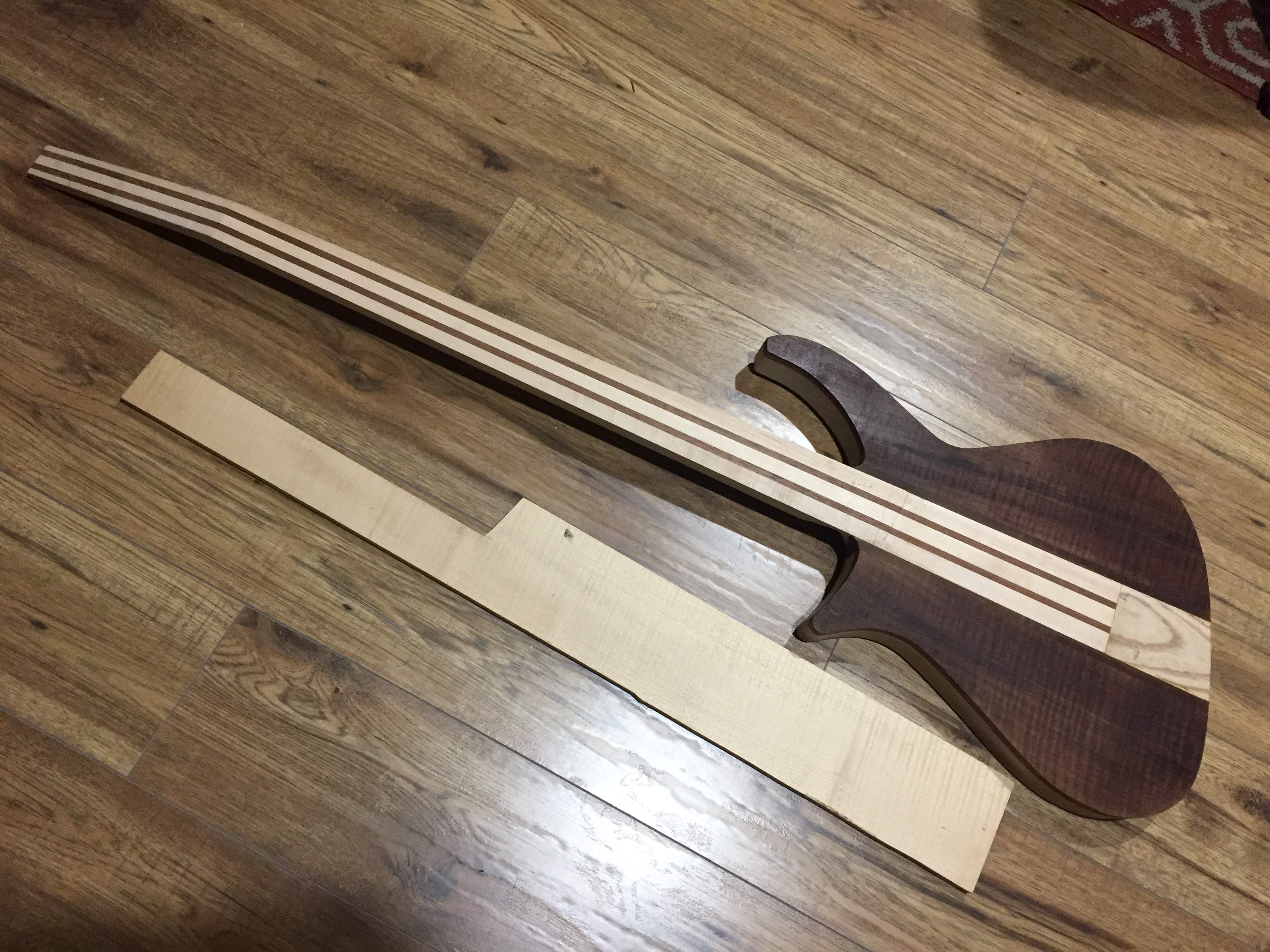
After searching though the wood pile I found some curly maple that can give me a fretboard and headstock overlay sooooo;) I have another possibility:hyper:. I haven't done a maple fretboard so this might be the time to try it:thumbsup:. I can put a layer of walnut :drool: down first to delineate between the neck and fretboard:woot:.
IMG_6952.JPG
 
Last edited:
Well now I think you're obligated! I love maple fretboards. And I think it's a challenge sometimes to put a dark fretboard on a bass with a walnut top since you end up with two different dark woods next to each other, which can be hard to coordinate well.
 
  • Like
Reactions: Slidlow
Well now I think you're obligated! I love maple fretboards. And I think it's a challenge sometimes to put a dark fretboard on a bass with a walnut top since you end up with two different dark woods next to each other, which can be hard to coordinate well.
Yes I am thinking we have a winner here. Plus I think it will be nice to do something interesting for all the left handed players out there. I don't think they get enough love.
 
  • Like
Reactions: wraub
I agree but I don't have matching curly maple to make binding from and the piece for the fretboard is not wide enough to cut from it either. I'm trying to use what's on hand. Maybe if I have to use plain maple I might put a layer of walnut in between to break it up?
That would look cool. The other way I've seen of hiding fret tangs is cutting the slot so it doesn't extend all the way across and snipping the tangs off of the ends of the frets. This is the result:

plek_Teambuilt.jpg
Plek.jpg


I assume they do it with precision C&C machinery. Warwick calls it "invisible fret technology".
 
  • Like
Reactions: JIO
I'd think about slicing the sides off the fretboard blank, slotting the board, then inserting some walnut veneer (which will take up the width lost to the saw kerf), and gluing the "edges" back on as binding.

I've done this on a few ukes and I have loved the result.

View attachment 4008197
Yes I thought of that but I am not sure I have the width.
 
I don't see a reflection but I do see a grain pattern that looks a little different then the actual fretboard.
My computer monitor is a 65" 4K tv - from this vantage point, it looks like a reflection from the thinnest string nearest the camera. I can see the reflection where it travels over the fret, across the fret reflected on the board, and then into the reflection of the string on the fretboard. :thumbsup:
 
  • Like
Reactions: Reedt2000