• TalkBass has been independent since 1998. Add your voice.
    Create a free account to reply to discussions, view embedded media, and browse with fewer display ads.
    Join freeLog in
    Want zero display ads or expanded classifieds tools? Compare plans.

Double Bass Time to replace the end-pin

The end-pin on my double bass has been problematic for a couple of weeks, with the metal pin slipping under load. Today it let go completely, and I played an hour's gig like the photo below. It's a cheapish plywood bass, so I'm thinking to mail order a replacement and swap it over myself. I'm assuming because it's a cone, I would loosen the strings right off so the tail piece isn't putting any pressure on the end pin assembly. Then swap it over and reassemble?

Or am I underestimating the scale of the job?
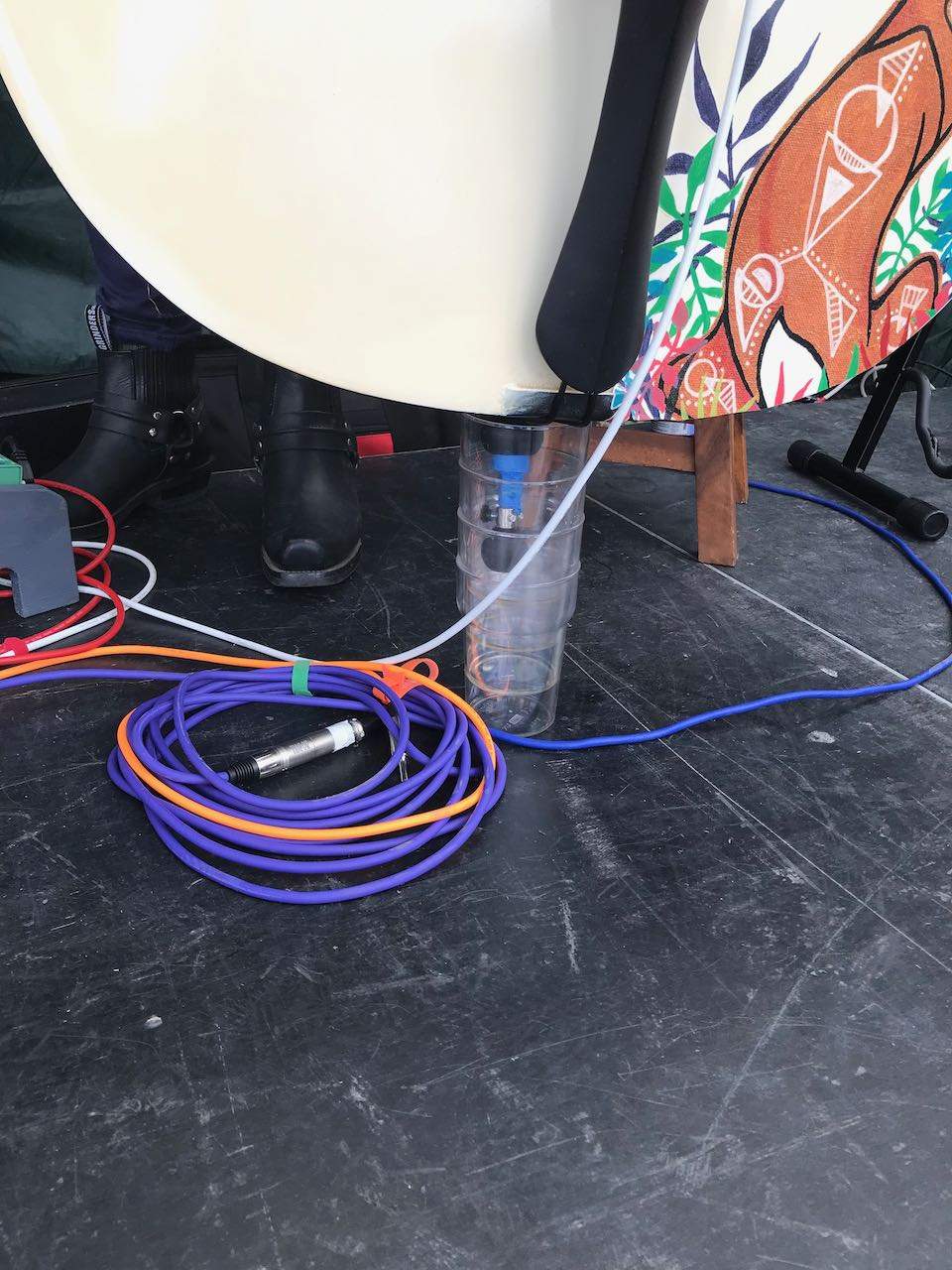
goose - 7.jpeg
 
Last edited:
  • Like
Reactions: Carl Hillman
The end-pin on my double bass has been problematic for a couple of weeks, with the metal pin slipping under load. Today it let go completely, and I played an hour's gig like the photo below. It's a cheapish plywood bass, so I'm thinking to mail order a replacement and swap it over myself. I'm assuming because it's a cone, I would loosen the strings right off so the tail piece isn't putting any pressure on the end pin assembly. Then swap it over and reassemble?

Or am I underestimating the scale of the job?

View attachment 4796649

I am laughing with you, not at you, and you owe me a beer ( which I spit out just now ) for showing that ( never seen before? ) fast solution to a big problem. Probably exactly what I would have done! :)
 
  • Like
Reactions: Gruff
The end-pin on my double bass has been problematic for a couple of weeks, with the metal pin slipping under load. Today it let go completely, and I played an hour's gig like the photo below. It's a cheapish plywood bass, so I'm thinking to mail order a replacement and swap it over myself. I'm assuming because it's a cone, I would loosen the strings right off so the tail piece isn't putting any pressure on the end pin assembly. Then swap it over and reassemble?

Or am I underestimating the scale of the job?

View attachment 4796649
Awesome

modern-problems-chapelle.gif
 
  • Like
Reactions: CryingBass
There is a big chance you will probably need to enlarge the hole with a tapered reamer. Unless you have one, just take it to someone

I don't really have anyone local - my previous luthier seems to have closed down, and the other local company quoted me a small fortune to do some minor work - which I took to be their way of saying they didn't want to do the work. I suppose I can buy the end pin and if it doesn't fit, then take it to someone.

If it's a relatively young bass it will probably have a standard taper, and a standard replacement will swap in as you describe. But before I recommend you go ahead and do that, I'd like to know more about why it's slipping. You may have a simpler solution available. Photos of the endpin parts will help.

It's probably less than 10 years old, a 'cheap' Thomann model, probably made in China. I don't know why it was slipping. The metal pin doesn't have any grooves, which doesn't help. It started slipping when I played, so I'd play 15 minutes then have to stop, pull the pin back out and re-tighten. But on Sunday it wouldn't hold at all. I got one of the guys in the band to tighten it for me and the thread stripped inside the conical wooden/plastic part.
 
If it is the pin itself that is slipping, you probably don't have to replace it. The set screw may be stripped. You should be able to get a replacement at a decent hardware store. Just filing a notch on the rod can be a big help.
I would check the socket the rod goes into to see if it is cracked or worn. In that case a new end pin is called for.
 
  • Like
Reactions: Gruff
It could be the screw. The tip of the screw, that locks into the notch in the endpin shaft could be messed up. You could reshape the end so it fits into the notches. It could be the threads in the collar. You can re tap the threads if they are bad. Another option is to drill a larger hole into the collar, tap it and then use a larger screw. You can get drill bit and tap set at hardware store. Just retapped threads on a collar and it was a 5/16" tap. You just have to see what size you have
 
  • Like
Reactions: Gruff
It could be the screw. The tip of the screw, that locks into the notch in the endpin shaft could be messed up. You could reshape the end so it fits into the notches. It could be the threads in the collar.

I'm thinking the problems started because there are no notches in the endpin shaft - it's just smooth, so it relied just on friction with the screw. At the gig the screw looked OK, so I assumed the threads in the collar are stripped.
 
Just filing a notch on the rod can be a big help.
I would check the socket the rod goes into to see if it is cracked or worn. In that case a new end pin is called for.

I took a look at it again just now - no sign of cracks, but there is a lot of slack around the shaft - about a 1mm gap. Filing a notch in the rod is what I should have done when the problem first started happening, but I had a series of rehearsals and performances and didn't want to mess with it. :(
 
A quick, inexpensive, and simple fix to an end-pin without notches that slips is what I describe in this thread. Even if you are not interested in a carbon fiber end-pin, the collar will work just as fine on your metal end-pin and prevent it from slipping. It will also prevent you from adjusting the end-pin without using a tool (for example, if you want to retract it when transporting your bass), but you can just remove the end-pin for transport.
 
Last edited:
A quick, unexpensive, and simple fix to an end pin without notches that slips is what I describe in this thread. Even if you are not interested in a carbon fiber end pin, the collar will work just as fine on your metal end pin and prevent it from slipping.

Interesting idea! My end-pin is captive, and damages the bass carry bag. But I expect it's as simple as removing the end pin collar, hacksawing the end of the pin off, and refitting.