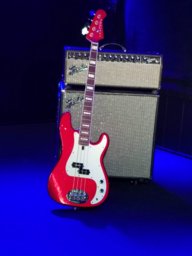
Just looking for my sound...influences cliff,geddy, geezer,and Chris squire....I like distortion the the most so maybe more to the cliff side but I'm NOT TRYING TO SOUND LIKE ANY OF THEM..i want my own sound. Specific Strings and effects are probably better...I don't do slap

Enjoy the benefits of a premium membership!
Upgrade Account
-
TalkBass has been independent since 1998. Add your voice.
Create a free account to reply to discussions, view embedded media, and browse with fewer display ads.
Join free Log in
Want zero display ads or expanded classifieds tools? Compare plans.
You are using an out of date browser. It may not display this or other websites correctly.
You should upgrade or use an alternative browser.
You should upgrade or use an alternative browser.
Tips for finding my "sound"
- Thread starter Bassistcali
- Start date
More options
Who Replied?You'll have to do a lot of experimenting. If you followed someone's instructions to find your sound, it wouldn't be yours. Just try new stuff until something works. I played metal and hard core with flats and nylon strings, played in a band where I never played lower than the 7th fret, played distorted bass alongside clean guitar. Felt picks, finger picks, metal picks. Do whatever feels right, and more importantly, do what feels wrong sometimes.

A lot of players just do "familiar" sounds. It's all tone stuck from years back and the audience expects it to sound familiar. It's not always the best sound, I listen to songs I liked a few years back and wonder how I could have like it then. It was more familiar back then.
To get you own sound - pick something, then play out enough so it becomes familiar to you and your band, and your audience.
To get you own sound - pick something, then play out enough so it becomes familiar to you and your band, and your audience.

Around 1972 or '73 and heard "my sound", a P bass with fresh Rotosound roundwounds through an SVT. I bought an SVT head, a 64 P bass and new Rotosounds.
"My sound" through the years grew off "that sound." Today I use a PF-500 through cabinets I built, and a Line 6 Variax 5 string, always with fresh roundwounds. An Ampeg is as important to "my sound" as anything.
My role, as a bass player, is to compliment the guitar and drums, both sonically and with what I play (and don't play.) I know what sound I need to support the drums, not clash with the kick, and leave the guitar player room for his tonality. I have always liked being above and below the guitar(s). I play with more mids today than I did in the 80's.
What the band needs to sound as good as possible is most important to me, but I also have to be satisfied and inspired by "my sound."
My favorite model in the Line 6 is the Danelectro model, although I use others in an average night. The Dano has liveliness, presence, enough attack and sounds great through my rig.
"My sound" through the years grew off "that sound." Today I use a PF-500 through cabinets I built, and a Line 6 Variax 5 string, always with fresh roundwounds. An Ampeg is as important to "my sound" as anything.
My role, as a bass player, is to compliment the guitar and drums, both sonically and with what I play (and don't play.) I know what sound I need to support the drums, not clash with the kick, and leave the guitar player room for his tonality. I have always liked being above and below the guitar(s). I play with more mids today than I did in the 80's.
What the band needs to sound as good as possible is most important to me, but I also have to be satisfied and inspired by "my sound."
My favorite model in the Line 6 is the Danelectro model, although I use others in an average night. The Dano has liveliness, presence, enough attack and sounds great through my rig.

IMHO it's not about "Specific Strings and effects"...it's about years of playing to find it
THIS
"My sound" 35 years ago was a lot different then "my sound" today.

SirMjac28
Patiently Waiting For The Next British Invasion
Around 1972 or '73 and heard "my sound", a P bass with fresh Rotosound roundwounds through an SVT. I bought an SVT head, a 64 P bass and new Rotosounds.
"My sound" through the years grew off "that sound." Today I use a PF-500 through cabinets I built, and a Line 6 Variax 5 string, always with fresh roundwounds. An Ampeg is as important to "my sound" as anything.
My role, as a bass player, is to compliment the guitar and drums, both sonically and with what I play (and don't play.) I know what sound I need to support the drums, not clash with the kick, and leave the guitar player room for his tonality. I have always liked being above and below the guitar(s). I play with more mids today than I did in the 80's.
What the band needs to sound as good as possible is most important to me, but I also have to be satisfied and inspired by "my sound."
My favorite model in the Line 6 is the Danelectro model, although I use others in an average night. The Dano has liveliness, presence, enough attack and sounds great through my rig.
I see a fellow Line 6 user congrats these basses have to be one of the best tools to finding any sound you want.

Keep in mind, all sound starts at your hands. Regardless of what bass you plug into what amp with whatever effects in the chain, the first place to start looking is with your hands. Changing the way your hand plucks the string, or holds the pick, to the way your fretting hand actually frets the note, it all makes a difference.

Finding "your sound" and asking others about it is sort of like going "Ok, somebody help me find what kind of women (assuming you're a straight guy) I'm attracted to!"
You can look at other dude's girls and go "Well, I like that gal!" and perhaps narrow it down to things like blonde hair, fair skin, blue eyes, and such...but you really don't have to do more than just look and go "Wow, I like her!" to know she's what you're attracted to. Finding your "sound" can kind of be the same way, just go play through and listen to stuff until you hear a bass tone and go "I LIKE that!". While I don't care for his sound too much, I'm sure Geddy's tone sounds absolutely perfect to him. Victor Wooten is likely the same concerning his tone.
Mine is an Ibanez SRX3EX (with a 3-band Bart preamp) sporting DR lo-rider ss rounds through a Traynor YBA200 + 2x15s or any GK rig. A '93 SR800 P/J with barts and a bart 2 band preamp sporting DR hi-beams through the same rigs from before. I pepper in boss bass chorus, delay, or BBMD fuzz for flavor every now and then. To me, that sounds like the best bass tone I can conjure up and I thoroughly feel confident playing anything with them. Necks feel great too!
Don't sweat it, man...you'll know it when you hear it
You can look at other dude's girls and go "Well, I like that gal!" and perhaps narrow it down to things like blonde hair, fair skin, blue eyes, and such...but you really don't have to do more than just look and go "Wow, I like her!" to know she's what you're attracted to. Finding your "sound" can kind of be the same way, just go play through and listen to stuff until you hear a bass tone and go "I LIKE that!". While I don't care for his sound too much, I'm sure Geddy's tone sounds absolutely perfect to him. Victor Wooten is likely the same concerning his tone.
Mine is an Ibanez SRX3EX (with a 3-band Bart preamp) sporting DR lo-rider ss rounds through a Traynor YBA200 + 2x15s or any GK rig. A '93 SR800 P/J with barts and a bart 2 band preamp sporting DR hi-beams through the same rigs from before. I pepper in boss bass chorus, delay, or BBMD fuzz for flavor every now and then. To me, that sounds like the best bass tone I can conjure up and I thoroughly feel confident playing anything with them. Necks feel great too!
Don't sweat it, man...you'll know it when you hear it

Finding "your sound" and asking others about it is sort of like going "Ok, somebody help me find what kind of women (assuming you're a straight guy) I'm attracted to!"
You can look at other dude's girls and go "Well, I like that gal!" and perhaps narrow it down to things like blonde hair, fair skin, blue eyes, and such...but you really don't have to do more than just look and go "Wow, I like her!" to know she's what you're attracted to. Finding your "sound" can kind of be the same way, just go play through and listen to stuff until you hear a bass tone and go "I LIKE that!". While I don't care for his sound too much, I'm sure Geddy's tone sounds absolutely perfect to him. Victor Wooten is likely the same concerning his tone.
This is a superficial way to look at the quest. Like choosing a woman for the way she looks. It's just a starting point. As in learning music, it's the "copy it" phase and is a necessary rite of passage because there's nothing else in your head.
Eventually you'll discover "your sound" is a complex mixture of:
- Gear comprised of bass (and its characteristics, strings, pickups), amp, cab, and EQ settings applied to specific room and crowd environments, pedals, etc.
- Technique achieved with your technical playing skills, how you use muscles in your hands/arms/shoulders etc., use of fingers/pick, etc.
- Song Mix achieved with how all of the above is applied to the type of music you play
This starts in your bedroom, but eventually "your sound" will have to develop in context of the band and other elements mentioned above. Be patient - sometimes it may take years, but that's part of the pleasure of investigating and polishing skills, and discovering what works best for you. Good luck in your quest!