I use .045, .065, .080, .100's. A little lighter on the E string.

Enjoy the benefits of a premium membership!
Upgrade Account
-
TalkBass has been independent since 1998. Add your voice.
Create a free account to reply to discussions, view embedded media, and browse with fewer display ads.
Join free Log in
Want zero display ads or expanded classifieds tools? Compare plans.
You are using an out of date browser. It may not display this or other websites correctly.
You should upgrade or use an alternative browser.
You should upgrade or use an alternative browser.
Tips for Stingray tone/eq?
- Thread starter kln_bc
- Start date
More options
Who Replied?

Smooth_bass88
vaxx!
- Oct 31, 2006
- 12,122
- 16,796
- Disclosures
- have been on nationally released albums, charting on the Billboard 200
I'm new to playing a ray, in fact I've never played an active bass before. It's an amazingly comfortable bass to play, but I'm struggling a bit with the tone. My biggest issue is that I find that unless I really crank up the bass knob on the ray, the higher stings just kind of get lost. But then the problem is that if I do that, then the E string is really boomy and aggressive comparative to the rest. Is that kind of the nature of these things?
I can adjust my technique to compensate a bit, and I've already played with the pickup height quite a bit to try and balance them more. Hoping for some tips to get it into a happy space .
I struggled with type of thing with my StingRays for years. Adjusting the onboard EQ, pickup height, knobs on the amp, everything. The only time it wasn't a problem was when i was playing through an SVT with an 810, or in the studio through a really nice tube mic pre. I ultimately decided that 'Rays weren't my jam. Great looking and feeling basses, absolutely, just not the right sound for me. Also, my 'Rays had weak G strings.

JazznFunk
Supporting Member
On my 3-band I cut the treble almost all the way off, leave the mids at 50% or cut slightly, and boost the bass to about 60/70% to start with. That generally gets me in default 'non zingy' mode for a tone to the FOH and my amp... then I tweak the amp to the room as necessary. The thing with Rays is that the tone is the tone, more or less. Your hand placement, attack, and pickup height make the rest of the difference.... along with string choice. I used to think I liked flats on a Ray but then realized I was missing a lot of the complexity in the tone that I liked.... so I eventually settled on DR Sunbeams with their already tame top end, and warm mids. 'Rays are complexly simple at the same time in terms of tone for sure.

Yea, just keep trying different strings till you like it. Compression and preamp tweaking may help like above comments advised. DR Highbeams, FoderaXDR, Dogal Carbonsteels, they all seem to work perfectly for my Stingrays. TI Powerbass rounds are real nice too. Also, as stated above, a lighter touch on the E can be beneficial.
Last edited:
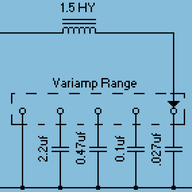
Just my opinion, but the things I didn't like about the 3-band can be seen in the graphs on the previous page: it has a HPF that's set much higher than I want (so I wasn't happy turning the bass either up or down), and that unavoidable spike at about 4kHz. That's probably music to the ears of real 3-band Stingray fans, so I guess I'm not one.
I had a 2-band clone preamp, and also the option of switching to passive (which would probably work well with EQing), agonized over whether or not to modify such a nice and expensive bass, and eventually sold both of my Stingrays, sadly. Well-built, no question.
I might accept a preamp that's flat - even with no controls, just a buffer - so I can use the amp/preamp/EQ of my choice.
I had a 2-band clone preamp, and also the option of switching to passive (which would probably work well with EQing), agonized over whether or not to modify such a nice and expensive bass, and eventually sold both of my Stingrays, sadly. Well-built, no question.
I might accept a preamp that's flat - even with no controls, just a buffer - so I can use the amp/preamp/EQ of my choice.

Stingrays are known for a little too much, "Zing," which is their aggressive high end.
I set my controls on the bass like this:
1) Bass - slightly boosted
2) Mids - slighly boosted a little more than the bass.
3) Treble - rolled back to about 2 or 3.
These settings give me a tone very much like Paul Denman's tone, who played on a few of Sade's albums.
Also, once you get the settings you want on the instrument, then move the tone controls on your amp.
Slight adjustments can be the difference between a tone you don't like, and a tone you love.
Stingrays are
I set my controls on the bass like this:
1) Bass - slightly boosted
2) Mids - slighly boosted a little more than the bass.
3) Treble - rolled back to about 2 or 3.
These settings give me a tone very much like Paul Denman's tone, who played on a few of Sade's albums.
Also, once you get the settings you want on the instrument, then move the tone controls on your amp.
Slight adjustments can be the difference between a tone you don't like, and a tone you love.
Stingrays are
Last edited:

What worked for me was cutting the bass on the preamp so the E and A sound more like the weaker D and G, compression and boost the bass after to taste. Without the bass boost it sounded like a very bright P bass.
The E and A sounded great and full but no matter how much I adjusted the pick up I could never even them out without compression.
The E and A sounded great and full but no matter how much I adjusted the pick up I could never even them out without compression.


3 band EQ? Max all 3 and the turn each down until you get what you need.

I've been playing ceramic (3 coil pickup, 3 band EQ) Stingray5s since 2001. I boost bass and cut treble just a bit and that's usually it for onboard EQ. BUT I always use a preamp (or something that emulates one), from almost clean to rather gritty, and further compress after that. In such context, the weak G string many complain about in Stingray5s has never been an issue for me, and it doesn't change with strings (I use .045" gauge these daya, but have uses .040" for years with the same tone).
On a side note, IME Stingrays don't sound too nice on their own. Most common mistake I see is people dumping theirs after much frustration trying to make them sound nice on their own. Stingrays are stellar in a band context, just harder to bury than other basses, timbrically more present (for lack of a better way to put it into words). But to play on my own I choose other basses 100% of the time. Overall roundness/low end authority is still a legit concern tho'. Just make sure you judge your Ray in a band context to find a sound that works for you.
On a side note, IME Stingrays don't sound too nice on their own. Most common mistake I see is people dumping theirs after much frustration trying to make them sound nice on their own. Stingrays are stellar in a band context, just harder to bury than other basses, timbrically more present (for lack of a better way to put it into words). But to play on my own I choose other basses 100% of the time. Overall roundness/low end authority is still a legit concern tho'. Just make sure you judge your Ray in a band context to find a sound that works for you.

I just moved on a MIJ 3 band Ray as I couldn`t get a tone that I liked from it no matter how much I messed around with it. The common opinion seems to be the 3 band from around that time wasn`t set up right. Pity as I liked the bass otherwise.
I play through a Helix so I have a bunch of "amp" and "compressor" options. I always use a comp, and I find that strangely, it actually makes this problem worse. Some of the amp models sound a little better. I tend to prefer the GK model, and then the SVT. But there are others that sound much more...flat? Those seems to suit the ray better.
I'm going to try some different pickup heights with the new strings on today and see if it makes any difference. TBH though, I have a J and a P, and they both just sound good no matter what I do, so the Ray might go back if I have to fiddle around with it this much. I do love the feel of it, but if I'm can't find a tone I'm happy with then I won't play it. I hate having to waste my time tweaking for decent tone.
Like it's not just a different tone, there is a huge volume jump on the E string. It's really weird.
I'm going to try some different pickup heights with the new strings on today and see if it makes any difference. TBH though, I have a J and a P, and they both just sound good no matter what I do, so the Ray might go back if I have to fiddle around with it this much. I do love the feel of it, but if I'm can't find a tone I'm happy with then I won't play it. I hate having to waste my time tweaking for decent tone.
Like it's not just a different tone, there is a huge volume jump on the E string. It's really weird.

This.Common issue with these basses. I have mine set up with the pickup much closer to the G string side and farther from the E string side and it's pretty balanced.
Adjust the pickup to be closer to the skinny strings and further from the thick strings. This balances the volume between strings. Do this with EQ at neutral.

I have the same issue with my Ray 4, it has a very uneven EQ. Even when I use a compressor, the clank ends up messing with the compression
I think on some level, you have to sorta accept it. It ends up having a neat sound in the mix, where the low notes really punch, and it gives the high notes a nice sizzle.
It's best to judge how you feel about it in a mix
I think on some level, you have to sorta accept it. It ends up having a neat sound in the mix, where the low notes really punch, and it gives the high notes a nice sizzle.
It's best to judge how you feel about it in a mix

I find this to be the case. On their own they are good but really shine with the band....On a side note, IME Stingrays don't sound too nice on their own. Most common mistake I see is people dumping theirs after much frustration trying to make them sound nice on their own. Stingrays are stellar in a band context, just harder to bury than other basses, timbrically more present (for lack of a better way to put it into words). But to play on my own I choose other basses 100% of the time. Overall roundness/low end authority is still a legit concern tho'. Just make sure you judge your Ray in a band context to find a sound that works for you.
Just moved everything around again and the issue is still very much there. Tried some more amp and comp models, still the same...just different flavors lol.
I had a thought and ran it through my DAW to see what kind of levels I was getting from each string. When I play on the E the signal coming in is way hotter then the other strings. Conversely, when I tried with the P and J basses, all the strings are coming in at around the same level.
This has to be something weird going on with the preamp. I can't really see any other explanation. Maybe it's supposed to be like that, maybe not...either way I hate it .
I had a thought and ran it through my DAW to see what kind of levels I was getting from each string. When I play on the E the signal coming in is way hotter then the other strings. Conversely, when I tried with the P and J basses, all the strings are coming in at around the same level.
This has to be something weird going on with the preamp. I can't really see any other explanation. Maybe it's supposed to be like that, maybe not...either way I hate it .
Don't go hatin' man (but I don't mind if you convert it to passive and let us know how that worked). 
I never got along very well with the 3-band Ray preamps. But I like Stingrays very much, so my solution has been to stick with 2-band Rays. To my ear the 2-band Ray preamp is much better balanced and, in conjunction with an alnico p'up, is the Stingray sound.
I will agree with others that the G can be a little weak on some Rays and I just balance that with pickup height.
I know the Stingray Special has been given a very warm reception by the bass community so my opinion is clearly not with the consensus, but I feel that moving to the 3-band pre was a step in the wrong direction 30 years ago and the recent move to ceramic pickups in the Special model just seals the deal. Nice basses but, to me, they're no longer Stingrays.
Of course; strictly my opinion.
I will agree with others that the G can be a little weak on some Rays and I just balance that with pickup height.
I know the Stingray Special has been given a very warm reception by the bass community so my opinion is clearly not with the consensus, but I feel that moving to the 3-band pre was a step in the wrong direction 30 years ago and the recent move to ceramic pickups in the Special model just seals the deal. Nice basses but, to me, they're no longer Stingrays.
Of course; strictly my opinion.

3 band EQ? Max all 3 and the turn each down until you get what you need.
do you still have that lovely looking early Stingray 5?

Just moved everything around again and the issue is still very much there. Tried some more amp and comp models, still the same...just different flavors lol.
I had a thought and ran it through my DAW to see what kind of levels I was getting from each string. When I play on the E the signal coming in is way hotter then the other strings. Conversely, when I tried with the P and J basses, all the strings are coming in at around the same level.
This has to be something weird going on with the preamp. I can't really see any other explanation. Maybe it's supposed to be like that, maybe not...either way I hate it .
Did you buy it new, or are you certain a previous owner didn't screw-up the wiring?
Again, it's not uncommon to have to adjust the heights of the *pole pieces* individually, not just tilt the pickup height.
Stingrays are well built and consistently, but this is a common issue (which can be corrected) and many of their 5-strings are renown for the G string virtually falling of the edge of the fretboard. So in too many instances they're poorly and inconsistently built.
I couldn't count how many Stingrays I've had. I can bond with some 3-bands, had to toss an otherwise perfect 5-string classic due to the G-string at edge of the 'board which could not be fixed via neck adjustments or setup, but I'll tak3 a 2-band 4-string sight unseen and know I can kill with it.
Mayyybe I've adjusted pole piece heights on 2-band rays too, but can't recall it. Either way, that EQ is far easier to dial in but the 3-band definitely has its charms too
Do what's required. Or not. It's always easier to work with a passive J or P anyway, so you're all set.


