• TalkBass has been independent since 1998. Add your voice.
    Create a free account to reply to discussions, view embedded media, and browse with fewer display ads.
    Join freeLog in
    Want zero display ads or expanded classifieds tools? Compare plans.

Double Bass Tips on playing with a piano-bass duo?

I never thought I'll come to this day, but my pianist friend was asking me if I can play a jazz piano-bass duo with her in the local jazz bar during one of their weekly shows where they allow beginner to intermediate musicians to play. She is not a full-time pianist but she studies jazz hard during her free time, and she started learning jazz two years before I did (I started last year) so I think her experience shows and probably why the bar owner asked her. As for me, I played some tunes with her recently in open jams, so maybe she thought I played fine.

Anyway, do you guys have any experience with this sort of thing, and how do you treat it differently from other normal gigs such as trios?
 
I play with a pianist friend regularly as a duo, weekly for a year or so. So far without an audience, but I'm sure this combination would work very well in a quiet jazz bar. We're both pretty good sight readers, so we like to play "spin the wheel" with a fat fake book and try new tunes. The most fun thing about the duo format is just the simple communication. You don't need fancy arrangements, you just need to listen to each other. To be honest, that's mostly me listening to him, but it really is a lot of fun. Probably not that different from a trio with drums if you have a drummer you're both aligned with, but logistics are so much simpler. If they have a piano it's just your bass and your amp to carry. The two of you should just try it. It sounds like a great opportunity!
 
One way to think about this situation is,
is your pianist used to playing solo jazz piano? These type of players tend to play the chord roots in the left hand. Sometimes, this is ok; other times, it can conflict with the bass player.
So, if the pianist hasn’t thought about this, perhaps you can suggest they use rootless voicings. There are many books and tutorials about this.
My other suggestion is that while you are the main time keeper, especially for
jazz that swings, it is both the bassist’s and pianist’s responsibility to keep time and swing, even during ballads.
Have fun!
 
I never did this exactly, but I did do a lot of drumless cocktail hour trios. Always thought of my part as sort of being like a drum. The texture and tone almost becomes more critical than the notes since a piano can fill a lot of that space.

A lot of folk records have just acoustic guitars and DB. They really manage to be there but not in the way.
 
  • Like
Reactions: scrubhelmet
I never thought I'll come to this day, but my pianist friend was asking me if I can play a jazz piano-bass duo with her in the local jazz bar during one of their weekly shows where they allow beginner to intermediate musicians to play. She is not a full-time pianist but she studies jazz hard during her free time, and she started learning jazz two years before I did (I started last year) so I think her experience shows and probably why the bar owner asked her. As for me, I played some tunes with her recently in open jams, so maybe she thought I played fine.

Anyway, do you guys have any experience with this sort of thing, and how do you treat it differently from other normal gigs such as trios?
Keep it simple for the beginner students.
Make sure the root is obvious at the chord change.
 
One way to think about this situation is,
is your pianist used to playing solo jazz piano? These type of players tend to play the chord roots in the left hand. Sometimes, this is ok; other times, it can conflict with the bass player.
So, if the pianist hasn’t thought about this, perhaps you can suggest they use rootless voicings. There are many books and tutorials about this.
My other suggestion is that while you are the main time keeper, especially for
jazz that swings, it is both the bassist’s and pianist’s responsibility to keep time and swing, even during ballads.
Have fun!
This. Many pianists that come from the solo realm can’t stop themselves from playing on your turf, and the resulting mud of incompatible low notes can take a lot of the fun out of this format. Maybe consider getting together a few times and working this out before taking on duo gigs. McCoy Tyner and Ron Carter famously agreed that everything below the “S” on Steinway belonged to the bassist.
 
Listen to " This One's for Blanton." Duke Ellington and Ray Brown. Talk about a lovely Piano Bass Duet.
I enjoy Piano/Bass duets. For me, the key is the piano player not being busy with their left hand. Barely a note below middle C. Just a light touch to lay down the chord to pad out their melody. I played with a piano player one time who did a walking bass line with his left hand, he was stepping all over me, it was a mess. The bass line is all yours. The piano and bass need to take turns with melodic lines. If her right hand is playing a melody, keep your bass line simple. Take turns with the piano that her lines are very simple, even just laying down the chord, so you can play a more melodic bass line. Too much business in the upper and lower register at the same time is wasted musical energy.
 
I always encourage bassists to play in drummer-less settings like piano/bass or piano/guitar duos, so good on you for doing it. Jazz tradition and history is rich with recordings of just this type of thing. I've spent most of my career playing in drummer-less duo and trio settings, and my sax player and I play duo all the time. It's where you really learn how good your time is, and you learn to get comfortable with space, versus feeling like you have to fill every bit of it up with something.

This is a recording/video of my sax player and I doing 'Polka Dots and Moonbeams' from a duo show earlier this summer:

As far as playing in this scenario is concerned, keeping it simple at first is key, especially if you both are still relatively new to jazz and this format in particular. Chord tones, solid half and quarter notes. Big sound. Be supportive and fill out the bottom end. Figure out what the pianist is doing first. How solid is THEIR time? If the pianist is playing a lot of root position chords, and if they are heavy with the left hand, it pins you down a bit with how free you can be, unfortunately. That being said, if they ARE playing the root a lot, you don't necessarily have to play the root on beat 1. You can craft lines that are more 'through' the chords' than ones which vertically, explicitly state the chords (like arpeggios).

Check out this recording with Kenny Barron and Charlie Haden.... one of my favorite piano/bass duos of all time.

Charlie Haden and Kenny Barron - Night & The City
 
is your pianist used to playing solo jazz piano?
Yes, although I think she prefers playing with a bassist. That's probably why she befriended me as well as other bassists.
Chord tones, solid half and quarter notes. Big sound. Be supportive and fill out the bottom end. Figure out what the pianist is doing first. How solid is THEIR time? If the pianist is playing a lot of root position chords, and if they are heavy with the left hand, it pins you down a bit with how free you can be, unfortunately. That being said, if they ARE playing the root a lot, you don't necessarily have to play the root on beat 1. You can craft lines that are more 'through' the chords' than ones which vertically, explicitly state the chords (like arpeggios).
Thanks man, these are reasonable points.

Also, cool YouTube channel. I already subscribed. I might also check out your Bandcamp some other time.
 
  • Like
Reactions: Ross Kratter
I always encourage bassists to play in drummer-less settings like piano/bass or piano/guitar duos, so good on you for doing it. Jazz tradition and history is rich with recordings of just this type of thing. I've spent most of my career playing in drummer-less duo and trio settings, and my sax player and I play duo all the time. It's where you really learn how good your time is, and you learn to get comfortable with space, versus feeling like you have to fill every bit of it up with something.

This is a recording/video of my sax player and I doing 'Polka Dots and Moonbeams' from a duo show earlier this summer:

As far as playing in this scenario is concerned, keeping it simple at first is key, especially if you both are still relatively new to jazz and this format in particular. Chord tones, solid half and quarter notes. Big sound. Be supportive and fill out the bottom end. Figure out what the pianist is doing first. How solid is THEIR time? If the pianist is playing a lot of root position chords, and if they are heavy with the left hand, it pins you down a bit with how free you can be, unfortunately. That being said, if they ARE playing the root a lot, you don't necessarily have to play the root on beat 1. You can craft lines that are more 'through' the chords' than ones which vertically, explicitly state the chords (like arpeggios).

Check out this recording with Kenny Barron and Charlie Haden.... one of my favorite piano/bass duos of all time.

Charlie Haden and Kenny Barron - Night & The City

I agree with pretty much everything in this - but I mostly came to recommend this very album as a master class on how to do it.

Charlie Haden was an amazing player so don't get discouraged if you're not quite on his level :) - but it's an amazing demonstration of JnF's point about space. The two of them leave a lot of space between notes - which makes the notes they do play that much more impactful.
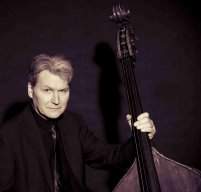
A concept that I struggle with in my own playing. "Oh there's a space there let me fill it!" Be like Charlie H, don't be like me.
 
Haden was one of my heroes and I saw him live many times and in many different contexts. I think you can learn a lot from him, but like Monk, I think it's tricky to try to imitate him. Those guys were unique and odd (in a good way) geniuses and often when guys try to sound like them they come off as trying too hard. Charlie was able to support and instigate at the same time. He was able to play solos that were outside but inside at the same time. I think other guys are better models for a young player. Ray Drummond comes immediately to mind for obvious reasons.
 
Congratulations on your gig. There's no better way to learn that to get out there and play live gigs regularly!

You might enjoy this playlist of Piano-Bass Duo jazz. Disclaimer: This contains a fair amount of my own albums, plus loads of other great duo recordings. Here's the Apple version if you prefer that.

If anyone has suggestions for my playlist that I haven't included, let me know.
 
Haden was one of my heroes and I saw him live many times and in many different contexts. I think you can learn a lot from him, but like Monk, I think it's tricky to try to imitate him. Those guys were unique and odd (in a good way) geniuses and often when guys try to sound like them they come off as trying too hard. Charlie was able to support and instigate at the same time. He was able to play solos that were outside but inside at the same time. I think other guys are better models for a young player. Ray Drummond comes immediately to mind for obvious reasons.

Agreed, but I think it's important to point out that no one suggested imitation. The point (or mine, at the very least) in suggesting that record (and Charlie's playing) is to listen to the space and economy that Charlie allowed. Let the music build. Don't walk right off the bat. Allow the melody to breathe. Listen. The 'support and instigate' thing definitely doesn't come until you get years of experience and develop your ears. 'Instigating' for the sake of doing it usually isn't musical, and it's important to note that. It's the equivalent of like having a conversation and then randomly inserting a bunch of stuff that isn't really relevant or needed, just to be heard. Sometimes it's better to say nothing and just listen.

If I were going to absolutely suggest someone to listen to before Charlie, etc., it would be Ray Brown. I have Ray Brown's bass book and still work through those exercises. I also have Michael Moore's method book too. The scale/walking/etudes in those books are required study IMO. Charlie's playing, regardless of his harmonic choices and artistic individuality, is a masterclass in supportive feel and tone that are universally applicable, IMO.
 
I do a lot of these gigs, and generally speaking, it seems like since there are no drums, rhythm foundation will come first. A lot of the guys who sub for me have much more command of the double bass, and you'd think the conversational element would be more at play in a duo, but from my general experience, clear time and harmony is much more helpful, especially without a drummer.

Yes, pianists can and should learn to count on their own, but providing a musically safe space is why I'm still the first call for a lot of these gigs.

I know lots of bassist who can do these stratospherically difficult things, but no one still really beat the power Ray Brown gave to the band.

YMMV
 
I do a lot of these gigs, and generally speaking, it seems like since there are no drums, rhythm foundation will come first. A lot of the guys who sub for me have much more command of the double bass, and you'd think the conversational element would be more at play in a duo, but from my general experience, clear time and harmony is much more helpful, especially without a drummer.

Yes, pianists can and should learn to count on their own, but providing a musically safe space is why I'm still the first call for a lot of these gigs.

I know lots of bassist who can do these stratospherically difficult things, but no one still really beat the power Ray Brown gave to the band.

YMMV

To this point... here's Ray and Duke Ellington in duo. I need to listen to this album more.

 
If your pianist is familiar with the format, she should be OK with rootless chord voicings and/or moving up an octave to stay out of your way. You should definitely have that discussion, though. And yes, with no drummer you are the entire rhythm section. Keeping time and hitting those roots on the downbeats is job one. You're playing in a bar, so don't expect conversation to stop when you play a solo! Keep your solos short and sweet, few and far between. Maybe try some bowed intros and outros if you like doing that. It helps mix things up and gets some attention. Be prepared to take (or reject!) requests, and be ready to deal with drunk people who want to sing.
 
  • Like
Reactions: scrubhelmet

Latest posts