

Enjoy the benefits of a premium membership!
Upgrade Account
-
TalkBass has been independent since 1998. Add your voice.
Create a free account to reply to discussions, view embedded media, and browse with fewer display ads.
Join free Log in
Want zero display ads or expanded classifieds tools? Compare plans.
You are using an out of date browser. It may not display this or other websites correctly.
You should upgrade or use an alternative browser.
You should upgrade or use an alternative browser.
Tired off fighting my 34"
- Thread starter stuntbass77
- Start date
-
- Tags
- 34"
More options
Who Replied?What angle (to horizontal) is your neck angle when you play? Too low can cause unnatural angles to your shoulder, elbow, wrist, and fingers, and all of it goes through your shoulder to the spine.
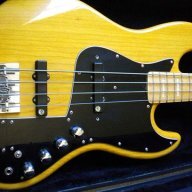
Others here know far more about more high-end short scale options but I recently bought one of these -- A Squier Jaguar 30" short scale bass-- as a knockabout instrument that maybe my kids could play too. I found it to be very comfortable, with the notes I want to play already under my finger tips instead of being a slight stretch/exertion, and it sounded surprisingly good. They are $179.
Take my advice with a grain of salt since I am no SS expert, but if I were you, I would consider buying one of these, and seeing how it feels and sounds. Then, if you decide you like the feel of the scaling, you could invest in a more expensive ss bass. In the meantime you'd have a pretty good ss bass you can play right away until you find the "perfect" ss bass. Sound on this was really pretty good, especially for the price.
Hm, now that you've got me thinking about it, I think I will pull it out and give it some lap time.
Link Removed
Take my advice with a grain of salt since I am no SS expert, but if I were you, I would consider buying one of these, and seeing how it feels and sounds. Then, if you decide you like the feel of the scaling, you could invest in a more expensive ss bass. In the meantime you'd have a pretty good ss bass you can play right away until you find the "perfect" ss bass. Sound on this was really pretty good, especially for the price.
Hm, now that you've got me thinking about it, I think I will pull it out and give it some lap time.
Link Removed

You could have a couple of nerve pain aggrevators - one being the pressure of the strap on the side of your neck, the other being the reach, to get to the first frets. And these two will work together to cause trouble. The nerve runs right under where the strap sits on your shoulder, and pressure on that nerve will cause more pain as you extend your arm.
You could try a bass that has a longer upper horn, which moves the headstock closer to your body or getting a better padded strap.
And there are straps that divide the weight onto both shoulders, but they are a little clunky. I got a automobile seat belt pad - a piece of sheepskin that snaps around the strap, and it worked great for neck and nerve pain. Try folding up a small towel and putting that under the strap, to see if this would work for you.
You could try a bass that has a longer upper horn, which moves the headstock closer to your body or getting a better padded strap.
And there are straps that divide the weight onto both shoulders, but they are a little clunky. I got a automobile seat belt pad - a piece of sheepskin that snaps around the strap, and it worked great for neck and nerve pain. Try folding up a small towel and putting that under the strap, to see if this would work for you.
It's not "modern," but I've been devoted to my Allen Woody shorty for 2+ years. Had a 5-string fling with an excellent Yamaha (still have it), but as something of a traditionalist I wanted to get back to four. Good luck.


The downside to many stock medium and short scale basses is that they are often short horn basses and the bridge placement isn't any better.
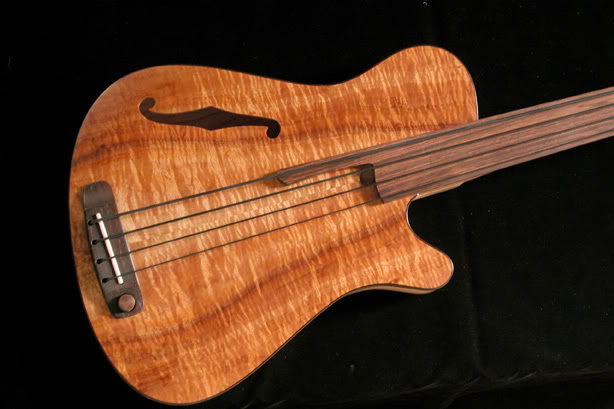
The bridge on a Rob Allen bass is much closer to the edge of the body than many stock short-medium scale basses. The top horn is also near the 12th "fret". Very easy to play, fits in a guitar gig bag, light as hell, and very deep sounding. What's not to love?
The bridge on a Rob Allen bass is much closer to the edge of the body than many stock short-medium scale basses. The top horn is also near the 12th "fret". Very easy to play, fits in a guitar gig bag, light as hell, and very deep sounding. What's not to love?
Give the danolectro a try. Besides most models being short scale, they weigh next to nothing. Great tone and a fast neck.

I've got massive nerve issues but mine don't cause pain. I've got a spinal cord injury which left me paralyzed. Fortunately, my strength, mobility and dexterity continue to return.
In my quest to find a way to play again, I ended up trying a Dingwall. The fanned frets made me curious, and I found they made playing in certain fret positions easier for my partially paralyzed fingers to deal with. The long B string made the first frets hard to reach. But I could get at the 6th fret B more easily than the 1st fret E. If you've got the funds, this may be a route to consider. Dingwalls aren't cheap, but the Combustion and NG models aren't insane. Ibanez started doing fanned fret models recently, which I'm sure are less expensive, but I can't comment on the quality.
Post script - I ended up selling my Dingwall. I recovered enough mobility to return to using a 34" 4 string, and found basses that sounded better to me.
In my quest to find a way to play again, I ended up trying a Dingwall. The fanned frets made me curious, and I found they made playing in certain fret positions easier for my partially paralyzed fingers to deal with. The long B string made the first frets hard to reach. But I could get at the 6th fret B more easily than the 1st fret E. If you've got the funds, this may be a route to consider. Dingwalls aren't cheap, but the Combustion and NG models aren't insane. Ibanez started doing fanned fret models recently, which I'm sure are less expensive, but I can't comment on the quality.
Post script - I ended up selling my Dingwall. I recovered enough mobility to return to using a 34" 4 string, and found basses that sounded better to me.

I had all the same issues - but didnt like shorties, that E string is just not right at 30". Then i found medium - best of all worlds. And I strongly endorse the Lowe drop in neck, and Brad is a great guy. Even if you grab a shortie, and the SS jag is a great platform for making a top quality shorty out of with changed pups, you should still breathe life back into you J with a Lowe neck.
Good luck - i also got some relief with a straight arm brace when sleeping for my fretting hand arm
Good luck - i also got some relief with a straight arm brace when sleeping for my fretting hand arm

i have shoulder damage and elbow problems, so usually have to play a short scale. if you play sitting, why not grab a squier jag short scale while you sort out your options? i ended up with 2 mikros (28.6" scale) that are light and smaller bodied, but i also have my jag ss, a nice bass but sometimes when my right shoulder is paining me, only the mikros will do. either the jag or mikro can be had for $179 (less if b stock or used), and then you can play whichever you get while you figure out what to get.
the fender rascal is also short scale with the coolest retro look, but i found it a bit heavier than my jag. or you could go with a hofner ignition (their cheap line) violin bass - you can find them at sweetwater with weights listed under 5 pounds. short scale, quirky, and there's the slightly heavier but still light short scale hofner ignition club bass, too.
in the 32" scale world, there's the fender pawnshop reverse jaguar, which i enjoyed - the only catch might be the lack of access to the higher frets on the G string. there's also the traveler guitar TB-4P bass. i'll tell you what i liked about it beside the fact it was small and probably as light as my mikro - it uses 34" scale strings, which are much easier to find. i spent some quality time with one recently, and it was comfy and sounded pretty good, too.
the fender rascal is also short scale with the coolest retro look, but i found it a bit heavier than my jag. or you could go with a hofner ignition (their cheap line) violin bass - you can find them at sweetwater with weights listed under 5 pounds. short scale, quirky, and there's the slightly heavier but still light short scale hofner ignition club bass, too.
in the 32" scale world, there's the fender pawnshop reverse jaguar, which i enjoyed - the only catch might be the lack of access to the higher frets on the G string. there's also the traveler guitar TB-4P bass. i'll tell you what i liked about it beside the fact it was small and probably as light as my mikro - it uses 34" scale strings, which are much easier to find. i spent some quality time with one recently, and it was comfy and sounded pretty good, too.
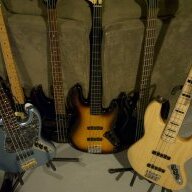
Please believe I'm not trying to belittle your condition whatsoever when I say this, but I've seen a 10-year-old with corresponding hand size play 34" scale without issue - it's all technique. You should be able to adjust technique so you aren't stretching (just moving your hand more, usually at the elbow), thereby negating any scale/size differences. One or two inches of difference in scale length don't add up to much on a per-fret basis... but of course a) your health is of the UTMOST importance, sadly even more important than bass, and b) YMMV so do what you must. I just hate to hear of someone giving up on a bass they love (a jazz, no less!) if it is something a shift in technique can help. Getting a teacher made a massive difference for me!I have a nerve problem (at least that's what I suspect as I have been to all the best doctors in Chicago with no real answer). I am 6 feet tall and not a small person but the nerve issue is a big problem. I love my jazz bass and will never sell it but I realize I may have to go to a shorter scale. I used a capo just as a test and found it made a real difference. So if my nerves problem doesn't get help soon I will need to consider going to a shorter scale. Funny thing is my Sterling by Musicman SB14 feels like it's a 33" so I think I will play it more for now. The medium scale market is pretty scarce. I know Birdsong and some others make a very nice bass but not my cup of tea. I would like something more modern, maybe a Factor bass as they are 32" and have clear tone with a bit of punch if dialed right. I also like the old Yamaha Motion basses a bit, 32" as well. Wonder how many others are in the same place as me.
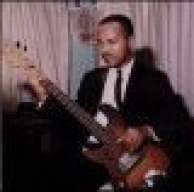
A Hofner is obviously something to try. Narrow string spacing as well as a short neck. I don't know if that's good or bad for you. Very different tone than a Fender Jazz, of course.

I have been sitting down to play for a couple years as straps of any kind cause my nerve pain to worsen.
Have you looked into straps that take the weight entirely off the shoulder?
Guitar Straps | Bass Straps | Slinger Straps Ergonomic Guitar Straps
I haven't used one yet, but they seem to help for some people.

Another vote for the Squier VM Jaguar SS. I can't believe how good they are and the price is low enough for you to experiment with it and see if this solves your problem. I bought mine used for $100. There is quite a fan club here for them.
There is a guy on YouTube that had a bass built for him ( I think his last name was "Whitley" and he had a Brittish accent ) that had a great tone. His bass was a 30" I believe but had a tremolo, which I would do without. He remarked on how most companies charges so much to have a bass built and he found a company that was reasonable.
That would probably be Scott Whitley; his company website is here:
Link Removed
His new SWB-1 Standard shortie does look and sound interesting, and might be what you're looking for. Not seeing a tremolo on the website's demo videos; maybe that's an extra-cost option? I've had some minor online conversation with him and besides being quite a good player, he seems like a real nice guy.
You could have a couple of nerve pain aggrevators - one being the pressure of the strap on the side of your neck, the other being the reach, to get to the first frets. And these two will work together to cause trouble. The nerve runs right under where the strap sits on your shoulder, and pressure on that nerve will cause more pain as you extend your arm.
You could try a bass that has a longer upper horn, which moves the headstock closer to your body or getting a better padded strap.
And there are straps that divide the weight onto both shoulders, but they are a little clunky. I got a automobile seat belt pad - a piece of sheepskin that snaps around the strap, and it worked great for neck and nerve pain. Try folding up a small towel and putting that under the strap, to see if this would work for you.
A good strap can help a lot if the shoulder/neck area is involved. I bought a Neotech neoprene Mega Bass Strap (get the Mega) for $27, and it made a HUGE difference in alleviating shoulder pain (tendonitis issues). Now, I have about 5 or 6 of them, so every bass can have its own great strap in the gig bag at all times.
http://www.amazon.com/Neotech-83010...82095&sr=8-1&keywords=neotech+mega+bass+strap
As an Amazon Associate, TalkBass may receive commissions from qualifying purchases made via links on this site.

My lightweight, 32" scale custom Zon Vinny has been a life-saver. I still play my big walnut Carvin 34" jazz when my neck/back can handle it, but having a drastically smaller and easier to play bass that still sounds top quality helps a lot to minimize playing downtime for me. Zons aren't cheap, but my understanding is that they'll do most of their basses in reduced scale versions.
Please believe I'm not trying to belittle your condition whatsoever when I say this, but I've seen a 10-year-old with corresponding hand size play 34" scale without issue - it's all technique. You should be able to adjust technique so you aren't stretching (just moving your hand more, usually at the elbow), thereby negating any scale/size differences. One or two inches of difference in scale length don't add up to much on a per-fret basis... but of course a) your health is of the UTMOST importance, sadly even more important than bass, and b) YMMV so do what you must. I just hate to hear of someone giving up on a bass they love (a jazz, no less!) if it is something a shift in technique can help. Getting a teacher made a massive difference for me!
my doctors and physical therapist completely disagree with you. i respectfully disagree, as well. i tried a variety of positions, and used to play with perfect form. but hyper extension of the right shoulder, among other things, can be a problem no amount of technique can fix. i'm only 5' 3", and it took years for the damage to develop, so those 10 years olds may have problems later in life, as i did. or they may have more natural flex in their shoulders or may end up taller with more reach.


