• TalkBass has been independent since 1998. Add your voice.
    Create a free account to reply to discussions, view embedded media, and browse with fewer display ads.
    Join freeLog in
    Want zero display ads or expanded classifieds tools? Compare plans.

To compress or not to compress?

If you're looking for a specific compressed sound, then yes. Doesn't sound like it though.

In that case it comes down to context. Context of the band you are playing in. Do you hear yourself evenly when playing with others? Do you preceive the bass as you want and expect in the context of others? Is the answer yes to the previous questions, and without you overtaking sound space for others in the band? If so, you probably don't need a compressor.

But it's always fun to try! :)

Cheers,
Kalle
 
It's not hardly essential if you have a decent bass. There are three reasons I can think of to use a compressor:

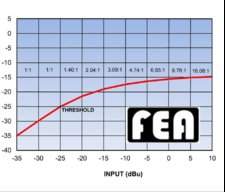
1. The biggest reason compressors are used is to get more sustain out of your bass. My bass has superb sustain, so I don't use one. Using a compressor "most" folks set the ratio to 4:1. That setting means that for every 4 decibels of volume increase you will only get 1db of actual volume increase and the rest of the energy will go into sustain. 3 to 1 is also a common setting. You'll still get decent attack out of your playing but increase the sustain. The higher you dial up the ratio the less attack you hear and thus the less dynamics you'll have in your playing.

2. To get a specific sound or effect out of your bass. If you dial up the ratio a lot, you can almost make your bass sound like organ pedals - no attack to the note and sustain forever. There are a few places where that might be desirable and some folks want just a little attack and lots of sustain in everything they play. The compressor is how to get that.

3. To protect your speakers. This is actually the main reason that FOH systems use compression on your channel. They don't want any sudden spikes of power from you diggin'-in on your bass or playing really low notes to damage their speakers. This is not necessarily driven by making you sound better (it can be), but by making sure their speakers don't get fried.

My opinion is the old "if it ain't broke, don't fix it". If you have a problem with not enough sustain or if you are making your speakers fart when playing loud, then a compressor is a good choice.

Ideally you'll want a compressor that has 4 controls - Threshold (controls when the compressor activates), Ratio (controls how much of the signal is compressed into sustain), Attack (controls how quickly the compressor engages once the threshold is reached- often see toggle switches of "soft knee" or "hard knee" instead of a much more variable dial), and Decay or Release (controls how long the compressor keeps compressing before it lets go once it's clamped on).

At the very least, you'll want something that will give you threshold and ratio. Usually those compressors have an internal setting on the attack and decay. Some are good...some not so good. You really have to play with those to see what you like.

I don't use a compressor because I don't need one for sustain, my speakers aren't in any danger of being stressed, and I don't play much in the way of slap. Playing Slap usually needs a compressor because of the huge attack caused by hammering on and plucking up on the strings.

Hope that helps.
 
Last edited:
I use an MXR M87 with a power supply adaptor (I don't use batteries) and it is always on.
 

Attachments

  • lg_BassCompressor-11.png
    lg_BassCompressor-11.png
    133.7 KB · Views: 38
  • Like
Reactions: Socobass
Compression is an art and it can easily get out of control, but once you wrap your head around it, it can be an incredibly useful tool. I use a two channel dbx in my rack. It helps even out the low end and control any wayward peaks (the unit I use has a limiter as well) so I get the most out of my wattage while maintaining a fair amount of headroom
 
It's not hardly essential if you have a decent bass. There are three reasons I can think of to use a compressor:

1. The biggest reason compressors are used is to get more sustain out of your bass. My bass has superb sustain, so I don't use one. Using a compressor "most" folks set the ration to 4:1. That setting means that for every 4 decibels of volume increase you will only get 1db of actual volume increase and the rest of the energy will go into sustain. 3 to 1 is also a common setting. You'll still get decent attack out of your playing but increase the sustain. The higher you dial up the ratio the less attack you hear and thus the less dynamics you'll have in your playing.

2. To get a specific sound or effect out of your bass. If you dial up the ratio a lot, you can almost make your bass sound like organ pedals - no attack to the note and sustain forever. There are a few places where that might be desirable and some folks want just a little attack and lots of sustain in everything they play. The compressor is how to get that.

3. To protect your speakers. This is actually the main reason that FOH systems use compression on your channel. They don't want any sudden spikes of power from you diggin'-in on your bass or playing really low notes to damage their speakers. This is not necessarily driven by making you sound better (it can be), but by making sure their speakers don't get fried.

My opinion is the old "if it ain't broke, don't fix it". If you have a problem with not enough sustain or if you are making your speakers fart when playing loud, then a compressor is a good choice.

Ideally you'll want a compressor that has 4 controls - Threshold (controls when the compressor activates), Ratio (controls how much of the signal is compressed into sustain), Attack (controls how quickly the compressor engages once the threshold is reached- often see toggle switches of "soft knee" or "hard knee" instead of a much more variable dial), and Decay or Release (controls how long the compressor keeps compressing before it lets go once it's clamped on).

At the very least, you'll want something that will give you threshold and ratio. Usually those compressors have an internal setting on the attack and decay. Some are good...some not so good. You really have to play with those to see what you like.

I don't use a compressor because I don't need one for sustain, my speakers aren't in any danger of being stressed, and I don't play much in the way of slap. Playing Slap usually needs a compressor because of the huge attack caused by hammering on and plucking up on the strings.

Hope that helps.

Compression does a lot more than add sustain. It reduces dynamics while boosting your overall signal. This can really bring out subtle nuances and ghost notes. I don't think it is a bandaid to fix a problem at all. It is a tool that was not widely understood in recording for a long time, but as with everything else, techniques to use were slowly developed over time. It is a powerful tool and I would be hesitant to relegate to a fix all for a poor performance
 
I think learning how a compressor works, and when to use one, is a valuable part of a bass player's skill set. I don't think every player should use one - or that one even needs to be used at all times if a player does have one.

As far as what compression achieves, that all depends on the player and the context in which it's being used.
 
I didn't use a compressor for my first decade of playing bass. For the 2nd decade I have.
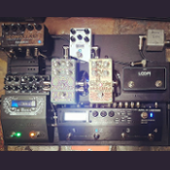
I use it mainly as a first-in-chain gatekeeper to present a nice even signal to my pedalboard, I kinda wish I'd figured out how to get the best out of a comp much sooner.
Seeing as I prefer tube amps for guitar and bass alike, I could go without a comp for bass pretty easy (FOH is going to compress you anyway, and I like dirt pedals), but for guitar I reeeaaaallly want that comp to get my guitar to really come alive (read: poor technique)
 
Compression does a lot more than add sustain. It reduces dynamics while boosting your overall signal. This can really bring out subtle nuances and ghost notes. I don't think it is a bandaid to fix a problem at all. It is a tool that was not widely understood in recording for a long time, but as with everything else, techniques to use were slowly developed over time. It is a powerful tool and I would be hesitant to relegate to a fix all for a poor performance

I'll agree with that and actually mentioned that in #2 and again when covering the specific compressor controls. I think the best use of a compressor doesn't sound like the compressor is being used at all OR is used to make a very identifiable effect on the bass line you're using. That's my opinion of course and is one of many.

I would however say that it's much better understood in the recording now where it can be used as parallel compression to add body to any part or all of the mix or as ducking (side chain) to help, for example, clean up sections where both bass and drums are playing together and hitting at the same time so the bass drum stays really clear without noticeably reducing the bass by making the compression on the bass trigger very quickly from the bass drum track and for very short amounts of time (milleseconds).
 
i was reading a bass supplement that came with a guitar magazine and it said every bassist should be using a compressor pedal

Hey, don't tell me what to do! :laugh:

To be honest, you won't know if it's for you until you try a good one - I'm a recent convert myself. It is a very useful tool to know your way around, for sure. A bad compressor (or one that's just a bad match for your tonal goals) can definitely mess up your sound and/or add noise, same goes for a good one if it's used incorrectly.

The main benefit of a compressor (for me, so far) is that it "beefs up" the sound of my D and G strings relative to the lowest strings - it evens things out, in a good way. Also, it makes my octaver sound better (and it's my favorite effect for solos). I use just a small amount so my tone is not too "squashy" and the voice of my bass is still recognizable. When the use of compression becomes super obvious, it's usually a sign that it's too much - unless that is what you're after.

If you can borrow one, I'd say it's definitely worth trying. Or you can record yourself and play around with the compression plugin of your DAW just to experiment and hear what it does.
 
I used to use a markbass compressore, now I use a tc spectracomp. In both cases, I've used them as always on pedals. I feel like playing compressed affords me the opportunity to be more present in the mix than I could be without. To be fair though, this is playing fretted. I very rarely turned on my compressor when I was playing fretless full time.
 
i insist on having a Mix or Blend knob ... !!

This. I first played with no compression. Then used the one built-in to my Carvin amp. Didn't like the sound so I went back to no comp. Then I got an MXR pedal. Better but still not 100% sold.

Now I'm using a Wampler with a blend knob and it is an always-on effect. Very subtle, very effective. Plenty of dynamics but notes are just a bit more "there".
 
I understand compression and have used compressors. I believe it is usefull, but not essential for live playing. There are number of reasons your shouldn't need compressor:
1. You don't like how it changes your sound
2. Compression was not used for music you play (i.e. old school rock)
3. You usualy play very low volume gigs
4. You usualy play big stage, and believe (like me) compression is best left to sound guy
5. You play one technique (i.e. pick) so your signal is fairly consistent.
There are probably many more. Also, there are number of reasons you should use it, but none of them is: because someone said so.

1. Most good compressors won't change your sound.
3. For low volume gigs i'd argue its more important (having mixed sound at many) its really easy to get energetic and start to play too loud in certain places and a compressor will stop you from going over the top.
 
Compress early and Compress often.

I run two compressors the main (MXR M87 Bass Comp) one is toward the end of my chain The threashold is set so that if i'm playing at a "normal" volume its not coming on at all and if I play slightly louder it starts to kick in and if i'm playing really loudly or slapping (or have been too lazy to configure sensible volumes on my pedal board).

The second one goes near the front and is basically a "make gooderer" pedal, depending on what i'm using it will be set with a low threashold so its engaged most of the time when I'm playing but the ratio is pretty less then 2:1 and or I'll use a blend knob so its not taking the dynamics away too much.

A decent compressor set well will be beneficial in almost all cases (people who don't like compressors and or think they take all your dynamics just haven't used a good one set up well).

If your new to compressors then get one with a meter that shows the reduction, its much easier to setup a compressor when you can see what its doing.
 
  • Like
Reactions: thejacknut