• TalkBass has been independent since 1998. Add your voice.
    Create a free account to reply to discussions, view embedded media, and browse with fewer display ads.
    Join freeLog in
    Want zero display ads or expanded classifieds tools? Compare plans.

To compress or not to compress?

At its most basic essence, s compressor levels the field between loud and soft tones. It’s somethi v that is pretty synonymous with slap. I don’t slap. I play finger style 99.999% of the time.
I have a Keely comp+, which is aimed at the other kind of guitar crowd. It benefits me in that it’s got a level control that boosts pretty darn cleanly.

Also has a blend. Control that allows you to put song of your uncompressed signal back in. I’ve had a few different ones and this is a great feature. It takes away some of the bottom end of your tone, so that’s a thing I guess.
The compressor adds some sustain and tightens up your sound overall, so it’s good for that too.
Point of all these ramblings is that deping on the compressor, you can get more than just compression. I don’t always have it on, but will probably always have it, or something like it because of all the things it’s good for.
 
I'm fairly new to bass - so I don't know much about playing bass live with a compressor. BUT .. I've done some engineering, mixing and mastering and compression (when used correctly) is "the glue" that holds everything together. Now I've heard it said that bass is "the glue" that holds the band together. Not sure if that is relevant at all - but it popped into my head as a connection :)

Anyway ... think of a compressor as an automatic volume control - if you are pounding out 16th notes and aren't very even with your plucking, the compressor can even it out so your loudest notes get turned down a little and your softest notes get turned up a little and it sounds consistent. That is the essence of what a compressor does. It also keep those spikes down so that the average volume is louder without peaking (or clipping your amp, or the board etc.).

There are times you want wide dynamics (so little or no compression) and there are times you want to compress to glue it all together.
 
I run a rack mounted compressor always on. I will change my ratio through the night between 2:1 to 4:1 based on what I'm playing and what bass I'm playing. Active five strings that I'm doing a lot of slapping on will be set a lot different than a passive four string p bass with flats, which generally doesn't take much compression to make it sound good.

I play with a pretty heavy right hand to get the growl out of the strings/bass, so a compressor set to allow me to bring this tone out and still keep from overloading my amp/speakers is needed often for the sound I want.

If I'm playing more jazz or funk with a lighter right hand technique then no I'd say it's not as necessary at all unless I'm wanting some sustain due to lower db levels, but I'd rather have my attack than it all smoothed out.
 
I like to have a compressor on pretty much all the time in live and for recording. I use a Diamond which is a fairly light compressor, only a 3:1 fixed ratio, and I never turn it past noon, if that. I play 5 strings, and get a lot of mileage out of the b strings, and compression like this is really helpful to keep a powerful b string balanced. It also can help to solve the problem of the G string not having as much presence as the E and A string. In generally, I find using compression allows the bass to be louder in the mix, since the peaks have been smoothed out a bit, and it also makes the tone fatter overall. I also really like the sustain that good compression ads to your live tones, which makes it sound more like a pro recording, especially through a good optical compressor like the Diamond. Cheap compressor pedals are not your friend, you get what you pay for with compression. I have had the Empress compressor, BBE opto stomp (amazing for the $40 used I paid), FEA opti fet , EHX Blackfinger, and currently the diamond which I don't see myself parting with for a long time. That being said, I have done PLENTY of gigs or session with no comp in my chain and it all works out ok, I just prefer to have one for my tastes.
 
I stopped using them live years ago. While I'm not opposed to their use for live playing I just haven't found them to be essential or needed enough to bother with when gigging so I dropped using them altogether for simplicities sake.

I think it's a very subjective thing that you have to work out through trial and error on your own. Don't just take what someone else says about them at face value as any sort of universal "fact".
 
I don't play big venues. I am not an expert in the nuances of compression. What I do know is that I use a Roland combo that has good built in variable compression that's very easy to use. It's always on, set to about 2 - doesn't matter what bass or what music I'm playing.

The compression smooths out and cleans up the sound, especially in very low registers - strengthens the signal, reduces boom and increases the density of the sound - more penetrating - sounds better, cuts through better instead of getting lost as just background booming. I can use the EQ on the bass if I want to adjust something - I use mostly active basses with good EQ's.

Sometimes, if I'm playing hard rock or metal I'll crank up the compression and boost the treble end, and the compression helps keep the low end up-front and punchy even with all the other stuff going on.
 
Last edited:
  • Like
Reactions: Timmy-Watts
It's important to understand what a compressor does and what you are trying to do with it. I use a mutli-band compressor 100% of the time. I like what it does to my sound. A "normal" compressor tends to make my bass sound a little thin when I go to slap--the compressor clamps down on the high-end spikes, which lowers the bass notes too. The multi-band doesn't do that, so it really works for me.

But the key is that I have a specific reason for using that particular compressor, and I understand exactly what it's doing. If you don't have those two things going on, learn about how compressors work and have a specific goal in mind before you go turning it on all the time.

Tom
 
  • Like
Reactions: tfer and boomertech
It's not hardly essential if you have a decent bass. There are three reasons I can think of to use a compressor:

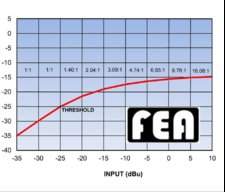
1. The biggest reason compressors are used is to get more sustain out of your bass. My bass has superb sustain, so I don't use one. Using a compressor "most" folks set the ratio to 4:1. That setting means that for every 4 decibels of volume increase you will only get 1db of actual volume increase and the rest of the energy will go into sustain. 3 to 1 is also a common setting. You'll still get decent attack out of your playing but increase the sustain. The higher you dial up the ratio the less attack you hear and thus the less dynamics you'll have in your playing.

2. To get a specific sound or effect out of your bass. If you dial up the ratio a lot, you can almost make your bass sound like organ pedals - no attack to the note and sustain forever. There are a few places where that might be desirable and some folks want just a little attack and lots of sustain in everything they play. The compressor is how to get that.

3. To protect your speakers. This is actually the main reason that FOH systems use compression on your channel. They don't want any sudden spikes of power from you diggin'-in on your bass or playing really low notes to damage their speakers. This is not necessarily driven by making you sound better (it can be), but by making sure their speakers don't get fried.

My opinion is the old "if it ain't broke, don't fix it". If you have a problem with not enough sustain or if you are making your speakers fart when playing loud, then a compressor is a good choice.

Ideally you'll want a compressor that has 4 controls - Threshold (controls when the compressor activates), Ratio (controls how much of the signal is compressed into sustain), Attack (controls how quickly the compressor engages once the threshold is reached- often see toggle switches of "soft knee" or "hard knee" instead of a much more variable dial), and Decay or Release (controls how long the compressor keeps compressing before it lets go once it's clamped on).

At the very least, you'll want something that will give you threshold and ratio. Usually those compressors have an internal setting on the attack and decay. Some are good...some not so good. You really have to play with those to see what you like.

I don't use a compressor because I don't need one for sustain, my speakers aren't in any danger of being stressed, and I don't play much in the way of slap. Playing Slap usually needs a compressor because of the huge attack caused by hammering on and plucking up on the strings.

Hope that helps.

Using a compressor or not has absolutely zero to do with “having a decent bass”.
 
From Ovnilab:

Do you need a compressor?


Is a compressor necessary?
("Another guy told me he never uses compression.")

Short answer: No, it's not for everyone. A compressor is a very useful tool, and just as with any other tool, the better you understand how to use it the more useful it can be. There are a lot of circumstances in which a compressor is the right tool for the job. But that doesn't mean you have to use one. Many people prefer to regulate their signal peaks as much as they can strictly through playing technique. And many amplifiers (especially tube amps) compress your instrument signal a little or a lot just by the nature of the amp design. Read here for more about that. Overdrive and other types of distortion also compress your signal considerably. So under many circumstances it may not be "necessary" to use an external compressor. It's up to you to analyze your particular situation and determine if a compressor, as a tool, can be useful to you. Remember too that misusing a compressor will get you bad results, exactly the same as misusing any other sort of tool. If you apply a chainsaw when you needed a fine dovetail saw, it'll be bad news for your woodworking project. But don't blame the chainsaw!

So why would somebody want to use a compressor? What is it good for, and when? Here are the basic benefits, which vary from one comp to another:

-Peak limiting, to avoid blowing your speakers or hearing unwanted distortion.
-Evening out levels between strings or between soft and strong playing.
-Changing the attack and other envelope qualities of your notes, making them squishier, rubberier, crisper, or other amplitude effects which may be difficult to achieve just with your fingers.
-Emulating some of the tone and envelope qualities associated with older recordings (Motown, early rock and funk, etc.) in which tube and transformer-based recording equipment and reel-to-reel tape recorders got "saturated" by the bass signal. That saturation compressed the recorded tracks.
-Increasing sustain or punch by increasing the average level of the signal without increasing the peaks. This can provide greater perceived loudness, fatter tone, more audible harmonics, and better placement in the mix.

Also, even though some people say they don't like compression because they play with a wide range of dynamics, the fact is that carefully applied compression will actually make the entire dynamic range easier to hear, rather than making your signal sound "less dynamic". This is partially about the quality of the compressor, partly about the type of compressor it is, and partly about how the compressor is being used. Failing to adjust the level of the signal going into the compressor can make anyone hate compression. And some compressors just suck.

Some amount of dynamic control can be achieved just using your fingers, and that is a really important goal to work towards while practicing. However some signal spikes can't be prevented with your hands, such as a resonant peak from an envelope filter, or a flanger or delay set to high resonance. And some players like to rock out with wild abandon, which means they need a limiter to keep their signal in check, to avoid unwanted speaker distortion.

As far as the various tone and envelope changes for flavor or fatness, they are completely subjective. Either you want those changes or you don't, and that's fine either way. Sometimes that rubbery thump, or boosted harmonics, are exactly what the song needed! And one compressor may be good for getting the tone/envelope changes you like, while another seems to do nothing but deaden your sound and add noise. That's normal. Read my article about good settings, and if that doesn't help then try a different compressor. But don't assume that because you have good dynamic control with your hands, or because you tried a pedal in 1985 that sucked, that compression is no good for anyone. It's a very useful and powerful (yet subtle) tool, but you must pick the right tool for the job and learn how to use it properly. I don't think compression is for everyone all the time, but I do think a professional musician should have the ability to use a compressor well, as part of their tool box of skills.
 
It's important to understand what a compressor does and what you are trying to do with it. I use a mutli-band compressor 100% of the time. I like what it does to my sound. A "normal" compressor tends to make my bass sound a little thin when I go to slap--the compressor clamps down on the high-end spikes, which lowers the bass notes too. The multi-band doesn't do that, so it really works for me.

But the key is that I have a specific reason for using that particular compressor, and I understand exactly what it's doing. If you don't have those two things going on, learn about how compressors work and have a specific goal in mind before you go turning it on all the time.

Tom

When I was gigging years ago, I always had my multi-band comp running.:thumbsup: Lots of compliments on my sound too!

-Frank
 
  • Like
Reactions: veryvery and tfer
I think it's a very subjective thing that you have to work out through trial and error on your own. Don't just take what someone else says about them at face value as any sort of universal "fact".
This is probably the truest and most useful statement I've read in this thread so far.

Using a compressor or not has absolutely zero to do with “having a decent bass”.
This is a close second.
 
  • Like
Reactions: StrangerDanger
Using a compressor or not has absolutely zero to do with “having a decent bass”.

I think he was covering the use of comps for uneven string volume across the neck and possibly for sustain and/or neck dead spots. People have recommended a comp to cover all of these issues.

-Frank
 
i was reading a bass supplement that came with a guitar magazine and it said every bassist should be using a compressor pedal,

1) would you agree with that?
2) what does it actually achieve?
That is only the opinion of one person that likes a certain tone. Me, I find compressing sounds like stuffing a pillow in your amp It is muffled and all the treble is sucked out.