• TalkBass has been independent since 1998. Add your voice.
    Create a free account to reply to discussions, view embedded media, and browse with fewer display ads.
    Join freeLog in
    Want zero display ads or expanded classifieds tools? Compare plans.

To compress or not

Mar 27, 2007
5,365
6,189
NPR, Florida
Disclosures
I'm not crazy, I'm just a little unwell
in a live situation, say like your average bar gig. I understand the benefits of using compression during the recording process. However, I was taught for live play compression is better controlled by the players dynamics not the effect itself.

I've noticed many modern SS and hybrid amps have single knob compressors. I can see if you slap a lot live that it could help control spikes. But say a standard bar gig, less than 300 audience at normal gig volume (not having to dime out your amp) , no FX in the chain, standard pick or finger style no slap.

So...what would be the advantages or disadvantages be to using compression?

PS: yes I did search; but would like to keep discussion limited to live use of compression in general, not brand specific gear etc.
 
If you prefer compression then use it. You can play a compressor based on how it is set. It doesn't have to be on or in you face all the time. I had a bass with a couple of dead and resonance notes. A compressor helped with those notes when recording. It can make your bass sound a little more tonally present to better sit in the song.

Below is drum demo that shows you how a good compressor can bring out certain frequencies. If you listen with headphones, you can hear how the bass drum can be brought up for example.

 
  • Like
Reactions: SirMjac28
Well at live levels even with a powerful solid state amp you are still getting compression from your cabinet and then
you have the audiences ears to factor in, they are also very effective audio compressors.
If you find it helps to reduce your peaks of dynamics a little further with an electronic compressor, then go there.
There are a great many bass suitable stand alone compressors to try.
The trick is that nature and your electronic compression must live in harmony
and that's normally with very little gain reduction from the electronics.
One thing that can be very useful on bass is compressors with filters in the side chain like the old Joe Meek VC type.
That makes it possible to compress the higher notes a little more than the lower notes.
Funkey Huh!.:-)
image.jpg
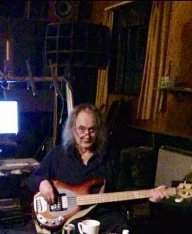
in background there is a neve 33609 comp Lim and a Urei 546 parametric EQ which is exactly the right set of parts that all solid state bass amps should have fitted between the pre and power amps in my opinion.:-)
 
I prefer to use compression in my rig for live performances. For me it partly about my tone, and partly for control. I like to use enough compression with my amp (although my compressor is a separate fully controlled rack mount one) to aid in producing a kind of "tube amp into a sealed cab" type sound that I love. A compressor is part of that equation. I also use it as I tend to be a bit heavy handed in my playing, especially rock music at higher volume. I don't really squash my tone, but it is present enough to know it's there.
 
  • Like
Reactions: blindrabbit
FWIW: I rarely use a compressor on my bass for leveling (its a dynamics killer), however I sometime use a compressor as an effect (squashed), or in combination with others petals.

I recommend trying one, play with it and see if its something you like or not.

PS: you'd most likely get more replies to your question on the "Effects" forum. ;)
 
Last edited:
the compression takes out some of the dynamics of my live playing, i noticed that i will really thump notes on the on beat with my middle finger live, whereas in the studio it sounds like somebody playing very controlled and evenly, which is good for the museum tracks i'm recording now, but my friend's all think that it sounds too clean/reserved/processed
 
A well adjusted compressor is a godsend when trying to maintain a sonic footprint within the confines of either a recording medium or live environment. I have a couple of single ka-nob compressors which are just fantastic IMO...some are just plain ol' bad.

Compression is a sub-set of sound reinforcement. Volumes have been written re: science / practice of application. My stock answer to the "do I need it" question is a resounding yes. The bigger question should be "how?".

Riis
 
I too like to control dynamics with technique and touch. So I get how you feel about compression. But it definitely has its place.

IME, the major reason why so many cats have a bad experience with compressors is that they don't know how to use one effectively. The key is to use it with subtlety. If you have it set properly, you should barely be even to tell that it's even turned on...other than when using it as an actual effect, as opposed to garden-variety signal control.

Unless setting it in an extreme way in order to draw attention to itself, I like to set it at low to medium threshold, low to medium ratio.

MM
 
Last edited:
I never use it, but I have had engineers do it to my track in post. They are paid to know when to do that, while I am paid to *play*.
I suppose the tube preamp in my two main amps does add a bit of compression, but I have no "compressor" in my fx chain.
 
I too like to control dynamics with technique and touch. So I get how you feel about compression. But it definitely has its place.

IME, the major reason why so many cats have a bad experience with compressors is that they don't know how to use one effectively. The key is to use it with subtlety. If you have it set properly, you should barely be even to tell that it's even turned on...other than when using it as an actual effect, as opposed to garden-variety signal control.

Again, unless setting it in an extreme way in order draw attention to itself, I like to use it at low to medium threshold, low to medium ratio.

MM

Yes, inexperienced users possibly coupled with compressors of questionable quality result in a lot of negative comments and experiences with compression. Its used very successfully in both live and studio settings without losing dynamics - if its done correctly with hardware that's up to the task.
 
Last edited:
I suppose the tube preamp in my two main amps does add a bit of compression, but I have no "compressor" in my fx chain.
it's a sansamp pre for me, but +1; the little bit of drive and "grit" in the signal does the job of compressing enough for it to feel like an amp, while still allowing for normal playing dynamics.
 
IME, the major reason why so many cats have a bad experience with compressors is that they don't know how to use one effectively. The key is to use it with subtlety. If you have it set properly, you should barely be even to tell that it's even turned on....

MM

I never mastered the art of compression. A couple of my amps have had it built in, and I’ve played around with it on my Zoom, but I found exactly what you are saying. If there is enough compression to notice that it is on, it’s too much.

So the question is, what benefit is it? If it’s on, but you can’t notice it, why put it on at all.
 
I like that ' tube like ' bit of compression ... all the time ... and now I'm no longer any tubes pres/amps ...
I'm trying to get that tuned in with a Wampler EGO pedal ... the Blend knob helps set just a bit of comp to things ... just helps keep things from Clipping when you dig in , if that's all you want it to do ..!
 
...
So the question is, what benefit is it? If it’s on, but you can’t notice it, why put it on at all.
I use compression at a quite mild setting, I can't really hear the effect with my clean sound. However, it's quite noticeable in combination with other pedals; dirt pedals break up more evenly across strings and filter pedals are tamed and more controllable. Maybe I could spend half a lifetime woodshedding with a certain bass and learn how to do this with just my hands, but frankly, I have more interesting things to do with my time. :)
 
  • Like
Reactions: blindrabbit

Latest posts